Asian stocks will likely keep eclipsing their US peers, as a weaker dollar further raises the appeal of a region that has benefited from cheaper valuations and a momentous shift away from American assets, according to analysts.
Also supporting the region’s equities are growing signs of easing trade tensions, especially between the US and China, where a months-long rally looks far from over. While the Federal Reserve’s latest interest rate cut was a given, it reinforced a bearish outlook for the US currency and opened up space for Asian central banks to loosen policy.
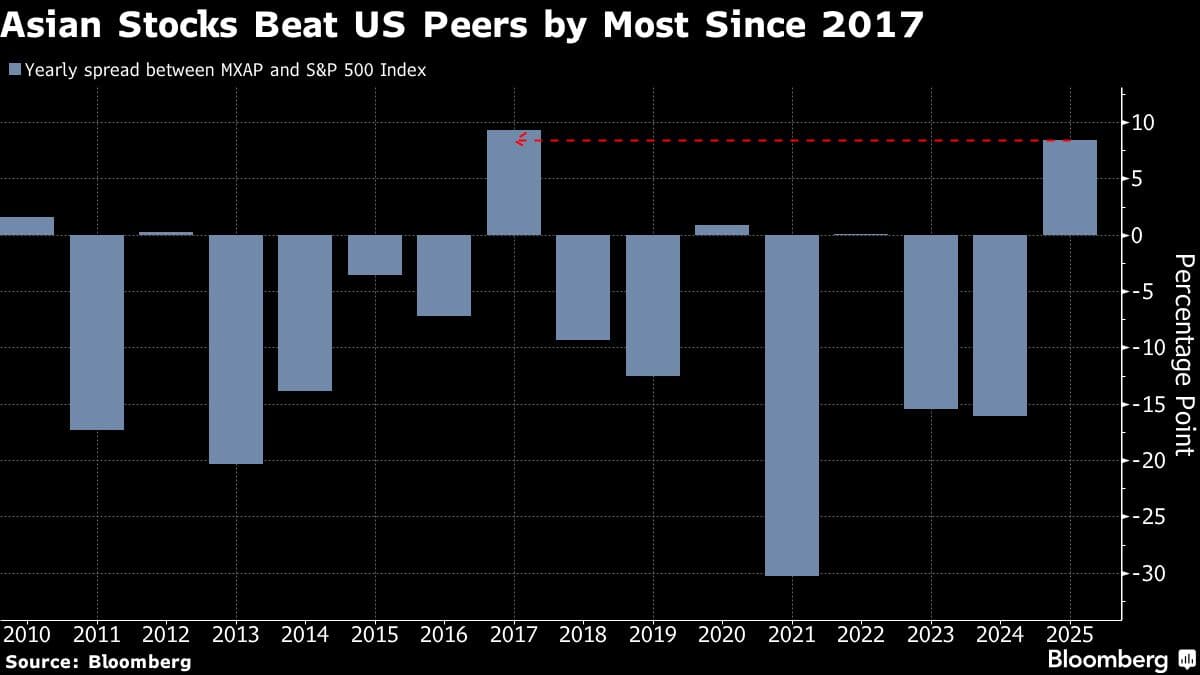
The MSCI Asia Pacific Index has climbed 22% this year, beating the S&P 500 Index by around eight percentage points and set for the biggest annual outperformance since 2017.
“We are tactically constructive on APAC equities’ relative performance in the remainder of the year versus US equities,” said Homin Lee, a senior macro strategist at Lombard Odier Singapore Ltd. A confluence of factors, from stable commodity prices to lower US rates and fading trade disruption should provide a decent backdrop for the markets, he added.
The MSCI Asia gauge is trading at 16 times forward earnings estimates, below the S&P 500’s 23 times. Meanwhile, the Hang Seng Tech Index that jumped to a four-year high last week trades at around 21 times forward earnings, versus 27 times for the Nasdaq 100 Index, according to Bloomberg-compiled data.
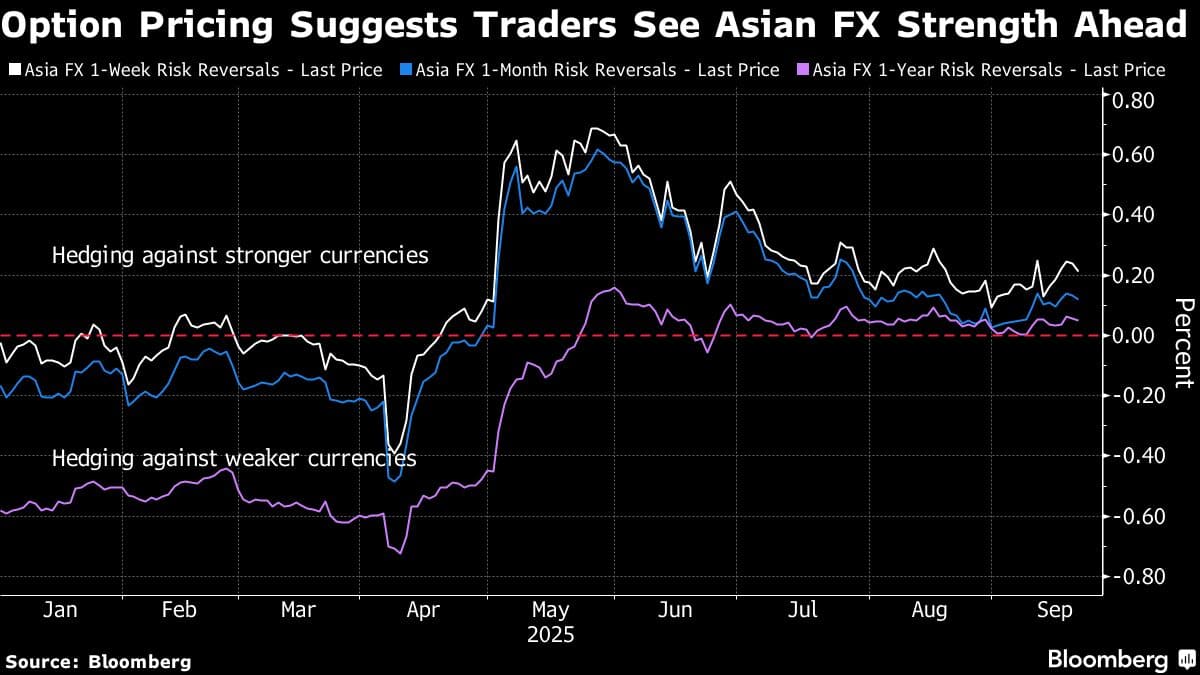
While the speed and magnitude of the Fed’s policy easing cycle remains uncertain, its rate cut last week was an extra boost to Asian currencies.
Signals from the options market suggest traders are paying a premium to hedge against further strength in Asian currencies. Aggregates of risk reversals in the region, a measure of demand for options that pay out if the currencies strengthen against the dollar over various periods, have been in positive territory for months.
“Given this backdrop we are increasing our exposure to non-US equities including Asian equities relative to US equities,” said Chang Hwan Sung, a multi-asset portfolio manager in Invesco’s investment solutions team in Hong Kong. The preference is mainly driven by a bearish view on the greenback and “US capital outflows seeking international diversification and foreign currency appreciation,” he added.
To be sure, any inflation-driven pause on the Fed’s rate-cut cycle or even a hawkish policy pivot would easily reverse investor sentiment, while the US-China ties remain vulnerable to deterioration. Meantime, political uncertainties in Indonesia, Thailand and Japan are also in focus.
But for now, there’s optimism that as US exceptionalism continues to draw skeptics, the appetite for Asian stocks will likely stay strong.
“The U.S. remains the center of gravity for AI and corporate earnings power, but Asia offers distinct angles,” said Charu Chanana, chief investment strategist at Saxo Markets, citing “India’s domestic demand story, Japan’s banks amid Bank of Japan tightening, and selective China tech plays where policy support and monetization are starting to align.”
Discover the latest Business News, Sensex, and Nifty updates. Obtain Personal Finance insights, tax queries, and expert opinions on Moneycontrol or download the Moneycontrol App to stay updated!
Find the best of Al News in one place, specially curated for you every weekend.
Stay on top of the latest tech trends and biggest startup news.