Abir Roy and Aman Shankar
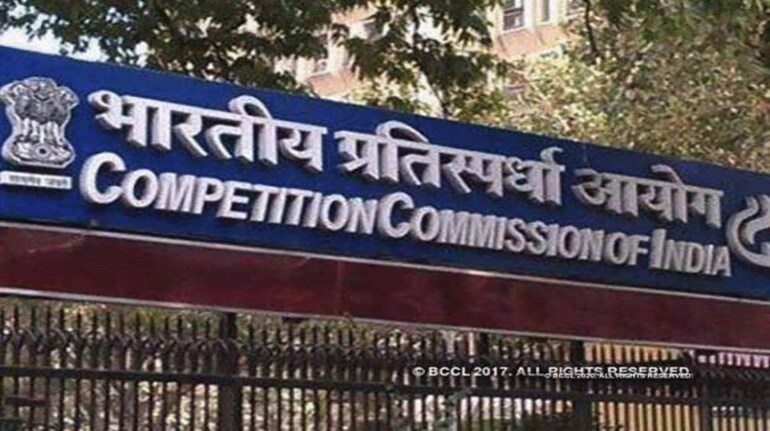
India has emerged as a pioneer of the global digital revolution. To keep the regulatory apparatus abreast of changing market dynamics, the Government introduced the Competition (Amendment) Bill, 2022 in August 2022. It was then referred to the Joint Parliamentary Standing Committee on Finance for further examination and stakeholder consultation. After adopting the suggestive amendments of the panel, the Bill was tabled in Parliament in February 2023 and subsequently passed by the Lok Sabha on March 29, 2023.
Key Changes
This is the first amendment to the Competition Act, 2002 after a hiatus of almost 14 years since it came into force in 2009. In hindsight, it also testifies to the robustness of the Act in all these years. The proposed amendments, inter alia, include a change in the merger control regime with the introduction of a new deal value threshold, adoption of the material influence test for assessing ‘control’, and reduction in procedural timelines related to combination; introduction of settlement and commitment mechanism at par with international standards; adding the concept of ‘hub and spoke cartel’ to eliminate all possibilities of cartelization in the market; introducing the ‘global turnover’ test for determining the penalties for contravention of the Act. Some of the major amendments and their impact are discussed in the ensuing part.
Change in merger control regime
The Bill has inserted a new clause in Section 5 of the Act, wherein it requires the approval of the Competition Commission of India (CCI) for the combination in connection with the acquisition of any control, shares, voting rights, or assets of an enterprise, where the value of the transaction is more than Rs. 2,000 crore.
This new ‘deal value threshold’ shall operate if the target entity (not the acquirer) in the transaction has substantial business operations in India. This is a welcome move, especially in light of the mergers and acquisitions in the digital market that often escape scrutiny of the regulator based on the assets and turnover ratio.
Moreover, the amendment has explicitly included the test of ‘material influence’ in the Act to determine control of Acquirer on the Target company by materially influencing the day-to-day affairs of the latter. In the past, the CCI had applied this test to keep an eye on the composition of the board of directors as per the proposed combination, (for eg. in Agrium Inc./ Potash Corp; or Canary Investments, Link Investment and Intas Pharmaceuticals, among others), but now it gets recognition under the statute to bolster the regime. In addition, the amendment proposes to reduce the timeline for CCI to pass an order on combinations from 210 to 150 days, which will led agility to the business.
Penalty to be determined on ‘global turnover’ of the enterprise
Under the existing framework, the CCI is empowered to impose a penalty that may be up to 10 percent of the average turnover for the last three preceding financial years of the enterprise which stands in contravention of the Act.
In the Excel Crop Care case, the Supreme Court clarified that the term turnover shall mean ‘relevant turnover’ and not ‘total turnover’.
Taking a forward leap, the Bill has proposed to empower the CCI to levy penalties on the 'global turnover' derived from all products and services of the guilty enterprise. The move can be seen in the light of development in mature jurisdictions like the European Union, UK, France and Germany.
This amendment would increase the amount of penalties on companies that have a significant global presence, such as Big Tech firms. On the positive side, the amendment would be a deterrent amongst Big Tech companies in the digital market from engaging in anti-competitive practices.
However, in effect, the government has nullified the Supreme Court judgment. Hence, there is a possibility of this amendment being challenged before the court. Further, the fear of huge monetary penalties may create an aversion among global corporations to come to India and compete in the Indian market.
A similar trend on the concept of considering ‘turnover from all products and services’ has been seen in the recently pronounced National Company Law Appellate Tribunal (NCLAT) judgment in the Google Android case.
The NCLAT has opined that digital platforms such as the one operated by Google using the Android Operating System-based mobile devices, are very different from traditional technology platforms. The business model, incentives and revenue streams are a net result of the interplay of software and programmes including various apps and services. Therefore, there is no single app or service that can be singled out to say that the revenue of Google is derived only from it. Thus, for determining the penalty amount to be levied on Google, the total revenue from all the apps and services becomes the ‘relevant turnover’.
Settlement and Commitment mechanisms
A framework for faster resolution of disputes through Settlement or Commitment has been introduced in the Bill. It will enable the CCI to close an inquiry against anti-competitive agreements or abuse of dominance if an enterprise offers a Settlement (i.e., payment of such fee as specified) after the Director General submits its report and before the final Order under Section 27 is passed by the CCI; or Commitment (i.e., behavioural and structural remedies). The Commitment must be offered by the enterprise after the prima facie order is passed by the CCI and before receipt of the DG investigation report.
An aggrieved party has been allowed to still file for compensation even after a settlement has been offered by the enterprise. The mechanism is in tandem with the objective of ‘ease of doing business in India’ and would reduce stretched litigation and allow easier resolution of a dispute relating to the Act, ultimately benefitting the market.
Strengthening enforcement mechanisms and behavioural corrections
The amendment has proposed to expand the scope of enterprises that can be inquired by the CCI to be participants of horizontal agreements that are anti-competitive (cartel). The liability is extended to other facilitators of a cartel that are at different levels of the vertical chain or those active participants that are neither strictly vertical nor horizontal, referred to as ‘Hub and Spoke cartel’. The amendment uses the qualifying word to cover all the parties who ‘participates or intends to participate’ in the cartel. However, no standards or determining criteria have been laid down to determine the intention which is usually a facet of criminal law and equated to mens rea (the intention or knowledge of wrongdoing).
We hope that the CCI would clarify the term and provide more flesh to it through its notifications/ regulations.
Moreover, the Bill entrusts the CCI with the power to appoint the DG which is vested with the Central Government under the existing regime. In a sweeping move, the DG's investigative powers have been expanded including the power to summon agents (including bankers, legal advisors, and auditors) of the concerned enterprise and examine them under oath. While it does give more teeth to the DG to diligently carry out its duty, the extension of the power to examine attorneys of enterprises under oath goes against the fundamentals of attorney-client privilege and the Evidence Act, 1872. While one of the clauses does clarify that “any reference to …. agents shall be construed as a reference to past as well as present…… agents, as the case may be”, which should mean in-house counsel and not independent advocates. However, it has to be seen how it is used by the DG in practice.
Conclusion
The moment is opportune to introduce these amendments and fine-tune the market law to keep pace with rapidly advancing technology and digital markets. The economic and business needs of the market have to be balanced while the CCI lays down the regulation for giving substance and full play to these amendments. While for some enterprises, there may be irking concerns (eg. global turnover test for penalty) and the provision may face some litigation, the business at large will benefit from the strengthening of the merger control regime, giving more teeth to the DG in terms of investigative powers, and with the reduced timelines for the CCI to act on combinations.
(Abir Roy is a co-founder and partner at Sarvada legal, he has authored a book on the competition act. Aman Shankar is an Associate at Sarvada legal)
Discover the latest Business News, Sensex, and Nifty updates. Obtain Personal Finance insights, tax queries, and expert opinions on Moneycontrol or download the Moneycontrol App to stay updated!
Find the best of Al News in one place, specially curated for you every weekend.
Stay on top of the latest tech trends and biggest startup news.