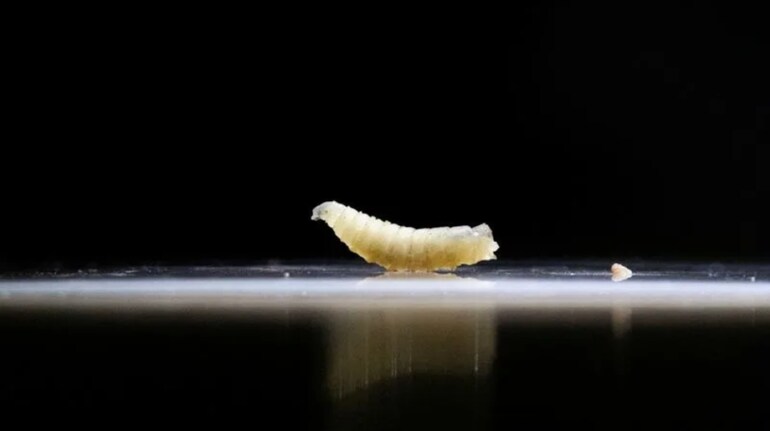
A flesh-eating screwworm infection has been confirmed in a human in the United States for the first time after six decades. The case, detected in Maryland in August 2025, involved a patient returning from Central America, where a broader outbreak has been spreading north since late 2023.
The traveller developed a rare condition known as screwworm myiasis, in which larvae burrow into living flesh.
The incident, confirmed by the Centres for Disease Control and Prevention (CDC) has raised alarms among health authorities and livestock experts alike. Officials have emphasised that there is still minimal risk to the public's health, but the screwworm's resurgence has raised worries about potential economic consequences, particularly in states like Texas that have a large cattle population.
What Is the Screwworm?
The New World screwworm (Cochliomyia hominivorax) is not a worm but a species of parasitic fly. Unlike ordinary maggots that feed on decaying tissue, screwworm larvae consume living flesh. Female flies lay hundreds of eggs inside open wounds of warm-blooded animals—including humans. Once hatched, the larvae dig deeper into tissue with sharp, screw-like mouths, a behaviour that inspired their name.
This infestation, called myiasis, can cause severe pain, tissue destruction, and even death if untreated. A single female fly can lay up to 3,000 eggs in her lifetime, making infestations hard to control without intervention.
Symptoms and Risk Factors
Though human cases are rare, they are often devastating. According to the CDC, symptoms include:
People with open cuts, tick or insect bites, or those working near livestock in endemic regions are at higher risk. The only treatment is manual removal of larvae and thorough wound cleaning. If detected early, outcomes are usually positive.
Why The Cattle Industry Is On Edge
While human health risks are minimal, the parasite is far more dangerous for livestock. Cattle are particularly vulnerable to screwworms because they feed on wounds from branding, childbirth, or even minor injuries.
When accounting for livestock deaths, veterinary care, and market disruptions, a Texas A&M University estimate cautions that the damage could surpass $1.8 billion if screwworms spread into Texas.
The industry is also frustrated by what some describe as a lack of transparency. According to Reuters, several veterinarians and beef executives learned about the Maryland case informally rather than through CDC briefings, fuelling concerns about communication gaps.
When Was it First Detected?
The United States had successfully eradicated screwworms in 1966 using a pioneering method known as the sterile insect technique. By releasing hundreds of millions of sterilised male flies, authorities collapsed the wild population, since females mate only once in their lifetime. The programme was a landmark success in pest control.
But the parasite’s resurgence in Central America and southern Mexico since 2023 has inched it closer to US borders. Mexico recently reported a fresh case in Veracruz, just 370 miles from Texas, prompting fears that the parasite could cross north.
What is the Government Doing?
In response, the US Department of Agriculture (USDA) has unveiled a major containment plan. A new sterile fly facility will be built in Edinburg, Texas, to mass-produce as many as 300 million sterile screwworms per week. This would complement the only existing plant in Panama, which currently produces about 100 million sterile flies weekly.
Mexico, too, has launched its own $51 million fly facility to slow the spread south of the US border. The goal is to push screwworms back into the Darien Gap, the dense rainforest separating Panama and Colombia, where eradication efforts have historically held the line.
Also Read: This protein may hold the key to reversing memory loss, says study
Even though the Maryland case is being treated as an isolated, imported infection, its timing is significant. With screwworms steadily advancing north and livestock inventories strained, the US beef industry is on high alert.
The detection serves as a stark reminder of how fragile biosecurity systems can be. For now, the public health threat remains low, but the economic and agricultural risks are considerable.
As experts warn, a parasite that was once thought “wiped out” in the US is proving it can return—and its impact may be measured less in hospital cases and more in billions of dollars at stake for America’s cattle industry.
Discover the latest Business News, Sensex, and Nifty updates. Obtain Personal Finance insights, tax queries, and expert opinions on Moneycontrol or download the Moneycontrol App to stay updated!
Find the best of Al News in one place, specially curated for you every weekend.
Stay on top of the latest tech trends and biggest startup news.