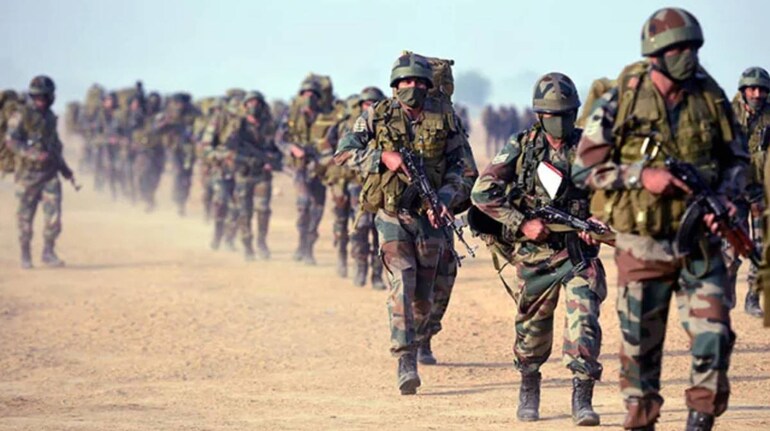

India did not set out in 1987 to fight a war in Sri Lanka’s north. The Indian Peace Keeping Force, the IPKF, arrived under the promise of the Indo-Sri Lanka Accord: a stabilising presence that would oversee a political settlement and the disarmament of Tamil militant groups. Instead, within weeks, Indian soldiers were locked in a bitter contest with the Liberation Tigers of Tamil Eelam, the LTTE—an opponent that knew the ground, blended into the population, and proved frighteningly good at learning how the Indian military operated.
Operation Pawan became, in effect, India’s first large overseas counter-insurgency campaign in the modern era. It began with conventional instincts—brigade thrusts, attempts to seize key nodes, the expectation that leadership decapitation would collapse resistance. It ended with small-team patrolling, painstaking search operations, and a slow realisation that a “peace mission” had turned into combat without the political clarity, intelligence preparation, or mandate that such a fight demanded.
A mandate that kept shifting under fire
The most important context is that the mission’s political foundation was never stable. The IPKF’s tasks morphed quickly—from monitoring and disarming militants to peace enforcement against the very group that had initially been expected to fall in line. That shift was not just semantic. It changed rules of engagement, force posture, the legitimacy of operations in local eyes, and the ability to build reliable intelligence networks.
Indian Express reporting on the mechanised forces’ experience in Sri Lanka points to “setbacks” and planning failures at higher levels—language that echoes the standard critique of the campaign: unclear objectives, poor anticipation of how quickly the conflict would mutate, and a mismatch between political intent and military reality.
By late 1987, a second problem became obvious: the LTTE was not just another insurgent group. It was disciplined, deeply embedded, and ruthlessly tactical—an organisation that had already spent years preparing the Jaffna peninsula for precisely the kind of contest it now faced.
The opening shock in Jaffna
The IPKF’s early combat phase is often remembered through the Jaffna operation—fierce fighting in built-up areas, narrow lanes, and a hostile intelligence environment. The Indian force went in expecting the LTTE to be contained and disarmed; instead, it encountered ambushes, sniping, booby traps, and an enemy that seemed to know Indian movements with uncomfortable accuracy.
That sense of being “read” by the opponent—of patrols being predicted, officers being targeted, columns being channelled into kill zones—shows up in later first-person accounts and commentary, including in The Print’s writing, on how quickly the IPKF found itself exposed in those early months.
One early tactical lesson was brutal: urban and semi-urban counter-insurgency punishes conventional muscle memory. Large formations can seize ground, but they also create predictable patterns. In Jaffna, predictability meant vulnerability.
Intelligence failures that weren’t just “bad information”
When people say “intelligence failure” in Operation Pawan, they sometimes imagine a single wrong input—one faulty report. The reality was more structural.
First, India’s political assumptions did not match the LTTE’s intent. The LTTE did not see disarmament as an inconvenience; it saw it as existential. Second, the human terrain was more complex than Delhi and even field commanders initially grasped. The LTTE’s ability to blend in, intimidate, and control information flows meant that building reliable local sources was slow and dangerous.
Third, there were the operational leaks and the broader vulnerability of communications and routine. The perception that the LTTE repeatedly had inside knowledge of IPKF moves—whether through sympathetic networks, surveillance, or interception—created a corrosive uncertainty. It is difficult to run crisp operations when you suspect the enemy is “already waiting.”
Finally, there was the classic peacekeeping-to-combat problem: intelligence structures designed for monitoring are not the same as those required for targeting. Once the mission became kinetic, the force needed target-grade intelligence—specific, time-bound, corroborated. That transition is hard even in familiar terrain; in Sri Lanka, it happened under fire.
Tactics: From conventional thrusts to learning the insurgent rhythm
The IPKF’s tactical journey is where Operation Pawan becomes most instructive.
In the early period, Indian forces attempted to apply conventional templates: clear areas, seize junctions, capture or neutralise leadership, and assume that control of territory would lead to political compliance. But the LTTE played a different game. It used mines, improvised explosive devices, ambushes and snipers to slow movement, punish concentration, and force the IPKF into costly clearing operations.
Over time, IPKF units adapted in ways that should sound familiar to anyone who later followed counter-insurgency operations in India: smaller patrols, more emphasis on night operations and unpredictable movement, careful route discipline, and a constant push to improve local-level intelligence. Even the basic habits of soldiering changed—how leaders exposed themselves, how troops moved through built-up areas, how convoys were protected.
The mechanised forces’ experience is a good window into this adaptation. Armour and mechanised vehicles can be decisive for shock and protection, but in constrained urban terrain, mines and close-quarter ambushes turn mobility into a liability. Indian Express reporting on mechanised forces in Operation Pawan highlights both successes and the lessons from setbacks—an understated way of saying that the force had to learn where heavy kit helped, and where it created new risks.
The LTTE’s advantages: Terrain, tempo, and psychological edge
The LTTE fought on home ground. That meant it could move, hide, resupply, and reappear with a speed that frustrated conventional operations. It also had a psychological advantage: it could frame the conflict locally as resistance against an external force, even when many Tamil civilians also feared LTTE coercion.
This mattered because counter-insurgency is never only about firepower. It is about legitimacy, information, and the daily interaction between soldiers and civilians. Once violence escalated, the operating space narrowed. Curfews, searches, closures—all of it may be militarily necessary in the moment, but politically expensive over time.
The war’s moral and political ambiguity also complicated soldiering. “Peacekeeper” is a role that relies on restraint and trust. “Combatant” is a role that relies on initiative and dominance. Switching between the two, sometimes within the same week, is psychologically and operationally destabilising.
Planning and command: the cost of strategic drift
By the late 1980s, one of the most common critiques was not that Indian soldiers couldn’t fight—the IPKF fought hard and paid a heavy price—but that the mission never had a clean, unified strategic logic.
Indian Express reporting from 2025, reflecting veterans’ anger and analysts’ critiques, points to the absence of a clear command structure and shifts in objectives—an erraticness that filters down to the lowest level in the form of uncertainty, mixed messaging, and changing operational priorities.
This matters because tactical brilliance cannot substitute for strategic coherence. A battalion can clear an area. A brigade can dominate a sector. But if the political end-state is unclear—or keeps changing—the fight becomes an endurance test with diminishing returns.
The numbers that still haunt the story
Casualty counts are more than statistics; they shape how institutions remember campaigns. Mainstream reporting in late 2025 and early 2026 has repeatedly cited that India lost around 1,200 soldiers during the IPKF’s Sri Lanka deployment, with thousands more wounded.
That human cost sits behind the renewed public attention in recent months. India’s defence minister has spoken about the sacrifices of IPKF troops being neglected and the need to recognise them formally—an echo of a long-standing sentiment among veterans that the campaign was politically awkward but militarily formative.
What the Army took home: Hard lessons that travelled forward
Operation Pawan’s operational value lies in what it taught Indian forces about fighting a well-organised insurgent group outside India’s borders, with limited local legitimacy and an ambiguous political script.
It taught, first, that intelligence preparation is not a supporting function—it is the centre of gravity. Second, that urban and semi-urban counter-insurgency is a different animal from conventional manoeuvre. Third, that mechanised power must be used with humility in mine-heavy, close-quarter terrain. Fourth, that mission clarity is not a luxury; it is what prevents tactical success from becoming strategic exhaustion.
And finally, it taught something less technical but perhaps more important: foreign interventions age quickly. What begins as a limited, “before breakfast” operation can become a long, grinding deployment if local politics turns, if the adversary adapts faster than expected, or if the sponsor state cannot sustain a coherent policy.
The aftertaste: Why Operation Pawan still matters
In the years since, Operation Pawan has often been trapped between two narratives. One treats it as a failure. The other treats it as a misunderstood, politically sabotaged mission. The more useful way to see it is as a campaign that exposed India’s limits and forced learning at speed.
The IPKF did not face an amateur opponent. It faced an insurgent organisation that combined military skill with political ruthlessness, and that understood the informational battlefield as well as the physical one. In that sense, the hard lessons of Sri Lanka were not unique—they were a preview of the kind of conflicts that modern armies, including India’s, repeatedly confront.
Even today, when India debates interventions, stabilisation missions, or the use of force beyond its borders, the shadow of Operation Pawan remains close. Not as a deterrent to action, but as a reminder: the most dangerous part of a war is often the part you didn’t plan for.
Discover the latest Business News, Sensex, and Nifty updates. Obtain Personal Finance insights, tax queries, and expert opinions on Moneycontrol or download the Moneycontrol App to stay updated!
Find the best of Al News in one place, specially curated for you every weekend.
Stay on top of the latest tech trends and biggest startup news.