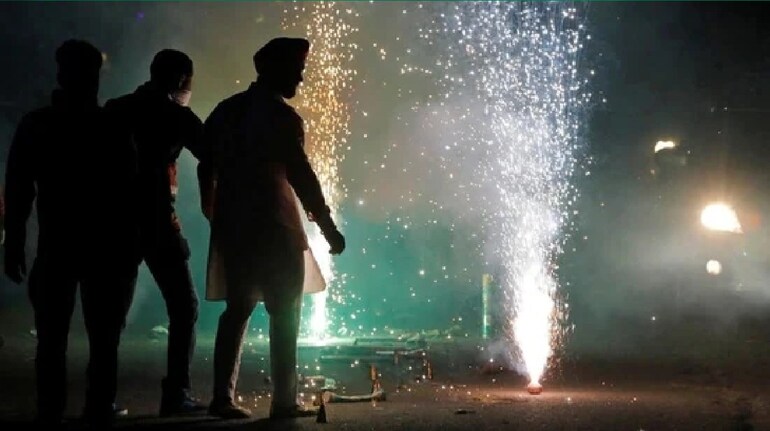
Delhi awoke to a familiar grey shroud on Tuesday morning, the aftermath of a night illuminated by Diwali celebrations. Despite a Supreme Court-mandated shift to less-polluting ‘green crackers,’ the capital’s air quality remained firmly in the ‘very poor’ category, with an Air Quality Index (AQI) of 350 recorded at 8 am.
The hazy, heavy air was a visible reminder of the perennial pollution crisis. However, according to an NDTV report, the comparison with previous years suggests this season’s festivities, while still heavily polluting, may have resulted in a marginally less severe impact than when traditional firecrackers were used in defiance of outright bans.
A comparative look at Delhi's air quality data
An analysis of post-Diwali AQI readings based on System of Air Quality and Weather Forecasting and Research (SAFAR) data reveals a nuanced picture. This year’s 8 am reading of 350, while alarming, stands in contrast to the ‘severe’ category levels witnessed in previous years.
In 2024, the AQI was recorded at 359 the morning after the festival. The following year, 2023, saw a much sharper deterioration, with the AQI soaring to 438 despite a blanket ban on all firecrackers. The year 2021 told a similar story, with an AQI of 454 as traditional firecrackers were defied “left, right and centre.”
The trend is also visible at Anand Vihar, a locality frequently cited as one of Delhi's most polluted. This year, the station recorded an AQI of 360. While still ‘very poor,’ this figure is notably lower than the 396 recorded in 2024 and offers a slight improvement from the 356 recorded in 2022.
Are green crackers just ‘less poison'?
The Supreme Court’s decision this year to allow green crackers, which claim to produce approximately 30 per cent less pollution, was intended as a balance between public health and industry interests. Yet, for environmental advocates, any reduction is insufficient.
As reported by NDTV, campaigner Bhavreen Kandhari, who has fought for clean air for nearly three decades, offered a stark critique. She framed the issue not as an environmental abstract, but a direct public health emergency.
“We are talking about public health. 30 per cent less pollution is meaningless. Are you saying less poison? Do you want to feed your children less poison?” Kandhari was quoted as saying. She added poignantly that despite her long-standing advocacy, she “still managed to give [her children] only damaged lungs.”
A multi-faceted pollution crisis
The failure to achieve ‘poor’ or ‘moderate’ air quality, even with regulated fireworks, underscores the complex nature of Delhi’s winter pollution. The firecracker emissions compound an already toxic cocktail of sources, including vehicular exhaust and seasonal stubble burning from neighbouring states.
The timing of the Diwali celebrations further complicated the situation. Just a day prior, on October 19, authorities had invoked the second stage of the Graded Response Action Plan (GRAP) as AQI levels plunged. These anti-pollution curbs included restrictions on the use of coal, firewood and diesel generators, alongside intensified road sweeping and water sprinkling.
A slight shift in a persistent pollution narrative
The data indicate that while the shift to green crackers may have prevented a descent into the ‘severe’ pollution category seen in prior years, it was far from a solution. The capital’s air quality remains dangerously poor and the narrative of a polluted post-Diwali morning continues, albeit at a slightly lower intensity.
The experiment with green crackers this Diwali has yielded a clear, if modest, result: less poison, perhaps, but poison all the same, leaving the city to grapple with a persistent public health crisis that a single regulatory change cannot hope to solve.
Discover the latest Business News, Sensex, and Nifty updates. Obtain Personal Finance insights, tax queries, and expert opinions on Moneycontrol or download the Moneycontrol App to stay updated!
Find the best of Al News in one place, specially curated for you every weekend.
Stay on top of the latest tech trends and biggest startup news.