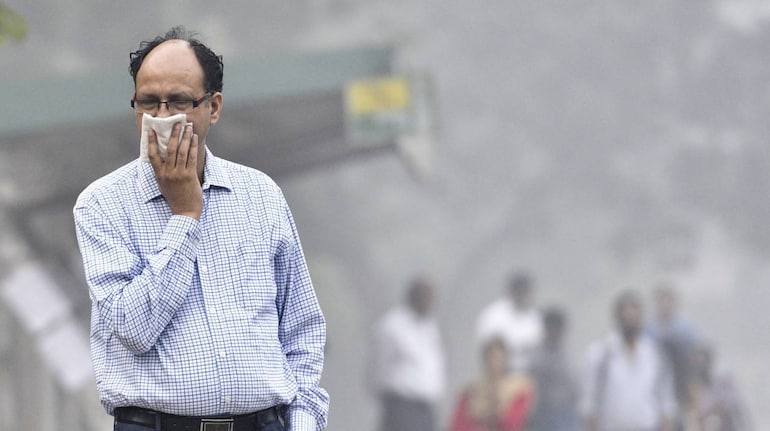
Air pollution is responsible for a staggering 8.1 million global deaths in 2024, a figure that surpasses the mortality rate of the Covid-19 pandemic, according to a stark warning from Dr Randeep Guleria, the former Director of the All India Institute of Medical Sciences (AIIMS). He has labelled the crisis a “silent pandemic” that fails to garner the urgency and attention it demands.
The warning comes as Delhi and much of North India remains gripped by a severe air quality crisis, with the Air Quality Index (AQI) consistently registering between 300 and 400, levels categorised as ‘very poor’ to ‘severe’. Dr Guleria went so far as to suggest that vulnerable individuals should consider leaving the capital, stating, “if you have poor lungs, please leave Delhi,” India Today reported.
Dr Guleria described air pollution as a “silent killer” with systemic consequences. He explained that fine particulate matter, known as PM2.5 and even smaller ultra-fine particles, do not merely lodge in the lungs. They can cross into the bloodstream and travel to every organ in the body. “They cause inflammation and narrowing of blood vessels, leading to a higher chance of heart attacks, strokes and even dementia,” he said.
The health impact, he stressed, extends far beyond common respiratory issues like coughs or breathlessness. Citing international studies, Dr Guleria noted that various global organisations now consider air pollution a major risk factor for heart attacks, heart failure, stroke and cancer. Long-term exposure has also been linked to neurological disorders such as Parkinson’s disease.
The former AIIMS director provided a sobering comparison, noting that the health effects of breathing Delhi’s toxic air are comparable to smoking 8–10 cigarettes a day. Data from the past decade reveals that nearly 70% of days in a year have unsafe air quality, with improvements seen only during the monsoon season or the unique circumstances of the 2020 Covid-19 lockdown.
“Most of the year, we are breathing toxic air. This continuous exposure is leading to chronic inflammation that affects multiple organs — the lungs, heart, brain and blood vessels,” Dr Guleria stated, as cited by India Today.
The report highlights that children and the elderly are the most vulnerable groups. Dr Guleria issued a specific caution regarding children, whose faster breathing rates cause them to inhale more pollutants, particularly when playing outdoors during peak smog hours in the early morning or late evening.
“This can affect lung growth and development,” he cautioned, advising parents to monitor air quality levels and restrict outdoor play during periods of heavy pollution.
The crisis is reportedly not confined to Delhi alone but represents a public health emergency affecting the entire North Indian region, demanding immediate and concerted action.
Discover the latest Business News, Sensex, and Nifty updates. Obtain Personal Finance insights, tax queries, and expert opinions on Moneycontrol or download the Moneycontrol App to stay updated!
Find the best of Al News in one place, specially curated for you every weekend.
Stay on top of the latest tech trends and biggest startup news.