This year’s Economic Survey was notable in what it did mention in terms of the need for ease of doing business 2.0 reforms, but also what wasn’t mentioned in the document presented a day prior to the Budget.
Last year’s survey had a detailed section on fiscal consolidation and the importance of adhering to the path in light of ratings upgrades; this year’s document is muted.
Fiscal consolidation has only one reference, indicating shifting priorities of the government.
“… the fundamentals of the domestic economy remain robust, with a strong external account, calibrated fiscal consolidation and stable private consumption,” the Survey noted.
Experts indicate that the government may better its fiscal deficit target of 4.9 percent for this fiscal, achieving a lower ratio of 4.8 percent of the GDP.
There is confidence that the government may follow its fiscal consolidation path target of bringing fiscal deficit down to 4.5 percent or below in FY26.
Instead, the document’s focus was primarily on deregulation and the next phase of big-bang reforms that can charge the economy to achieve 8 percent growth for the Viksit Bharat goal.
This could also form the focus of the upcoming Budget to ease further norms and enable ease of doing business, something akin to what was.
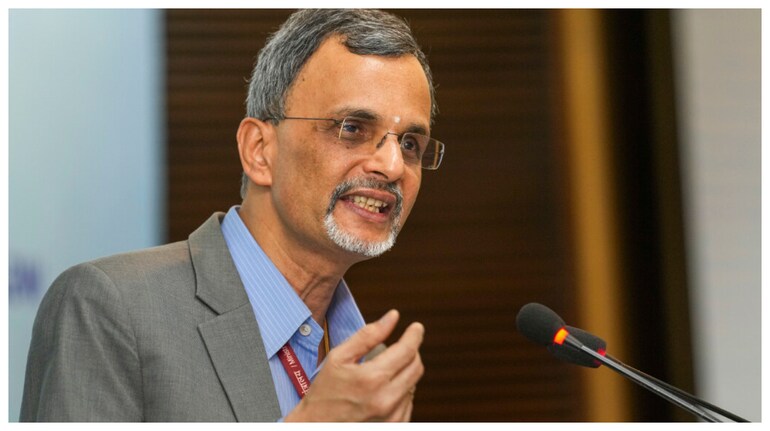
“Above all, underpinning specific policy efforts will have to be the philosophical approach to governance. “Getting out of the way” and allowing businesses to focus on their core mission is a significant contribution that governments around the country can make to foster innovation and enhance competitiveness,” chief economic advisor V Anantha Nageswaran said in the preface to the Economic Survey.
The shift in times is also reflected in a whole chapter on AI-led disruption of jobs. The focus of conversation seems to have shifted away from creating non-farm jobs in the previous Budget.
While the survey reiterates the need to create 7.85 million jobs each year until 2030, the goal seems to have shifted towards need for skilling amidst AI revolution.
To the government’s credit, it announced schemes worth Rs 1.3 lakh crore to boost employment in the previous Budget.
The Budget could expand on this idea, especially in light of the progress made by China in the open source large language model domain, in leapfrogging innovation.
The government had announced AI centres of excellence in last Budget.
Similarly, the survey masks the threat of tariffs from US President Donald Trump with a generalised statement on the rise of protectionism and its impact on investment and subsequent growth.
“If uncertainty persists and trade-restrictive measures continue to rise, they could increase costs and prices, deter investment, hinder innovation, and ultimately reduce global economic growth,” said the Survey.
In his interaction with the media, CEA noted “Don't want to talk about speculative scenarios about a single country's trade policies. Whatever steps are needed in response or anticipation, I am sure the concerned ministries will take.”
Instead, the focus of the entire survey is to ensure growth and sustain it for a longer period, something that could also continue in the Budget.
A detailed discussion on capex is also missing, like last year, which indicates that the
the government may not be expending so much of capex, but would rather look for, as the survey noted, public-private partnerships as a mode of financing.
Price support mechanisms in the form of more investments in agriculture research and long-term measures to curb volatility in food inflation may also be a theme in Budget with food inflation playing an irritant.
Textile exports, on the other hand, found a prominent mention in the Survey and may also find some support in Budget.
Discover the latest Business News, Sensex, and Nifty updates. Obtain Personal Finance insights, tax queries, and expert opinions on Moneycontrol or download the Moneycontrol App to stay updated!
Find the best of Al News in one place, specially curated for you every weekend.
Stay on top of the latest tech trends and biggest startup news.