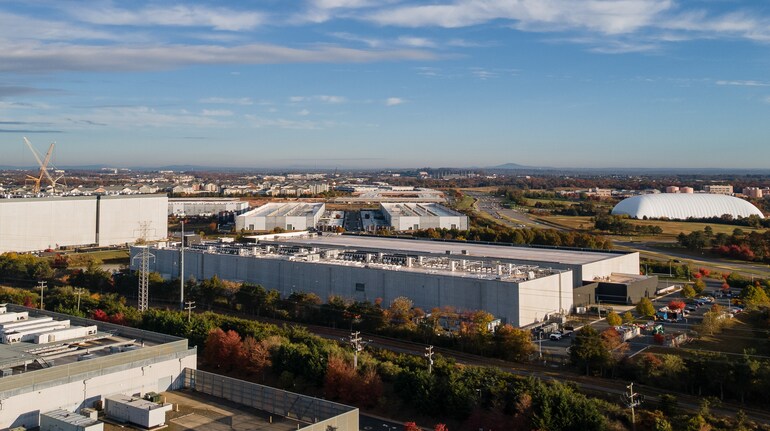

Data centres are expected to remain in focus ahead of the Union Budget 2026, as the sector continues to see strong structural growth driven by cloud adoption, artificial intelligence and rising data consumption. According to a Moneycontrol report, industry participants are seeking policy support on reliable power availability, access to green energy and easier financing, as data centres are highly energy-intensive infrastructure assets.
While the number of pure-play, directly listed data-centre operators remains limited, market participants remain optimistic given the scale of the opportunity and the strong visibility on long-term demand. A recent report by CRISIL Ratings estimates that revenues of India’s data-centre operators will grow at a 20–22 percent annual rate to reach around Rs 20,000 crore by FY28, supported by increased use of digital platforms by enterprises and consumers and rising demand from hyperscale cloud providers. To meet this demand, installed capacity is expected to nearly double to 2.3–2.5 gigawatts by March 2028.
Budget 2026 Live Updates: Nirmala Sitharaman’s Budget speech today
CRISIL attributes the sector’s expansion to three key factors: rapid adoption of public cloud services by enterprises, rising investments in artificial intelligence that require high-density computing infrastructure, and the rollout of 5G, which is driving demand for low-latency applications such as video streaming, gaming and internet-of-things services.
Looking beyond the medium term, a Jefferies report from November 2025 projected that India’s data-centre capacity is expected to quintuple to around 8 gigawatts by 2030, implying the addition of nearly 6.4 GW of new capacity over the next five years. This expansion would require an estimated $30 billion in facility capital expenditure, with typical build-out costs of $4–5 million per megawatt. Data-centre leasing revenues are projected to rise five-fold to $8 billion by the end of the decade, while large domestic players such as Reliance Industries, Bharti Airtel and AdaniConneX could together account for 35–40 percent of total capacity by 2030. Jefferies notes that surging data traffic, growing AI adoption, tighter data-localisation norms and near-full occupancy levels in hubs like Mumbai and Chennai are underpinning the sector’s momentum.
Against this backdrop, investors are increasingly looking at adjacent and ecosystem players for exposure to the theme. These include operators and platform players such as Bharti Airtel (Nxtra Data), Tata Communications, Reliance Industries (Jio Platforms) and real estate developer Anant Raj, as well as engineering and EPC firms like Larsen & Toubro and KEC International. Power and backup solution providers including ABB India, Cummins India, Kirloskar Oil Engines and Hitachi Energy, along with cooling solution specialists Blue Star and Voltas, are also seen as potential beneficiaries of the sector’s expansion. Analysts expect these stocks to be in focus during the Union Budget announcement on February 1.
Disclaimer: The views and investment tips expressed by investment experts on Moneycontrol.com are their own and not those of the website or its management. Moneycontrol.com advises users to check with certified experts before taking any investment decisions.Discover the latest Business News, Sensex, and Nifty updates. Obtain Personal Finance insights, tax queries, and expert opinions on Moneycontrol or download the Moneycontrol App to stay updated!
Find the best of Al News in one place, specially curated for you every weekend.
Stay on top of the latest tech trends and biggest startup news.