




Book Extract
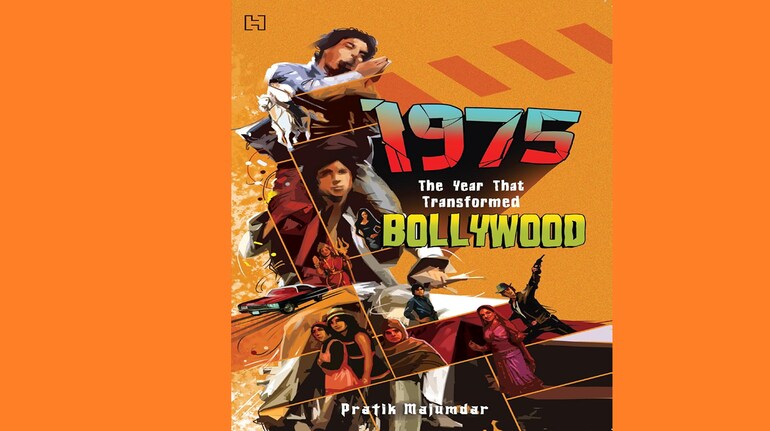
Excerpted with permission from the publisher 1975: The Year That Transformed Bollywood, Pratik Majumdar, published by Hachette India.
*******
THE IMPACT OF THE 1975 EMERGENCY ON THE HINDI FILM INDUSTRY
The Emergency declared by the then-prime minister Indira Gandhi on 25 June 1975, marked a dark chapter in India’s democratic history. For 21 months, the government suspended civil liberties, majorly censored the press and jailed many political opponents. This period had far-reaching impacts on all aspects of Indian society, including the Hindi film industry, which faced unprecedented scrutiny, censorship and repression.
One of the most notable films affected by the Emergency in 1975 was Sholay, a landmark Bollywood film. The original ending of Sholay was supposed to be the ex-police officer protagonist, Thakur Baldev Singh, exacting personal vengeance by killing the antagonist, Gabbar Singh. However, the government, under its strict censorship regime, mandated a change to this climax. The authorities believed that such a depiction of personal revenge could incite violence and promote vigilante justice, which was deemed unsuitable during a time of heightened political control. As a result, the film-makers were forced to create a less violent, more law-abiding conclusion where the antagonist is captured by the police, aligning the film with the state’s emphasis on law and order.
Another significant casualty of the Emergency was the film Aandhi (1975), directed by Gulzar. The film featured a woman politician who is estranged from her husband, which led to widespread speculation that the character was modelled after the then-prime minister Indira Gandhi. Despite the film’s nuanced portrayal that had no direct similarity with Indira Gandhi’s life, the government still perceived it as a threat, fearing it might incite the opposition to diminish Mrs Gandhi’s image. It is interesting to note that till the time Emergency was declared, Aandhi was running to packed houses for 23 weeks. It is rumoured that Sanjay Gandhi wanted Gulzar to speak on behalf of the Youth Congress on its objectives and plans, an offer that Gulzar politely declined. Consequently, Aandhi was banned, becoming a casualty of the regime’s intolerance towards any perceived critique or unflattering portrayal of its leaders. It was only after the Emergency ended and the government was ousted that Aandhi was re-released and found commercial and critical success, underscoring the arbitrary nature of the censorship it faced.
I.S. Johar’s Nasbandi (1978) was another film that faced severe backlash from the government. This satirical film critiqued the government’s policy of forced sterilizations, which was an abhorrent cornerstone of the Emergency’s population control measures. Nasbandi used humour and caricature to expose the draconian measures and human rights abuses carried out under this policy. The film featured lookalikes of prominent Hindi film stars, which further angered the establishment. As a result, Nasbandi was banned, and Johar faced significant personal and professional risks.
Some film-makers decided to tweak their storylines and treatment of films, fearing the wrath of the administration during this period. Launched in 1976, fresh from the success of Sholay, the film Ram Balram starred the same lead pair of Dharmendra and Amitabh Bachchan with the intention of shooting a fun film laden with action and comedy. The film was to depict the unique partnership of a thief and a cop who were hand-in-glove to commit frauds and schemes to make money. The writers however decided to change the mood of the film to that of a regular masala movie during the Emergency due to fears that showing a police officer in such a light might make the administration create problems for the film.
The most egregious example of censorship was perhaps the case of Kissa Kursi Ka (1977), directed by Amrit Nahata. This film was a scathing satire on the corruption and nepotism rampant in the government. Before its release, the film was submitted to the censor board, as is required. However, the original prints of the film were seized and destroyed by government operatives in an act that epitomized the extreme measures taken to stifle dissent. The destruction of Kissa Kursi Ka was a stark reminder of the lengths to which the government would go to suppress critical narratives and control the flow of information. The entire film was remade again in 1978, but the damage was already done by then.
Another important development during the Emergency was the banning of the songs of the most beloved and leading playback singer of the industry, Kishore Kumar. Kishore had refused to perform for free at a Congress rally where a whole lot of film personalities were also performing. The government wanted the industry’s help in promoting Mrs Gandhi’s 20-point programme for development. Kishore’s refusal irked the government authorities, especially the then–information-and-broadcast minister V.C. Shukla and joint secretary C.B. Jain, and his songs were promptly banned from being broadcast on All India Radio. Any song that featured Kishore Kumar was excluded from AIR during that period. It was only after Kishore wrote a letter to the government and then the subsequent falling of the government that the ban was lifted.
Actors like Dev Anand, Manoj Kumar and Amol Palekar too were harassed by Congress activists for their refusal to speak on behalf of the Youth Congress on Sanjay Gandhi’s request. Dev Anand in particular was so upset by the happenings during Emergency that he decided to form his own political party, the National Party of India, which also included eminent personalities like Vijaylakshmi Pandit (the sister of Jawaharlal Nehru) and Nani Palkhiwala. Dev, however, had to disband his party after he failed to gather sufficient funds for running it and getting representatives to stand for elections.
The Emergency period was akin to a dark age for the Hindi film industry. Film-makers were unfairly forced to navigate an environment of intense scrutiny with curtailed artistic expression, and any deviation from state-approved narratives could lead to severe consequences. This censorship stifled creativity and prevented important social and political issues from being explored in cinema.
However, the resilience of the industry and its practitioners eventually triumphed. Once the Emergency was lifted, banned films were re-released and received widespread acclaim, illuminating the public’s appetite for diverse and critical viewpoints. The legacy of this period serves as a potent reminder of the power of cinema to challenge authority and reflect societal truths as well as the importance of safeguarding artistic freedom from authoritarian forces.
**********
Pratik Majumdar, 1975: The Year That Transformed Bollywood, Hachette India, 2025. Pb. Pp. 208
The year 1975 to Bollywood is what 1939 is to Hollywood – the greatest year in film history of the respective industries. Sholay, Deewaar, Pratiggya, Aandhi, Mausam, Khel Khel Mein, Warrant, Chupke Chupke, Mili, Nishant and then ... who can forget the jaw-dropping success of Jai Santoshi Maa! Rarely a year sees the release of such a great number of films that go on to become cult classics.
With iconic films, leading actors, film-makers and music composers, shelved movies from that year and the impact of the Emergency on Hindi films, this guide to 1975's Bollywood offers wholesome information with fulsome entertainment.
Pratik Majumdar began his career in advertising, working in both India and London, before returning home to successfully run a family-owned homeopathy business.
A passionate cinephile, music enthusiast and published author of a collection of short stories, Pratik has amassed an impressive collection on Blu-rays, DVDs and vinyl records over the years. His articles on film have been published in the Telegraph, the Daily Eye and Kolkata Konnect. 1975: The Year That Transformed Bollywood is his first book on cinema.
Discover the latest Business News, Sensex, and Nifty updates. Obtain Personal Finance insights, tax queries, and expert opinions on Moneycontrol or download the Moneycontrol App to stay updated!
Find the best of Al News in one place, specially curated for you every weekend.
Stay on top of the latest tech trends and biggest startup news.