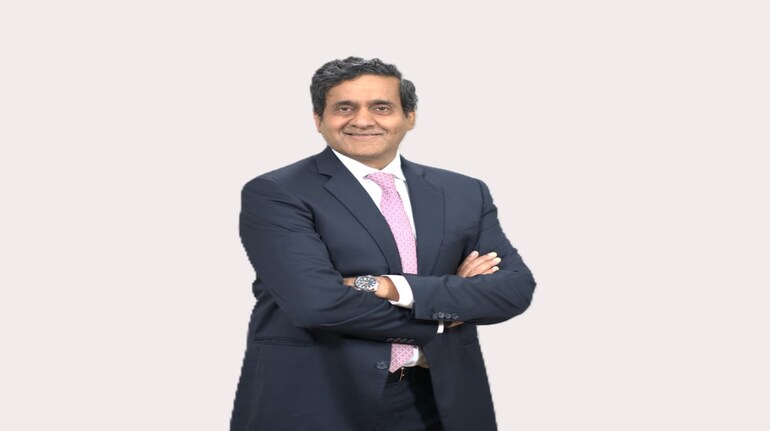
"We have been preparing for higher regulatory expectations well in advance,” said Nirmal Jain, Founder, IIFL Finance, in an exclusive interview to Moneycontrol this week when asked what plans IIFL Finance has, should it get classified as an upper layer NBFC in the next few months.
“The last two years have been about reset, resilience, and rebuilding trust. We have strengthened compliance frameworks, tightened risk governance, simplified business mix, and improved transparency with regulators and investors,” he said.
Jain didn’t seem too perturbed about the fluctuation in gold prices and its impact on IIFL Finance’s core gold loan business as loan-to-value (LTV) is at a comfortable level.
Edited excerpts:
Despite good numbers in Q3FY26, the market is not giving credit to the financial performance. What is hurting sentiments for IIFL Finance at this point?
The markets are reacting more to overhangs and perception risks than to quarterly numbers now. Over the last two years, we have gone through a period of exceptional disruptions, like regulatory action on gold loans, clean-up in microfinance (MFI) and unsecured portfolios, and, more recently, a procedural income-tax audit.
While none of these impact our business fundamentals today, the sentiment typically takes longer to normalise. Our focus is on consistent execution, transparency, and sustainable growth, and we believe markets eventually reward that.
You are seeing good growth in the gold business, which, to a large extent, is attributable to price appreciation, but there is also some element of tonnage growth. Do you see this trend sustainable?
Gold price appreciation has certainly expanded the addressable market, but what is equally important is that due to tighter credit norms and reduced availability of unsecured loans, demand for gold loans has structurally strengthened. We are seeing genuine tonnage growth, driven by customer reacquisition, post-embargo, improved branch productivity, and a broader shift away from unsecured credit. Growth rates may normalise from recent highs, but the underlying demand and business momentum remain sustainable.
Some players, especially private banks, are getting cautious on gold loans, given the price-led growth momentum. What is your view and is IIFL Finance altering its ticket sizes to shield from potential depreciation in gold prices?
Caution is prudent in any lending business, and we have always followed a conservative approach. Our average LTV is around 60–61 percent, well below the regulatory ceiling. This provides a strong buffer, even in the event of gold price volatility. We are not chasing growth by stretching ticket sizes or LTVs. Our focus is on risk-adjusted growth, not headline growth. We also closely monitor LTV and mark-to-market movements at the customer level through our branch network.
Until 6–9 months back, the company had confidence in unsecured loans, including micro, small and medium enterprise (MSME) segment. That seems to have changed and you are de-growing the book. What went wrong?
Nothing “went wrong”, in the sense of execution failure, but the risk-reward equation and the operating environment changed. After the regulatory clampdown on unsecured credit, availability shrank, and there was also some contagion from the MFI stress into individual unsecured loans. In hindsight, unsecured lending had expanded very rapidly across the industry. While the future can never be predicted with certainty, what matters is recognising early signals and quick course-correction. We saw early signs of stress as borrower leverage increased and took a conscious decision to step back, clean up, and recalibrate rather than defend growth. This has helped protect asset quality and earnings stability.
The housing finance arm is also going through some course correction. Can the unit be ready for listing in 3–6 months as reported in media?
Our immediate priority is strengthening the business model, asset quality, and leadership depth at the housing finance subsidiary. We have discontinued Micro LAP (loan against property), which will help us maintain asset quality at a much better level. We have a robust branch network, trained teams, and strong reach in smaller towns, and we will focus on our strengths by building in the affordable and emerging housing segments. The board will evaluate listing options at an appropriate time, keeping market conditions and business readiness in mind. Any decision on timing will be taken in a disciplined and value-accretive manner, not driven by headlines.
Deals are starting to happen in the MFI space and at benign valuations. What are your monetisation plans for IIFL Samasta?
The microfinance business has gone through phases of volatility multiple times, and we are now growing cautiously. Our current focus is on stabilising performance, improving collections, and restoring normalised profitability. Once the business demonstrates steady-state metrics and market conditions are conducive, we will evaluate strategic monetisation options, keeping shareholder value firmly in mind.
On a standalone basis, IIFL Finance is nearing the upper-layer threshold. Internally, what are your plans for that elevation?
We have been preparing for higher regulatory expectations well in advance. This includes stronger governance, deeper risk controls, conservative capital buffers, and greater use of co-lending and direct assignment to manage balance-sheet intensity. From a systems, compliance, and capital standpoint, we are already operating with an upper-layer mindset. We also plan to leverage our branch network and customer base to expand MSME lending and diversify the portfolio, so that growth is not overly concentrated on gold loans.
The last two years have been extremely difficult for the company, starting with the ban on gold loans in March 2024 and an IT-related issue a year later. What efforts are being undertaken to put these issues to rest forever?
The last two years have been about reset, resilience, and rebuilding trust. We have strengthened compliance frameworks, tightened risk governance, simplified business mix, and improved transparency with regulators and investors. They were not cosmetic changes but structural corrections. We believe this phase has made the institution stronger, more disciplined, and better prepared for long-term growth.

Discover the latest Business News, Sensex, and Nifty updates. Obtain Personal Finance insights, tax queries, and expert opinions on Moneycontrol or download the Moneycontrol App to stay updated!
Find the best of Al News in one place, specially curated for you every weekend.
Stay on top of the latest tech trends and biggest startup news.