BUSINESS
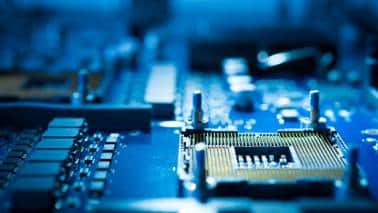
Will India’s dreams in semiconductors come to fruition?
Within India, the knowledge of designing devices and research into high-end semiconductor technology has no well-developed legacy to build upon, leaving the country at a serious disadvantage, though it has made some strides in packaging

BUSINESS
The Green Pivot: India’s solar energy capacity is growing but challenges remain
Solar projects are now looking economically attractive and IRRs (internal rate of return) look good. But the industry is heavily dependent upon imports, particularly from China, for modules and panels
BUSINESS
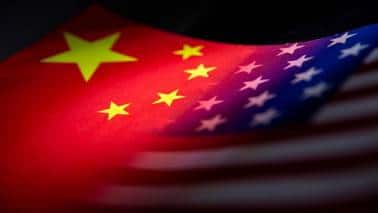
China’s weaponisation of rare earths threatens a crisis
China's latest move makes it clear that weaponisation of technologies was now being used as a geoeconomic weapon against the West. Rare earths form a part of the critical mineral spectrum and form a part of national security risk evaluations across much of the globe

BUSINESS
High political risk limits India’s investment play in Africa
With its own polity opaque, and its cheap state-driven capital designed to secure both resources and geopolitical advantage, Chinese state-run firms are quite comfortable working across both hugely corrupt and muddy political environments, quite content to deal with any government of the day irrespective of ideology or Western liberal principles
BUSINESS
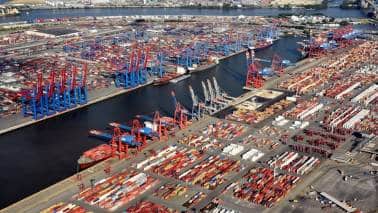
How will global supply chains look like in 2024? China, US hold the clues
If Beijing’s belligerence in the South China Sea worsens, which is a distinct possibility, given its hardliner games with the Philippines in recent weeks, then the US would be tempted to switch its supply chains away from the region
BUSINESS
Saudi Arabia, China And Russia: The fateful triangle that decides the future of oil prices
The slowdown in China and the clouds of recession over the global economy are pushing Putin and the Saudi crown prince together

BUSINESS
Copper faces an uncertain future globally
Long-term, much of the copper demand, and therefore its price, depends upon the green energy transition. China’s and the global economy’s slowdown cast a shadow in the near term
BUSINESS
Why Xi Jinping’s China remains a worry for the world
China’s economy is facing its worst time for business confidence, both offshore and within borders. Xi Jinping’s hardline socialist approach is making businesses think twice before investing

ENVIRONMENT
China’s low-carbon success highlights cracks in its political system
While the country’s carbon emissions are projected to go into a structural decline, new coal project approvals are soaring

BUSINESS
India’s climate change transition costs add to daunting challenges
For India funding challenges are formidable to say the least with the pressure on government to find the money for the net zero transition. But there are other very formidable socio-economic challenges too
BUSINESS
China-Iran-Russia nexus might see the Middle East emerge as a crucial fourth player
The ostensible weakening of the Chinese economy and that West-based capital is avoiding China is known. But less noted is the quiet flow of funds from the Middle East to China

BUSINESS
India’s agtech investments are rising but they’re not enough to transform the agri-sector
In the absence of transformative laws that incentivise fundamental changes, India’s agtech revolution cannot drive deep-seated, consequential tech-related change

BUSINESS
Qatar’s geopolitical clout on display even as global gas investments decline
Qatar’s China deals not only give Doha a bandwagon relationship with a rising superpower that has begun to establish itself in the Middle East and West Asia, but they also offer considerable regional and global geo-economic and geopolitical clout
TECHNOLOGY
What the US-China tech war means for Chinese private capital, semiconductors
China will have the ability to meld state and business interests moving capital from misallocated sectors to technology. It can also try and weaponise its supply chain advantages

POLITICS
How Israel has built its formidable military-technology-industrial complex
Israel is a technology powerhouse, one that developed, built and deployed technology that was both disruptive and risk minimizing, closely allied with the military but with a creep over into non-military areas
BUSINESS
India’s net-zero transition needs a loose purse and a risk meter
An RBI report states that the real challenge for India will be in arranging new investment, estimated to be in the range of $7.2 trillion (baseline scenario) to $12.1 trillion (accelerated scenario) till 2050
BUSINESS
Cost efficient nuclear energy is making a quiet global comeback
Small Modular Reactors promise to be the gamechanger that nuclear energy needs for its comeback. They can be built in half the time that the older larger reactors took—about five to six years—and they’re safer
BUSINESS
India will drive global aluminium growth, but challenges remain
India’s per capita aluminium consumption is just 2.5 kg against the global norm of 11 kg and is poised to grow. The challenge is to increase domestic capacity but with a low carbon footprint

BUSINESS
IEA road to net zero doesn't count all costs
The critical pathway to the transition will involve largescale combinations of blended finance, technology dispersion at low costs and globally dispersed production chains

BUSINESS
Lessons for India from China’s EV strategy
The core of the Chinese strategy is to build cost-efficient scale with policies targeting the complete value chain— from inbound raw materials across operations down to marketing and sales

BUSINESS
Spice route versus Silk route: Which one has the upper hand?
China has already taken the lead in building soft economic power with Europe, offering efficient trade connectivity. Is there room for one more pathway?

BUSINESS
India needs to fix its farm infrastructure urgently to avoid another tomato burst
India’s storage capacity for food grains is 790 million tonnes. But its cold storage facilities at 37.5 million tonnes are largely limited to four states and do not cater to large sections of agri-produce, each of which has distinct storage characteristics
BUSINESS
The world is unwilling to give up on fossil fuel subsidies
These pernicious forms of subsidies not only divert public and private funds from other useful economic activities, but also harm the environment
BUSINESS
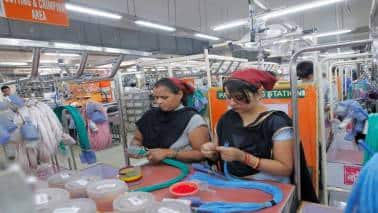
Beyond state schemes, India’s MSMEs need strategic govt push to flourish
The strategically focused push that envisages the MSME sector as a vital link in a massive industrial value chain-driven machine is missing