
BUSINESS
This year’s Economics Nobel Laureates’ dystopian view of AI
Acemoglu and Johnson have said that the big companies developing and deploying AI overwhelmingly favour automation (replacing people) over augmentation (making people more productive), which means many workers will be displaced, and those who remain employed will be subjected to increasingly demeaning forms of surveillance and control

BUSINESS
This year’s Economics Nobel highlights the role of political power in development
Acemoglu, Robinson and Johnson have in their research focused on the power relations between the masses and the elites and how these lead to different political systems, the economic policies that follow from different power configurations, and how changes occur in power relations

BUSINESS
The inflation horse bolts at the sight of vegetable prices
The question is that with some indicators indicating a slowdown in growth, would the MPC prefer to look through the vegetable price spike and focus on the fact that low core inflation signals there has been hardly any spillover from food prices

BUSINESS
The many mysteries of the Index of Industrial Production
Out of 23 manufacturing sectors, as many as 15 sectors had a higher production level in August 2018 than in August 2024

POLITICS
The shifting sands of the Middle East
The huge surpluses of the Gulf states are being invested not only in the region but across the world, from buying up football teams in the UK to the world’s largest technology fund. These huge investments underpin the links of these countries with global capital and with Israel and the US

BUSINESS
Swiggy IPO shines the spotlight on Quick Commerce opportunity
The near-term growth rate of Quick Commerce in India is expected to be 80-100 percent annually for the next two years driven by higher user adoption, geographic expansion, expanding AOVs (Average Order Value), basket size and category expansion

BUSINESS
Core sector production shrinks for the first time since February 2021
The contraction in the core sector in August is partly due to the base effect and if we consider April-August 2024, then growth has been 4.6 percent from the same period last year
BUSINESS
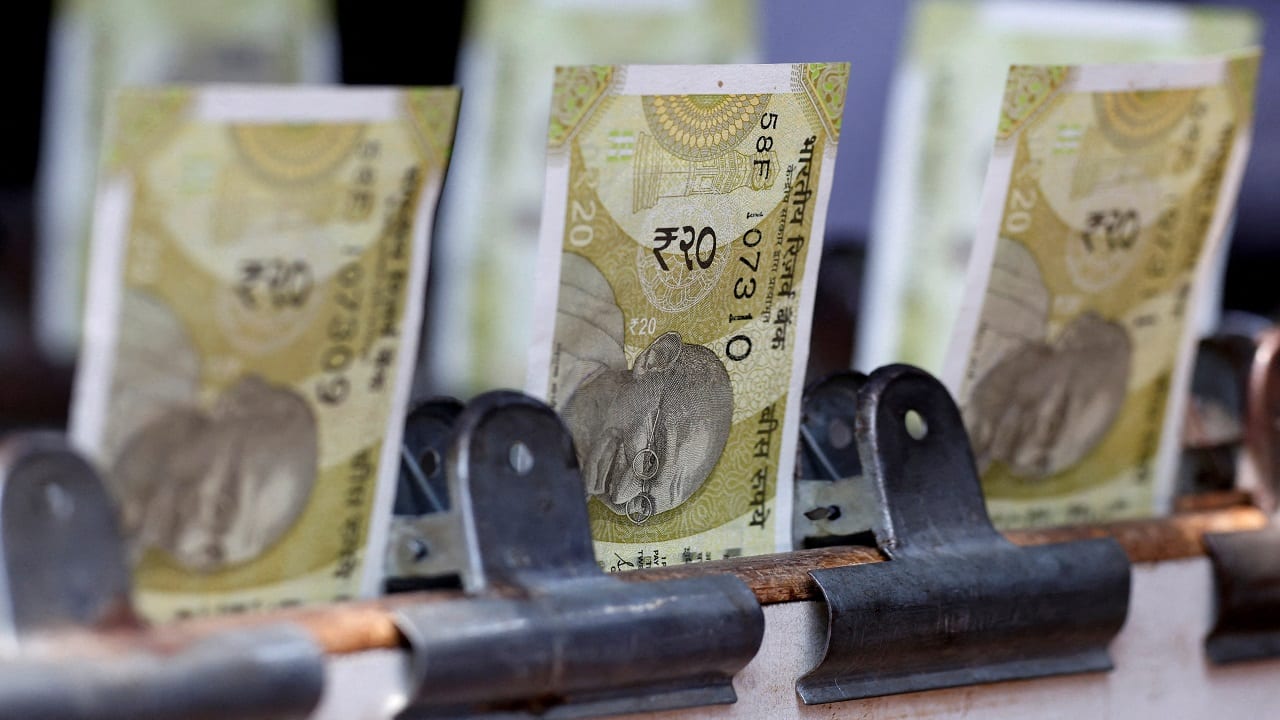
Colour of Money: Average salary highest in Ladakh, lowest in Punjab
Rural women are among the worst paid, with female workers in Uttar Pradesh earning an average salary of Rs 6333 per month, while the all-India average for women workers in rural India is Rs12396 per month. But salaried women in rural Puducherry earn an average of Rs 47,167 per month, 4.17 times their male counterparts

BUSINESS
The PRC’s 75th anniversary — Great Disorder Under Heaven
President Xi Jinping has warned that China must "be more mindful of potential dangers, be prepared for the worst-case scenarios, and be ready to withstand high winds, choppy waters and even dangerous storms"

BUSINESS
The Union Territory of Dadra and Nagar Haveli and Daman and Diu has the hardest workers in India
The PLFS survey finds that while 24.2 percent tireless urban male workers in the Union Territory put in 72-84 hours a week, an indomitable 0.2 percent slog over 84 hours in a week

BUSINESS
Unemployment rate down, but share of unpaid helpers counted as employed has increased
While the unemployment rate has come down by 2.6 percentage points over the last five years, the proportion of unpaid helpers has gone up by 6.1 percentage points

BUSINESS
Government numbers show share of workers in informal sector has increased in last five years
The percentage of workers employed in agriculture has increased from 42.5 percent in 2018-19 to 46.1 percent in 2023-24

BUSINESS
Government employment data reveal why household consumption demand has been low
The average earnings of both self-employed and salaried workers, after adjusting for inflation, have shrunk in the last five years

BUSINESS
Strong case for a policy rate cut -- The RBI Bulletin’s State of the Economy report
The report projects inflation to be sustained at below 4 percent in 2025-26 and GDP growth at well below the Indian economy’s potential growth rate. That makes a clear case for the central bank to start cutting the policy rate

BUSINESS
Will Fed rate cuts drive fund flows into emerging markets?
A BIS study identifies several factors that affect flows to emerging markets: interest rate differentials, the level of the USD, the level of the VIX, and finally there are the factors collectively called ‘’financial conditions’’. These are all proxies for gauging risk appetite

BUSINESS
Core inflation to stay down as wholesale prices of manufactured goods fall
Within manufactured products, the principal sector that saw its WPI decline substantially month-on-month was basic metals

BUSINESS
How a rising dependency ratio has forced China to increase its retirement age
According to the UN Population projections, India’s and China’s dependency ratios will be equal, at 44.6, in 2032. However, this ratio then starts to go up for China in leaps and bounds and by 2050, it’ll be at 69.1 percent, while India’s is projected to be a much lower 48.1 percent at that time

BUSINESS
Read these market signals ahead of the first Fed rate cut since March 2020
At the beginning of the week, the Fed Fund futures are signalling a 50 percent probability that the Fed will cut the policy rate by 50 basis points on September 18

BUSINESS
What the July IIP numbers say about consumption, capex
Consumer durables production was up a strong 8.21 percent, but the output of consumer non-durables was lower by 4.36 percent from a year ago

BUSINESS
August CPI shows encouraging signs in food disinflation
If we take the index values, the consumer price index was at 193 both in July and in August. In other words, month-on-month inflation for August is zero

BUSINESS
Decoding Economics: The impact of AI and what it means for investors
Two research papers from the Bank for International Settlements, a report from the International Labour Organisation and a Goldman Sachs Global Strategy paper, consider the likely effects of AI

BUSINESS
World Trade Report highlights dangers of the new power-based world order
The old rules-based system of the global economy, of which the WTO was the lynchpin, is now defunct. It has been replaced by protectionism, geopolitical trade blocs, beggar-thy-neighbour policies and a focus on security

BUSINESS
Jumpy markets fret about risks to soft landing
While the US market was rocked by the downward revisions to the jobs data on Friday, Fed Funds futures are still pricing in only a 25 basis point rate cut at the September 18 Fed meeting
BUSINESS
Decoding Economics: Will China’s 'overcapacity' lead to a flood of exports, hurting other countries?
A recent IMF working paper assesses the importance of China’s subsidies in shaping its exports and imports, and sheds light on the implications that China’s industrial policy can have for its trading partners