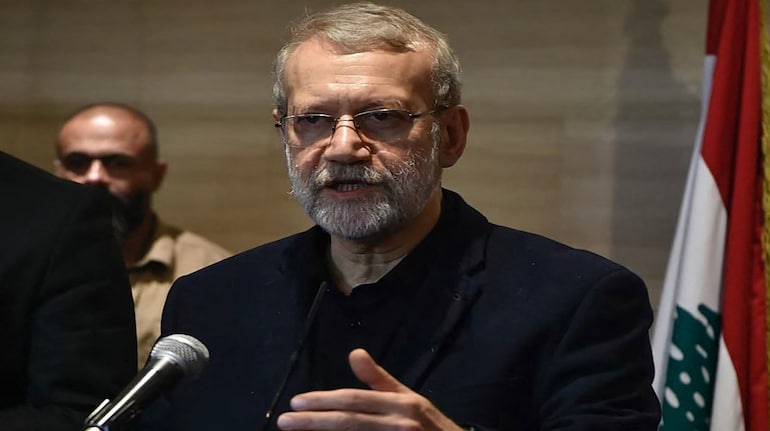

The targeted killing of Ali Larijani, Iran’s top national security official, by an Israeli strike marks a pivotal shift in the Islamic Republic’s wartime leadership.
Larijani, a veteran politician known for his pragmatism and decades of experience, had been central to Iran’s security strategy and diplomatic outreach. His death now leaves decision-making firmly in the hands of hardliners, raising difficult questions about the prospects for any diplomatic solution and the ability of the U.S. to negotiate a swift exit from the widening conflict.
Tehran, late Tuesday night, confirmed that Larijani was killed alongside his son, Morteza, and security aides. The deaths came soon after the Israeli military targeted Gholamreza Soleimani, head of Iran’s Basij paramilitary force, describing his killing as "an additional significant blow to the regime’s security command-and-control structures".
Israeli Defense Minister Israel Katz confirmed Larijani had been "eliminated," and a government spokesperson said, "solving the conflict involves hammering the ayatollah regime until they are gone. We will not allow one ayatollah regime to be replaced with another ayatollah regime.”
Both funerals are scheduled for Wednesday, according to Iran’s semi-official Mehr news agency.
President Masoud Pezeshkianh expressed "deep sorrow and regret" over Larijani’s death. "I saw nothing from him but benevolence, insight, companionship, and foresight," he has been cited by Fars news agency.
Larijani: A key figure in Iran’s leadership
Larijani, 67, served as secretary of Iran’s Supreme National Security Council and had been an insider of the Islamic Republic’s political establishment for decades. He maintained close ties across factions and with the late Supreme Leader Ayatollah Ali Khamenei, influencing major national decisions. In the months leading up to the war, he traveled to Gulf-Arab states and Moscow, meeting Russian President Vladimir Putin, reflecting his central role in security and diplomacy.
Larijani had also been instrumental in discussions surrounding Iran’s nuclear program and in shaping Iran’s military and political strategies during the early weeks of the war. Known as a pragmatic voice, he was seen as someone who could potentially connect military operations with diplomatic channels.
Hardliners gain influence
Larijani’s death consolidates power among hardliners.
Mohammad-Baqer Qalibaf, parliament speaker and former commander of Iran’s police and Revolutionary Guards, is likely to gain influence, while ultra-conservative clerics fill the vacuum left by pragmatic officials. Larijani was the only senior figure connecting the current leadership with policies of former moderate President Hassan Rouhani and the nuclear deal of 2015.
Foreign Minister Abbas Araghchi, seen as one of Iran’s most experienced diplomats, remains in office. However, the hardline tilt is likely to marginalise other pragmatic figures and reduce the likelihood of diplomatic engagement.
Trita Parsi, executive vice president of the Quincy Institute, said Larijani's assassination could complicate any US effort to negotiate an exit from the Iran war, even if it does not weaken Tehran’s ability to continue fighting.
Parsi, in an interaction with Al Jazeera, described Larijani as a "consensus maker-in-chief" within Iran’s system, playing a critical role in aligning different factions rather than acting as the final decision-maker. His removal, Parsi says, eliminates one of the few figures capable of bridging internal divisions and carrying the wider leadership into potential negotiations.
Parsi noted that Iran had already prepared for such targeted strikes following last year’s conflict, putting in place replacements for key positions to ensure continuity. As a result, he said, the killing is unlikely to disrupt the country’s warfighting capacity.
Instead, its most significant impact may be on diplomacy. The assassination narrows the pool of interlocutors who could credibly negotiate with Washington and deliver a consensus within Iran’s leadership. “Those are figures being eliminated,” Parsi said, adding that this reduces the chances of finding an “off-ramp” for Trump.
Meanwhile, Iranian army chief Amir Hatami vowed "decisive and regrettable” retaliation for Larijani’s death. The Revolutionary Guards reported launching missiles at central Israel “in revenge for the blood of martyr Dr Ali Larijani and his companions.” Parliament speaker Qalibaf warned that traffic through the Strait of Hormuz “won’t return to its pre-war status,” signaling prolonged disruption in the Persian Gulf.
Maj. Gen. Ali Abdollahi, commander of Iran’s Khatam al-Anbiya Central Headquarters, warned that US President Donald Trump “must wait for our surprises,” adding that the armed forces’ response would be “more devastating than the actions and imagination of the enemy” and would continue “until his surrender,” according to Tasnim news agency.
In a separate statement, senior advisor Ali Akbar Velayati said Iran would “deliver a strong blow to the sinister face of global arrogance,” a term commonly used by Tehran to refer to the United States and Israel, Tasnim reported.
Larijani, it should be noted, had been viewed as a bridge between Iran’s military and diplomatic spheres. With him gone, pathways for negotiation may narrow.
Israeli Ambassador to the UN, Danny Danon, stated that potential Iranian leaders exist who could pursue diplomacy, but stressed that any negotiations would require a significant change in Iran’s leadership direction.
On the other hand, Araghchi has, however, hailed Iran’s institutional resilience.
In an Al Jazeera interview, he said, "The presence or absence of a single individual does not affect this structure… the political system in Iran is very solid. Of course, individuals are influential, each plays their role, but the system itself remains strong".
Veteran politicians framed Larijani’s killing as part of the “glorious line of sacrifice” for the Islamic Revolution. Saeed Jalili described it as strengthening Iranians’ resolve, while Ali Akbar Velayati condemned US and Israeli actions, calling Larijani a “revolutionary.”
The deaths of Larijani and Soleimani remove senior figures who managed both security operations and diplomatic channels. Hardliners now dominate the top echelons of Iran’s leadership, reducing the likelihood of early diplomatic solutions.
With Tehran’s command now more rigid and less strategically flexible, the path toward a negotiated end to the war seems to be longer and more uncertain.

Discover the latest Business News, Sensex, and Nifty updates. Obtain Personal Finance insights, tax queries, and expert opinions on Moneycontrol or download the Moneycontrol App to stay updated!
Find the best of Al News in one place, specially curated for you every weekend.
Stay on top of the latest tech trends and biggest startup news.