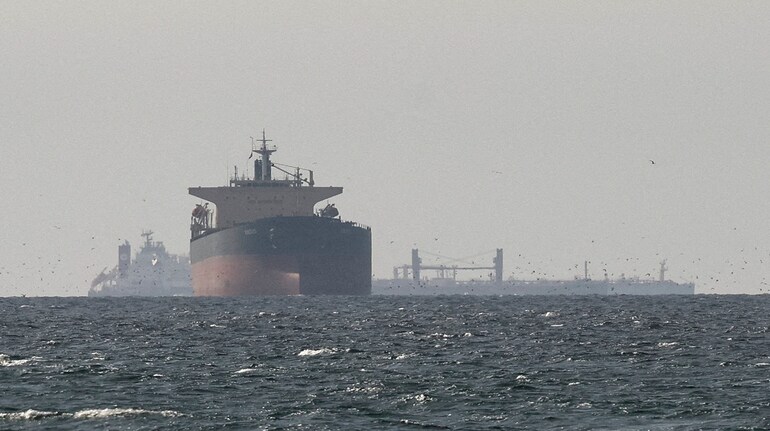
The Strait of Hormuz has effectively become a pressure point in the ongoing conflict. Iran has not formally “closed” it in a traditional sense, but through attacks, threats and rising risks to ships, it has made passage through the route extremely difficult.
The United States has said it will reopen the strait, but that is proving far more complicated than it sounds. At the same time, there are mixed signals on diplomacy. Washington has spoken about possible talks, while Iran has publicly denied that any negotiations are underway.
On the ground, the situation remains tense, with multiple commercial vessels already hit since the conflict began, the New York Times reported.
Why this narrow stretch of water is so important
The Strait of Hormuz is one of the most critical energy routes in the world. It connects the Persian Gulf to the open ocean and is the only way for oil and gas exports from major Gulf producers to reach global markets.
At its narrowest point, the usable shipping lanes are just a few kilometres wide. Yet through this small passage flows roughly 20 percent of the world’s oil and a significant share of liquefied natural gas.
Much of this energy is headed to Asian markets, including India, China, Japan and South Korea, which makes any disruption immediately global in its impact.
How Iran is slowing down traffic
Iran is not relying on a single tactic. Instead, it is using a mix of methods that take advantage of geography and proximity.
Missiles and drones have been used to target ships in and around the Gulf. Naval mines are believed to have been deployed, creating the risk of damage even without direct confrontation. Smaller boats can be used to harass or swarm commercial vessels, adding another layer of uncertainty.
The geography of the strait works in Iran’s favour. The waters are shallow, the lanes are narrow, and ships are forced to move close to the coastline, where they are easier to monitor and target.
Even limited attacks have had a big impact. Insurance costs for ships have surged, and many operators are unwilling to risk passing through the strait at all.
Why this is hard to fix militarily
Reopening the strait is not just about sending more ships into the region.
Even after sustained strikes on Iranian military sites, the threat to shipping has not been fully eliminated. Iran’s approach relies on dispersed, mobile systems that are difficult to locate and destroy completely.
A military fix sounds straightforward on paper, but it’s anything but simple in practice. It would mean escorting commercial tankers, clearing sea mines and keeping constant watch from the air and sea. Even then, there’s no guarantee ships would move safely.
The only way to completely remove the threat would be to take control of the coastline itself, which would mean a far bigger and much riskier operation. That’s not something any country can do lightly.
The economic ripple effect
The impact is already being felt well beyond the Gulf.
Energy prices have moved up sharply, and that is showing up in fuel costs across countries. Those that rely heavily on oil and gas coming through this route are feeling it the most.
When fuel gets expensive, it doesn’t stay limited to petrol pumps. It pushes up transport costs, manufacturing expenses and eventually everyday prices. That’s how it feeds into inflation.
Some countries have already stepped in with emergency measures to manage supply. Even so, releasing oil from reserves hasn’t been enough to bring prices down in a meaningful way.
Why this gives Iran leverage
For Iran, the Strait of Hormuz is more than just geography. It’s one of its strongest pressure points.
It doesn’t need to shut the route completely. Just making it risky or unpredictable is enough to affect global markets and put pressure on its rivals.
Of course, there’s a downside. Iran also uses the same route to export its own oil. But right now, the strategy seems to be about raising costs for others, even if it comes with some cost to itself.
The bigger picture
What’s unfolding in the Strait of Hormuz shows how a relatively small stretch of water can have an outsized impact on the global economy.
It also highlights the limits of military solutions in such situations. As long as the underlying conflict continues, keeping the strait fully open and safe may depend as much on diplomacy as on force.
Discover the latest Business News, Sensex, and Nifty updates. Obtain Personal Finance insights, tax queries, and expert opinions on Moneycontrol or download the Moneycontrol App to stay updated!
Find the best of Al News in one place, specially curated for you every weekend.
Stay on top of the latest tech trends and biggest startup news.