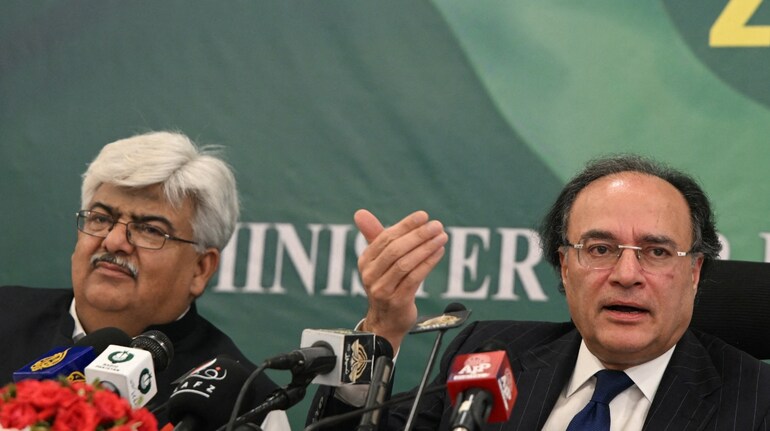
In a dramatic show of dissent, Pakistani journalists on Wednesday staged a walkout during finance minister Muhammad Aurangzeb’s post-budget press conference due to lack of transparency
The journalists were protesting the Pakistan government's opaque handling of budget details and accusing it of concealing crucial facts about new tax measures.
The boycott came after the minister unveiled Pakistan’s Rs. 17.57 trillion federal budget for the fiscal year 2025–26.
Reporters, who were denied a technical briefing on the Finance Bill 2025 by the Federal Board of Revenue (FBR), accused the authorities of deliberately keeping the media in the dark, particularly about the true extent of the new tax burden being placed on citizens, Pakistan-based Dunya News reported.
The finance secretary attempted to placate the press, but the finance minister proceeded with the briefing for the few reporters who stayed back. Some of the journalists returned later.
Ambiguity & confusion
The journalists wanted clarity on various tax-related aspects of the Budget from FBR, which is Pakistan’s top tax authority responsible for collecting federal taxes and enforcing fiscal laws.
For instance, the Pakistan government offered some relief to the middle class by slashing the tax rates across income groups in the budget. However, according to a report in Dawn, there was some discrepancy in the income tax rate applicable on the lowest taxable bracket announced by the Pakistan government and the tax rate actually mentioned in the finance bill.
Moreover, the Pakistani government set an aggressively high revenue target of Rs 14.13 trillion for FY26 — an 18.7% increase over the revised estimate of Rs 11.9 trillion. This, despite falling short of its tax collection target by Rs 1.07 trillion in the current fiscal year.
The target has assumed Rs 840 billion in new tax measures and Rs 1.39 trillion in automatic tax gains from projected inflation (7.5%) and GDP growth (4.2%). However, given the government’s repeated failures to meet its fiscal goals, the math appeared overly optimistic, if not unrealistic, a report in The Dawn suggested.
The reliance on inflation-driven revenue growth and aggressive assumptions around compliance improvement come with significant execution risks.
At the same time, the government also projected a sharp reduction in the budget deficit — from 5.6% of GDP (Rs 6.44 trillion) this year to 3.9% (Rs 5.04 trillion) next year — based heavily on an anticipated Rs 1.46 trillion cash surplus from provinces. But with provincial governments having missed even this year’s lower surplus target of Rs 1.22 trillion (managing only Rs 1.01 trillion), the expectation of a higher surplus seemed implausible.
The Dawn report said that the overall fiscal plan banks on Rs 2.26 trillion in expenditure containment — primarily through lower debt servicing costs and cuts to development and public welfare spending — raising further questions about whether these projections are politically and economically feasible.
Simply put, the numbers don’t seem to add up.
Prioritising guns over bread
Meanwhile, instead of addressing Pakistan’s crumbling infrastructure, joblessness or fiscal imbalances, the Shehbaz Sharif government chose to fatten military coffers, in line with its long-standing India-centric security doctrine.
It announced a hefty 20% rise in defence allocation in the wake of heightened border tensions with India.
Despite a brief de-escalation after May 10 military-level talks, Islamabad continues to flex its military muscle rather than investing in civilian needs.
The budget speech, filled with nationalistic rhetoric, made no attempt to justify the ballooning military spending. As has become tradition, details of defence expenditures were kept opaque, bypassing parliamentary scrutiny.
Discover the latest Business News, Sensex, and Nifty updates. Obtain Personal Finance insights, tax queries, and expert opinions on Moneycontrol or download the Moneycontrol App to stay updated!
Find the best of Al News in one place, specially curated for you every weekend.
Stay on top of the latest tech trends and biggest startup news.