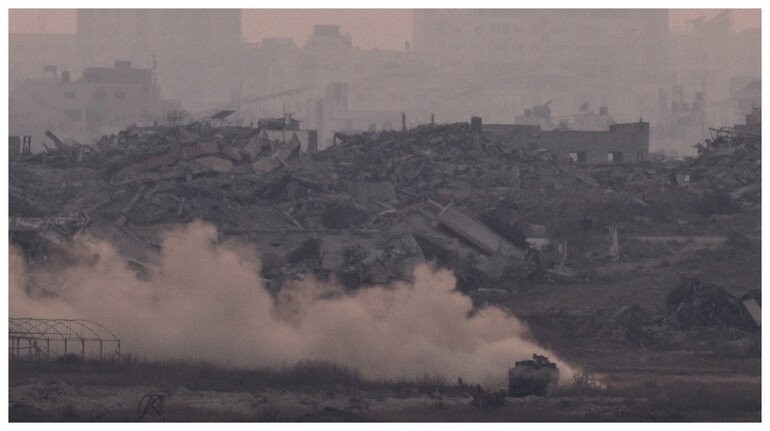
Nearly two years into its war against Hamas, Israel is facing mounting criticism from international allies and experts at home for its failure to plan for what comes next in Gaza. A weekend of deadly aid-related shootings by Israeli soldiers has reinforced warnings that the lack of a postwar governance plan is fuelling anarchy, complicating humanitarian relief, and obstructing long-term stability, the New York Times reported.
No government, no order, no safety
Israel’s military campaign has devastated Gaza’s infrastructure and severely weakened Hamas’s governing capacity. But in the absence of a clear transitional authority — military or civilian — large parts of Gaza have descended into chaos. Law enforcement, aid coordination, and basic order have broken down, leaving civilians to jostle for food and risking their lives amid violence at aid distribution points.
Israel has rejected reinstating the Palestinian Authority in Gaza and has refused to outline an alternative plan, drawing accusations that it is choosing instability over compromise. “It’s anarchy in Gaza,” said Shira Efron of the Israel Policy Forum. “And without addressing what comes next, there won’t be a solution.”
Two aid systems, both failing
Food distribution in Gaza is now split between two competing approaches. The United Nations’ system, which operated hundreds of local distribution points, has been sidelined. Israel now backs a new system run by the American-led Gaza Humanitarian Foundation, which hands out food from just a few centralized locations. The result: civilians must walk long distances into insecure areas to access aid, often risking death under Israeli fire.
Israel claims this new model helps prevent Hamas fighters and looters from seizing supplies. But critics say it pushes civilians into combat zones, while Israeli forces regularly use live ammunition to control hungry crowds instead of nonlethal alternatives. Over the weekend, two such incidents left several civilians dead — one near the UN aid convoy and another near an Israeli-approved site.
Mounting pressure from abroad
The growing violence and disarray have amplified Israel’s diplomatic isolation. On Monday, 25 nations — including the UK, France, and Japan — issued a rare joint statement condemning Israel’s conduct in Gaza and calling for an immediate end to the war. Critics argue that Israel’s refusal to plan for a peaceful transition after Hamas not only prolongs the conflict but also prevents effective humanitarian relief.
A warning long ignored
Warnings about the risks of a power vacuum in Gaza came early. US officials, Israeli generals, and humanitarian experts urged Prime Minister Benjamin Netanyahu to prepare a postwar strategy. But Netanyahu, under pressure from far-right allies who oppose any Palestinian authority in Gaza, rejected those calls. Instead, he insisted that planning could wait until Hamas was fully defeated — a goal that has remained elusive.
The consequences became tragically visible as early as March 2024, when an Israeli attack on a crowd surrounding an aid convoy left dozens dead. Similar patterns continue nearly a year later. Analysts say the persistent instability and food shortages could ultimately allow Hamas or criminal networks to reassert control.
Unending chaos or deliberate strategy?
Some Israeli critics now suspect the disorder may be more than just poor planning. “If proper arrangements aren’t made, it’s because the Israeli government doesn’t want them made,” said former Prime Minister Ehud Olmert.
Whether by design or neglect, the lack of a clear power transition in Gaza is feeding a humanitarian and political crisis that neither Israel nor the international community can afford to ignore much longer.
Discover the latest Business News, Sensex, and Nifty updates. Obtain Personal Finance insights, tax queries, and expert opinions on Moneycontrol or download the Moneycontrol App to stay updated!





Find the best of Al News in one place, specially curated for you every weekend.
Stay on top of the latest tech trends and biggest startup news.