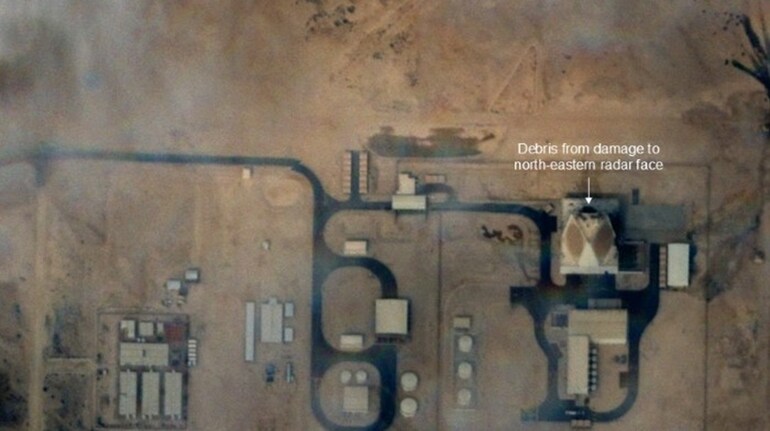

The United States and its allies have some of the most advanced air defence systems in the world. Yet the current conflict with Iran has exposed a problem that is less about technology and more about economics.
Iran is deploying large numbers of relatively cheap attack drones, while the systems used to stop them are far more expensive. This imbalance has become one of the defining features of the conflict, the New York Times reported. Even when the drones are successfully intercepted, the cost of stopping them can be many times higher than the cost of launching them.
What are Iran’s Shahed drones?
Iran’s most widely used drone in recent attacks is the Shahed series, a type of one way attack drone often described as a “loitering munition.” Instead of returning to base like a conventional drone, it flies toward a target and detonates on impact.
The Shahed 136, one of the best known versions, has a triangular shape and a wingspan of roughly 11 feet. It carries an explosive payload in its nose and can travel long distances before striking its target. Analysts say the drone can reach ranges of up to about 1,200 miles, making it capable of hitting targets across much of the Middle East.
Another reason the drone is difficult to counter is how it is launched. Shahed drones can be fired from simple mobile launchers mounted on trucks, which makes them easier to hide and harder for opposing forces to track.
Why these drones are so inexpensive
Unlike many Western military systems, the Shahed drone is built using relatively simple technology. Many components are based on commercially available electronics rather than specialised military hardware.
Because of this, analysts estimate the cost of producing a single Shahed drone at roughly USD 20,000-50,000, depending on the version. Iran has reportedly manufactured thousands of them, and similar drones have also been produced by Russia for use in Ukraine. The relatively low cost allows Iran to launch drones in large numbers, forcing defenders to respond repeatedly.
The cost of shooting them down
The real problem appears when these drones are intercepted. One of the main systems used by the United States and its allies is the Patriot air defence system.
Patriot interceptor missiles can cost more than USD 3 million each. In other words, destroying a drone that may cost around USD 30,000 can require a missile that is roughly 60 times more expensive.
Military analysts often describe this as an unfavourable cost exchange ratio. Arthur Erickson, the chief executive of Texas drone manufacturer Hylio, said the ratio could range from about 10 to 1 to as much as 60 or 70 to 1 in Iran’s favour.
Are there cheaper ways to stop drones?
Because of this imbalance, the US military has been experimenting with other counter drone systems. One option is the Raytheon Coyote interceptor, a small drone designed to hunt and destroy other drones. Each Coyote interceptor costs about $126,500, significantly cheaper than a Patriot missile but still several times more expensive than a Shahed.
Other systems attempt to disable drones rather than destroy them. These include electronic warfare equipment that jams the signals guiding the drones, as well as experimental technologies using lasers or microwave energy.
While these tools can sometimes be cheaper, they are not always reliable and can interfere with civilian communications.
Why this problem could grow
The challenge highlighted by Iranian drones is not limited to the Middle East. Military analysts say the same issue is emerging in conflicts around the world. Cheap drones are becoming easier to produce, while the missiles designed to intercept them remain expensive and limited in supply.
Recent procurement data suggests the United States manufactures only hundreds of interceptor missiles each year. In a prolonged conflict where thousands of drones may be launched, those numbers could become a constraint.
For now, US military leaders say they have enough defensive weapons for the current situation. But the growing use of inexpensive drones is forcing militaries to rethink how air defence systems should work in future wars.
Discover the latest Business News, Sensex, and Nifty updates. Obtain Personal Finance insights, tax queries, and expert opinions on Moneycontrol or download the Moneycontrol App to stay updated!
Find the best of Al News in one place, specially curated for you every weekend.
Stay on top of the latest tech trends and biggest startup news.