




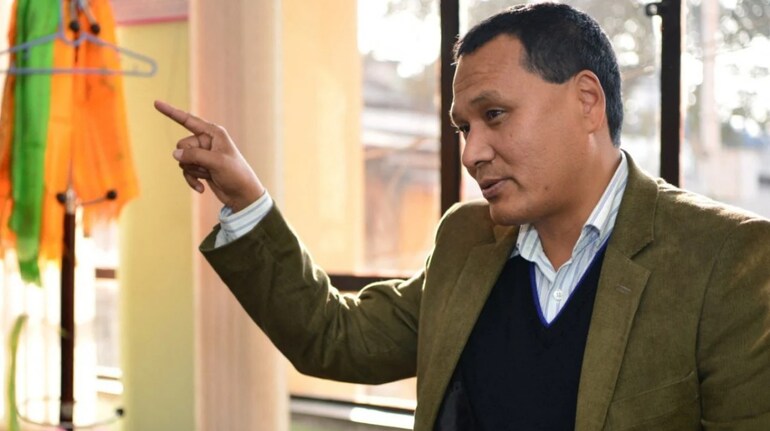
Kulman Ghising, the widely respected head of Nepal Electricity Authority (NEA), has emerged as the frontrunner to lead Nepal’s proposed interim government. Although not yet officially appointed, his name has gained momentum after both Kathmandu Mayor Balen Shah and former Chief Justice Sushila Karki stepped aside from consideration.
Ghising’s name came to the fore a day after Karki – Nepal's former chief justice – withdrew her candidacy within hours, citing constitutional and legal hurdles as well as her own reluctance. She had confirmed taking up the post on Wednesday evening, and acknowledged the trust the young protesters placed in her to guide the government during this transitional period.
For many Nepalis frustrated with entrenched corruption and political gridlock, Ghising represents a rare figure with a proven record of competence and integrity.
From a rural village to national recognition
Born on November 25, 1970, in Bethan, Ramechhap, Ghising’s rise from a rural background to national prominence is often described as a story of discipline and dedication. He studied electrical engineering at the Regional Institute of Technology in Jamshedpur, India, before completing further studies at Pulchowk Engineering College in Nepal. Later, he earned an MBA to strengthen his management and leadership skills.
Ghising joined the NEA in 1994 as an electrical engineer and steadily moved through technical and administrative roles, including responsibilities in major hydropower projects. His early career built a solid foundation in project execution and system management. These experiences prepared him for the leadership challenges he would face as the head of Nepal’s main power authority.
Ending the era of load-shedding
When Ghising became NEA Managing Director in 2016, Nepal was suffering daily power cuts of up to 18 hours. Businesses, households and public institutions had resigned themselves to blackouts. Ghising implemented a combination of better demand management, improved generation planning and stricter oversight of power distribution. Within a short time, the country’s notorious load-shedding was eliminated. The NEA also began turning a profit under his watch, reinforcing his reputation as a results-oriented public servant.
Why his name resonates now
Nepal’s current political transition follows weeks of large protests led by young citizens demanding clean governance, jobs and the lifting of a controversial social media ban. In this context, Ghising stands out as a non-partisan technocrat who has already delivered concrete results in a key public sector. Supporters argue that his track record of efficiency, accountability and reform could translate into effective leadership of an interim administration.
Challenges ahead if elected
Should Ghising be chosen to lead the interim government, he would inherit a deeply divided political environment, widespread public anger and high expectations for quick change. Managing these pressures will require consensus-building skills, transparent decision-making and an ability to move from technocratic management to political leadership.
Situation on ground
The army has imposed a curfew to restore order in the Himalayan nation of 30 million people, after the worst violence in two decades ousted the government and left parliament ablaze on Tuesday.
Demonstrations began on Monday in Kathmandu against the government's short-lived ban on social media and over corruption, with at least 19 people killed in the crackdown.
A day later, protests escalated into an outpouring of rage nationwide, with government offices, a major hotel and other buildings set on fire. In the chaos, more than 13,500 prisoners broke out of jail.
Discover the latest Business News, Sensex, and Nifty updates. Obtain Personal Finance insights, tax queries, and expert opinions on Moneycontrol or download the Moneycontrol App to stay updated!
Find the best of Al News in one place, specially curated for you every weekend.
Stay on top of the latest tech trends and biggest startup news.