
A US Senate Intelligence Committee hearing this week turned into a sharp exchange over a basic but critical question. Who decides when a threat is “imminent”?
Director of US National Intelligence Tulsi Gabbard made her position clear. She said it is ultimately the president who determines what qualifies as an imminent threat. The comment came as she was asked to explain the gap between President Donald Trump’s public warnings about Iran and an internal assessment from her own aide that Iran posed no immediate danger.
That answer did not go down well with several lawmakers, the New York Times reported.
Senator Jon Ossoff pressed her directly, arguing that assessing threats is precisely what the intelligence community is meant to do. The exchange laid bare a tension that has been building for months.
The trigger: A resignation and a conflicting assessment
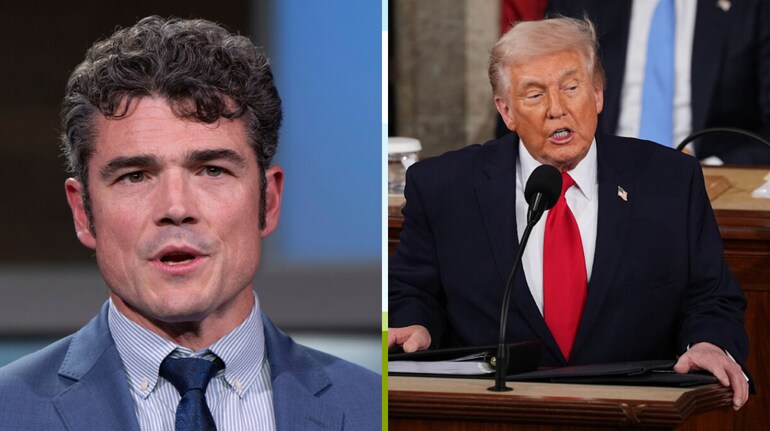
The issue escalated after Joe Kent, a senior aide to Gabbard, resigned over his opposition to the war in Iran. In a letter to Trump, he wrote that Iran did not pose an imminent threat to the United States and said he could not support the conflict.
That letter created a problem for the administration. It directly contradicted the justification for military action, which Trump has framed as a response to an urgent threat. Gabbard chose not to publicly distance herself from Kent. Instead, she shifted the focus,saying the definition of an imminent threat rests with the president. It was a careful move, one that avoided directly contradicting Trump.
Two versions of the same intelligence
The hearing also exposed inconsistencies in how intelligence was being presented. In her written submission to lawmakers, Gabbard said Iran’s nuclear programme had been “obliterated” in earlier strikes and that there had been no efforts to rebuild it.
But in her oral remarks, she said intelligence agencies believed Iran had been trying to recover from damage to its nuclear infrastructure before the current conflict.
When questioned about the difference, she said she had shortened her spoken statement due to time constraints. Senator Mark Warner pushed back, suggesting that the omitted details were the ones that did not align with the president’s position.
A different tone from the CIA
CIA Director John Ratcliffe took a more direct approach. He described Iran as a long- standing threat and said it posed an immediate danger at present. At the same time, he linked the current situation to past policy decisions, arguing that earlier administrations had allowed Iran’s capabilities to grow.
His response highlighted a contrast in how senior officials are navigating the same political environment. While Gabbard avoided defining the threat independently, Ratcliffe framed it in broader, ongoing terms.
What intelligence officials are not saying
Throughout the hearing, intelligence leaders avoided answering some of the most sensitive questions. They declined to detail what information was provided to Trump before the decision to strike Iran or how they currently assess the progress of the war.
Gabbard offered only a limited update, saying Iran’s leadership had been significantly weakened by US and Israeli strikes but that the government remained intact.
Lawmakers also pressed her on whether intelligence had warned about potential Iranian action in the Strait of Hormuz. She refused to comment on what advice was given to the president.
A wider shift in how threats are framed
This is not just about one hearing or even just Iran. It points to something bigger in how intelligence is being handled.
Traditionally, intelligence agencies are expected to lay out the facts as they see them, separate from politics. Presidents can then decide how to act on that information. The analysis and the decision-making are meant to be two different things.
What Gabbard suggested blurs that line. If the president is the one defining what counts as a threat, then the role of the intelligence agencies starts to look different.
You can see hints of that shift elsewhere too. In the latest threat assessment, some issues that featured earlier, like climate risks or public health, have taken a back seat. The focus has moved more toward border security and homeland defence, even as Russia and China remain central concerns.
Why this matters now
At the end of the day, this comes down to trust. If intelligence starts to be seen as shaped by political priorities, it becomes harder to know what is analysis and what is messaging.
That matters a lot when decisions about conflict and national security are being taken in real time. The hearing did not settle that question. It just made the gap more obvious.
Discover the latest Business News, Sensex, and Nifty updates. Obtain Personal Finance insights, tax queries, and expert opinions on Moneycontrol or download the Moneycontrol App to stay updated!
Find the best of Al News in one place, specially curated for you every weekend.
Stay on top of the latest tech trends and biggest startup news.