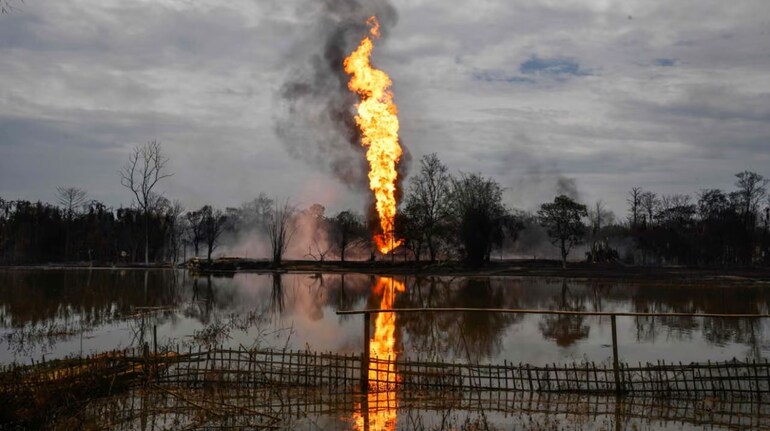
As tensions escalate again in parts of the Middle East, memories of one of the region’s worst environmental disasters are resurfacing. During the 1991 Gulf War, as Iraqi forces pulled out of Kuwait, they set fire to more than 600 oil wells. What followed was hard to ignore. For months, thick black smoke kept rising into the sky, turning daytime into a dull, grey haze across much of the Gulf.
Satellite images from that time, reported by outlets like BBC and The New York Times, showed just how far the smoke was spreading, drifting across Kuwait, Saudi Arabia and beyond. It wasn’t something confined to one country. The impact was clearly spilling across the region.
It took nearly nine months to bring the fires under control. In that time, huge amounts of oil burned, sending soot, ash and toxic gases into the air. Air quality dropped sharply, and in many places, daily life was affected by the constant smoke hanging over cities and towns.
Closer to the fires, the effects were immediate. Reports from Reuters and BBC at the time described black rain falling in parts of Kuwait and Saudi Arabia. The soot mixed with moisture and came down as an oily residue, coating buildings, cars and open land.
As images of the smoke spread globally, people began asking how far this pollution could actually travel. The scale of the fires made it clear this wasn’t just a local problem. There was a real sense that the impact could extend well beyond the Gulf.
That’s why this episode is being talked about again now, as tensions in the Middle East rise and concerns grow around attacks on energy infrastructure and supply routes. The situations aren’t the same, but the memory of 1991 still hangs in the background.
What it showed very clearly is how quickly environmental damage can spiral during conflict, and how hard it is to contain once it starts. Even with international help, it took months to bring the situation under control, while pollution kept spreading across borders.
More than three decades later, those images still feel relevant. In a region where energy infrastructure plays such a central role, the risks are not just about immediate conflict, but also about the longer-term environmental fallout that can follow.
Discover the latest Business News, Sensex, and Nifty updates. Obtain Personal Finance insights, tax queries, and expert opinions on Moneycontrol or download the Moneycontrol App to stay updated!
Find the best of Al News in one place, specially curated for you every weekend.
Stay on top of the latest tech trends and biggest startup news.