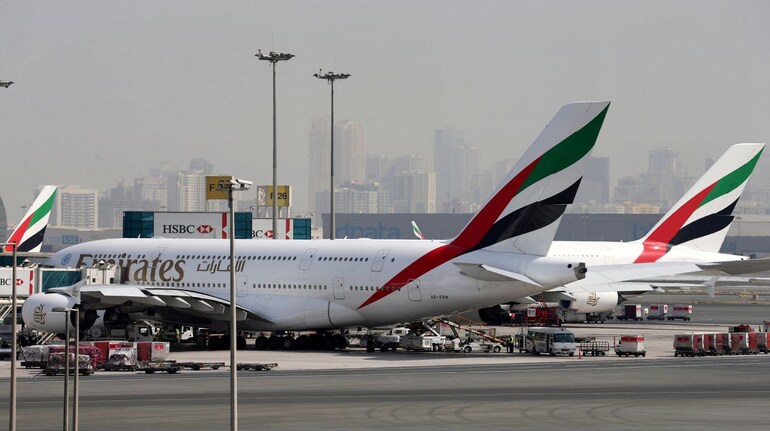

The aviation sector is flying into turbulence, with rising crude oil prices, Iran war and restricted air corridors pushing up airline costs and passenger fares ahead of the peak summer travel season.
The immediate challenge for airlines is the surge in crude prices, which directly impacts aviation turbine fuel (ATF), one of the largest cost components for carriers.
“Oil prices have already climbed to more than $100 a barrel, from roughly $70-72 earlier. That’s about a 25 percent increase in a short span,” Satyaki Raghunath, aviation expert and former chief operating officer of Bengaluru airport, told Moneycontrol.
“ATF typically accounts for around 30-40 percent of an airline’s operating expenses. With prices rising sharply due to supply disruptions linked to tensions in the Gulf region, carriers have begun passing on the impact to passengers.”
Industry experts warn that if the Iran war drags into the summer season, airlines, particularly European carriers, could raise fares across major leisure routes as travellers shift away from West Asian hubs.
Airlines roll out fuel surcharges
Indian carriers have started revising fares. IndiGo said it implemented a fuel charge from March 14, citing a steep increase in fuel prices. The airline said that data from IATA’s Jet Fuel Monitor indicates a sharp rise in fuel prices in the region, and said it opted for a partial fare adjustment to limit the burden on customers.
Air India has announced a phased rollout of fuel surcharges across its network. The surcharge starts at Rs 399 for domestic and SAARC routes and ranges from $10 for West Asia routes to as high as $200 on long-haul sectors such as North America and Australia.
The increase was unavoidable, given the surge in fuel costs. Without the hike, some routes could become unviable, it said.
Akasa Air, India’s youngest airline, has also introduced a fuel surcharge in the Rs 199-Rs 1,300 range.
“There has been a significant increase in the price of aviation turbine fuel… Given this impact, Akasa Air has introduced a fuel surcharge… and will continue to monitor the operating environment and review the surcharge periodically,” an Akasa spokesperson said.
Airspace curbs add to costs
Airlines are also grappling with operational challenges due to airspace restrictions. Indian carriers can’t use Pakistan airspace and are also facing constraints in West Asia, forcing them to take longer routes to Europe and North America.
“As a result, flights are being rerouted further west, often via Saudi Arabia, before turning north toward Europe,” Raghunath said. “These diversions increase both flight duration and fuel burn. For instance, a Mumbai-London flight… is now taking around 10.5 hours due to extended routing.”
Connectivity hit
West Asia is the gateway to Europe and North America for Indian flyers. Nearly 40 percent of India’s outbound international traffic to Europe, Africa and North America transits through hubs such as Dubai, Doha and Abu Dhabi. However, disruptions in the region have led to reduced capacity by major carriers, triggering a supply crunch.
“With capacity suddenly reduced, there simply aren’t enough seats available on alternative routes,” an aviation expert said. “Airfares have already risen sharply in recent weeks… A large share of passengers earlier depended on Middle Eastern carriers for onward connections,” the expert added.
The impact is more pronounced for destinations without direct connectivity from India, such as Madrid and Barcelona, where travellers rely heavily on transit hubs in the Gulf.
Summer travel demand at risk
The full impact of the disruption could unfold during the summer travel season, experts said. “If this situation continues into summer, we could see European airlines hiking fares across the board as demand moves away from the Middle East,” a Bengaluru-based aviation analyst said.
“Travel patterns may shift towards alternate hubs such as Singapore and Hong Kong or European gateways like Frankfurt. At the same time, destinations such as Colombo and Thailand could see increased demand,” the analyst added.
The impact, however, is expected to vary across regions. Southern states such as Kerala and Tamil Nadu, which have strong travel links to West Asia may see sharper disruption. In contrast, metros like Delhi, Mumbai and Bengaluru could witness different demand shifts due to stronger long-haul connectivity.
Limited upside for Indian carriers
Despite rising fares, Indian airlines are unlikely to benefit much. Only a handful of domestic carriers operate long-haul wide-body aircraft, limiting their ability to capitalise on reduced competition. Airspace restrictions also continue to constrain operations. “Middle East is one of the most lucrative markets for Indian airlines. If disruptions persist, they risk losing revenue as well,” an expert said.
Crude, war duration
The sector’s outlook will depend largely on fuel prices and demand trends. “If fuel prices stay elevated and fares keep rising, demand will eventually soften. That’s the biggest risk facing airlines globally,” an expert said.
For now, the industry remains on edge. A quick easing of tensions could limit the impact but if the crisis stretches into the summer, airlines and passengers may face a prolonged period of higher costs and disrupted travel.

Discover the latest Business News, Sensex, and Nifty updates. Obtain Personal Finance insights, tax queries, and expert opinions on Moneycontrol or download the Moneycontrol App to stay updated!





Find the best of Al News in one place, specially curated for you every weekend.
Stay on top of the latest tech trends and biggest startup news.