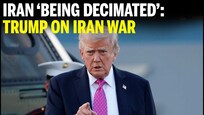
The European economy is bracing for renewed turmoil after President Trump announced a steep 30 percent tariff on goods from the European Union, a move that could further strain growth and ignite retaliation from Brussels. The new tariff—set to take effect on August 1—has triggered warnings from economists, business leaders, and political officials who fear the move could tip parts of Europe back toward recession, the New York Times reported.
Why are these tariffs happening now?
President Trump’s announcement marks a sharp escalation in his ongoing trade war against major U.S. partners. Since returning to office, he has revived his aggressive trade agenda, which already includes high tariffs on Chinese and South Korean goods. The latest move targets a wide range of European exports, including luxury goods, wine, automobiles, steel, and pharmaceuticals.
Trump’s reasoning, according to aides, is rooted in what he sees as unfair trade imbalances and Europe’s “protectionist” stance toward American companies. But analysts view the new tariffs as politically driven, aimed at projecting strength on trade ahead of U.S. elections and negotiations with allies.
How bad could it be for Europe’s economy?
Economists warn that the new tariff could seriously dent the region’s already fragile economic outlook. The European Commission recently cut its eurozone growth forecast for 2025 from 1.3 percent to just 0.9 percent, citing “increased tariffs and the heightened uncertainty” stemming from U.S. policy.
ING economist Bert Colijn said that a 30 percent tariff could keep growth “stuck around the zero line” and may even trigger quarters of negative GDP growth, particularly in export-heavy nations like Germany and France.
Germany, Europe’s largest economy, is injecting massive stimulus to recover from a prolonged slump and is still projected to grow 1.5 percent in 2025. But the Kiel Institute for the World Economy estimates that Trump’s tariffs could shave off about 0.5 percent of that growth.
Which industries are most exposed?
European automakers are among the hardest hit. Germany’s V.D.A., the top car industry lobby, says that U.S. tariffs already imposed since May have cost the sector billions. Now, the new 30 percent rate could increase the damage. Other sectors like luxury spirits, wine, and agriculture—especially in France, Spain, and Italy—also face deep losses.
France’s Cognac producers export roughly 90 percent of their product to the U.S., and the industry is now in panic mode. BusinessEurope, the continent’s largest corporate lobby, called the tariff “unacceptable.”
Italy’s main business association warned that even the earlier 10 percent tariff could cost the country €20 billion in exports and up to 118,000 jobs. The 30 percent rate would likely push those losses even higher.
What is the EU doing in response?
For now, the European Union has opted to keep talking. After meeting in Brussels on Sunday, top officials said they would refrain from immediate countermeasures while negotiations continue. European Commission President Ursula von der Leyen said the bloc was still preparing retaliatory options “so we are fully prepared,” but added, “We have always been clear that we prefer a negotiated solution.”
Still, pressure is mounting. French President Emmanuel Macron and Spanish Prime Minister Pedro Sanchez both sharply criticized the tariffs, with Macron warning that Europe must consider punitive tariffs on U.S. goods if talks fail.
Can Europe blunt the impact?
Despite the high stakes, some economists believe Europe may be able to weather the storm. Countries in Southern Europe, which export less to the U.S., may be shielded from the worst. Infrastructure and military investments across the continent are expected to add a cushion to growth. And since the U.S. has imposed high tariffs on multiple countries, American buyers will have fewer alternative suppliers—possibly dulling the competitive damage.
But the outlook remains uncertain. Many European firms had adjusted to the earlier 10 percent rate and believed it would stay in place. The sudden jump to 30 percent, with threats of even higher rates on sectors like pharmaceuticals and chemicals, has disrupted that fragile stability.
As the August 1 deadline approaches, Europe now faces a choice between restraint and retaliation—with the future of its economic recovery hanging in the balance.
Discover the latest Business News, Sensex, and Nifty updates. Obtain Personal Finance insights, tax queries, and expert opinions on Moneycontrol or download the Moneycontrol App to stay updated!
Find the best of Al News in one place, specially curated for you every weekend.
Stay on top of the latest tech trends and biggest startup news.