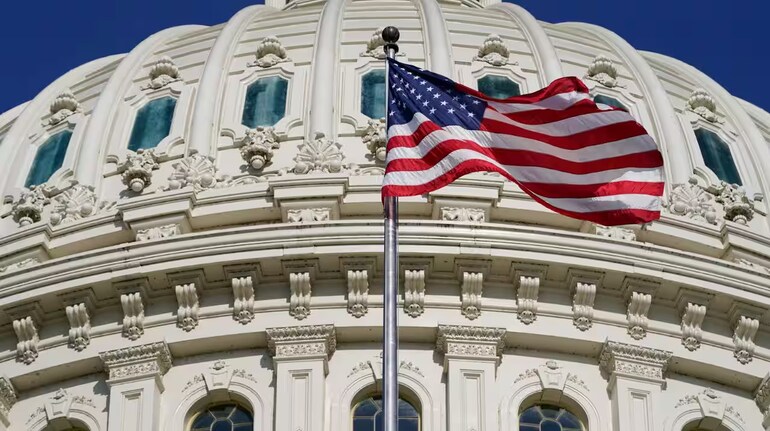

The US federal government is once again staring at the prospect of a shutdown, this time triggered by a standoff in the Senate over funding for the Department of Homeland Security. The dispute follows political fallout from a fatal shooting in Minneapolis and has left Republicans and Democrats deadlocked just days before current funding expires.
If US Congress fails to act before the deadline, large parts of the government will be forced to pause operations. It would come less than three months after the end of the longest shutdown in US history, underscoring how fragile federal funding agreements have become under President Donald Trump’s second term, CNN reported.
What a government shutdown actually is
A shutdown happens when Congress does not pass spending bills or a temporary funding extension for the new fiscal year. Without legal authority to spend money, many federal agencies must close or sharply limit their operations.
This time, it would likely be a partial shutdown. Several departments have already been funded for the full year, meaning others would continue operating while major agencies temporarily go dark.
Which parts of government would be affected
If funding lapses, departments such as Defence, Education, Health and Human Services, Transportation, Treasury and Homeland Security would be affected. Together, they account for more than three-quarters of federal discretionary spending.
Each agency decides which functions are “essential.” Those deemed critical to protecting life and property continue, often with staff working without pay. Everything else pauses until lawmakers strike a deal.
What happens to paycheques and benefits
Federal workers tend to take the hardest hit. Hundreds of thousands could be furloughed, while others would be required to work without pay. Back pay is guaranteed once the shutdown ends, but the delay can still cause serious financial strain.
Social safety net programs are less exposed. Payments from Social Security Administration, including retirement benefits, disability payments and SSI, would continue. Medicare and Medicaid payments would also keep flowing, and unemployment benefits would go out as long as states have funds to process them.
Federal contractors, however, are not guaranteed back pay and often absorb losses permanently.
How travel and airports could be disrupted
Air travel almost always suffers during shutdowns. Air traffic controllers and TSA officers are considered essential and must stay on the job, but they would not be paid.
Support staff and training programs are typically suspended, which can strain the system. In previous shutdowns, this has led to longer security lines, flight delays and, in severe cases, cancellations at major airports.
National parks, museums and public services
This time, national parks, Smithsonian museums and the National Zoo are expected to stay open because they have already been funded through the end of the fiscal year. That is a change from earlier shutdowns, when parks were often closed or left understaffed.
Other services can quietly grind to a halt. During past shutdowns, courts have stopped issuing marriage licenses, housing loans have been delayed, and the National Flood Insurance Program has been unable to issue new policies, affecting home sales.
What it means for the economy
Shutdowns ripple far beyond government offices. When workers miss paycheques, spending drops. Businesses that rely on federal permits, contracts or data can be forced to pause operations.
The 2018-19 shutdown shaved billions of dollars off economic growth, some of which was never recovered. It also disrupted tax enforcement, reducing federal revenue in ways that lingered even after the government reopened.
Economic data itself can become harder to track. Agencies like the Bureau of Labor Statistics may stop publishing key reports, including jobs numbers, making it more difficult to assess the health of the economy.
Why this keeps happening
Despite controlling the White House and Congress, Republicans still need Democratic support in the Senate to pass funding bills. Democrats, meanwhile, are using that leverage to demand changes to immigration enforcement and DHS operations.
For now, both sides insist they want to avoid another shutdown. But unless one backs down soon, the familiar cycle of furloughs, delays and uncertainty could return — with consequences felt far beyond Capitol Hill.
Discover the latest Business News, Sensex, and Nifty updates. Obtain Personal Finance insights, tax queries, and expert opinions on Moneycontrol or download the Moneycontrol App to stay updated!
Find the best of Al News in one place, specially curated for you every weekend.
Stay on top of the latest tech trends and biggest startup news.