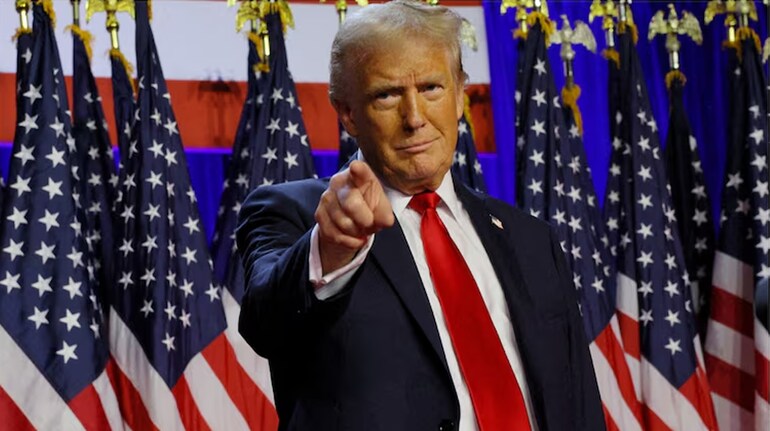
A sharp exchange over history, power, and political legacy played out in Washington this week after US Senator Chris Van Hollen criticised efforts by Trump-aligned Republicans to associate President Donald Trump with national monuments and cultural institutions.
Speaking at a public protest, Van Hollen warned against what he described as the “strongman instinct” to stamp one’s name on history. He said that history was full of leaders who sought immortality through monuments, only to be discarded by later generations. “Those names,” he argued, “end up in the dustbin of history.” Trump’s, he said, would be no different.
What triggered the protestThe remarks followed controversy around proposals floated by conservative lawmakers and advocacy groups to expand Trump’s presence in federal commemorations and public institutions. One such flashpoint involved discussion, not a completed or legally binding decision, about altering the naming framework of the John F Kennedy Center for the Performing Arts to formally include Trump’s name.
The Kennedy Center, which operates under a federal charter but functions as a cultural institution rather than a political memorial, has not approved any such renaming. Officials associated with the centre have not announced any formal vote or change. However, the proposal itself sparked backlash from Democrats, artists, and civil society groups, who viewed it as an attempt to politicise a space historically associated with bipartisan cultural patronage.
Van Hollen’s historical warningVan Hollen framed his criticism in explicitly historical terms. Drawing comparisons with 20th-century authoritarian leaders, including Benito Mussolini, he argued that leaders who aggressively inscribe their names onto public institutions often misjudge how history treats power once it fades.
His point was less about Trump alone and more about the broader impulse to force legacy through symbolism rather than consensus. “History,” he said, “does not work on demand.”
A wider political patternThe episode fits into a larger pattern in American politics, where monuments, school names, libraries, and public buildings have become arenas for ideological conflict. Over the past decade, debates over Confederate statues, presidential libraries, and renaming of military bases have shown how memory itself has become contested ground.
Trump’s supporters argue that his electoral base, longevity in political discourse, and impact on American politics justify permanent recognition. Critics counter that legacy is earned over time, not declared by allies while a political movement is still in motion.
There is no immediate mechanism to rename the Kennedy Center, and any such move would require legislative changes, institutional approval, and public scrutiny. For now, the issue remains symbolic but potent.
What Van Hollen’s protest underscored is that the battle over Trump’s place in history is already underway, not in textbooks yet, but in arguments over who controls the nation’s memory. Whether Trump’s name endures or fades will not be decided by plaques or banners, but by how future generations judge the years he reshaped American politics.
Discover the latest Business News, Sensex, and Nifty updates. Obtain Personal Finance insights, tax queries, and expert opinions on Moneycontrol or download the Moneycontrol App to stay updated!
Find the best of Al News in one place, specially curated for you every weekend.
Stay on top of the latest tech trends and biggest startup news.