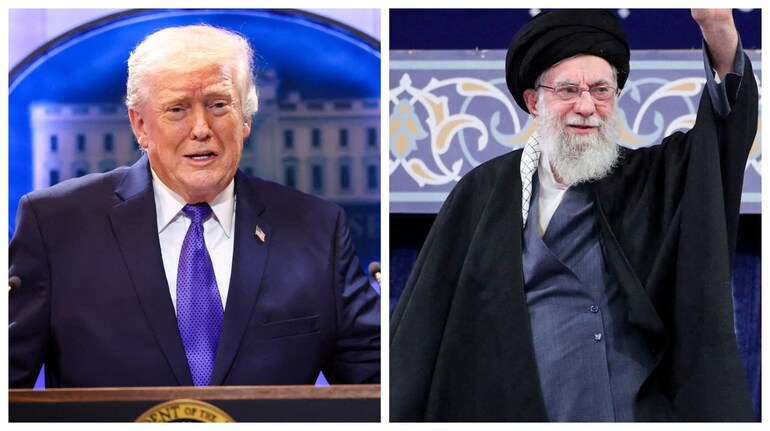

A fresh round of discussions between the United States and Iran is set to take place on Thursday in Geneva, as confirmed by a US official cited by AFP.
The announcement comes at a time when Washington continues to increase its military presence in the Middle East, a move widely seen as an attempt to pressure Tehran into an agreement over its nuclear programme.
While the US official did not provide additional specifics, as reported by AFP, Iran had already indicated on Sunday that talks were expected later this week, a timeline also supported by mediator Oman. The negotiations will be indirect, continuing a format used in earlier rounds.
Rising rhetoric ahead of talks
Even as diplomatic channels reopen, tensions between the two countries remain sharply elevated. Tehran issued a strong warning on Monday, making clear that any form of military action by Washington would provoke a severe response.
"And any state would react to an act of aggression... ferociously, so that's what we would do," said foreign ministry spokesman Esmaeil Baqaei.
The warning follows remarks from President Donald Trump, who recently indicated that he was considering limited strikes if Iran failed to reach an agreement within a short timeframe. Tehran responded firmly, stating that even a restrained attack "would be regarded as an act of aggression."
Iranian officials have also cautioned that the fallout from any confrontation would not remain contained. Deputy foreign minister Kazem Gharibabadi stressed that escalation could have wider consequences.
"The consequences of any renewed aggression wouldn't remain confined to one country, and responsibility would rest with those who initiate or support such actions," he said, urging global actors to act to avoid further deterioration.
Diplomatic window and core disagreements
Despite the hostile tone, both sides appear willing to test the possibility of a deal. Gharibabadi described the upcoming talks as "a new window of opportunity," though the gap between the two countries remains significant.
Iran maintains that its nuclear activities are strictly for civilian purposes, while Western governments suspect ambitions to develop atomic weapons. Tehran has signaled readiness to present a draft proposal through mediators in the coming days.
However, key disagreements persist. Iran has refused to expand negotiations beyond the nuclear issue, while Washington continues to push for discussions on Iran’s missile programme and its backing of armed groups across the region.
A second round of indirect negotiations concluded recently in Switzerland under Omani mediation, setting the stage for the upcoming Geneva meeting.
Military build-up and regional anxiety
The diplomatic push is unfolding alongside heightened military preparedness. The United States has been reinforcing its presence in the region, contributing to fears of a possible confrontation.
Precautionary steps are already visible internationally. India, along with Sweden, Serbia, Poland and Australia, has advised its citizens to leave Iran. Meanwhile, Washington has ordered non-essential personnel to exit its embassy in Lebanon, where Hezbollah -- a group closely aligned with Tehran -- operates.
In Israel, Prime Minister Benjamin Netanyahu described the current situation as "complex and challenging days," signaling concern over the evolving crisis. He also reiterated a stark warning to Iran’s leadership, stating that if Israel were attacked, it would respond with overwhelming force.
Internal unrest in Iran
Compounding external pressures, Iran is also witnessing renewed domestic unrest. University students have returned to campuses amid protests that echo earlier nationwide demonstrations driven by economic hardship.
The earlier wave of protests, which peaked in early January, was met with a heavy crackdown. According to the US-based Human Rights Activists News Agency (HRANA), more than 7,000 people were killed, though it noted the figure could be higher. Iranian authorities have acknowledged over 3,000 deaths but attributed the violence to what they describe as externally driven “terrorist acts.”
Recent videos circulating online show students in Tehran chanting slogans against the government and engaging in symbolic acts such as burning the Iranian flag adopted after the 1979 revolution. Counter-demonstrations have also taken place, with some groups burning US and Israeli flags, occasionally leading to clashes.
Calls for diplomacy
Amid the uncertainty, international actors are urging restraint. The European Union has emphasized the importance of pursuing negotiations rather than confrontation.
"It is true that Iran is at its weakest point that they have been. We should be really using this time to find a diplomatic solution," said EU foreign policy chief Kaja Kallas.
As both sides prepare to meet in Geneva, the coming days are likely to test whether diplomacy can prevail over escalating threats, or whether the region edges closer to a broader conflict.
(With inputs from AFP)Discover the latest Business News, Sensex, and Nifty updates. Obtain Personal Finance insights, tax queries, and expert opinions on Moneycontrol or download the Moneycontrol App to stay updated!
Find the best of Al News in one place, specially curated for you every weekend.
Stay on top of the latest tech trends and biggest startup news.