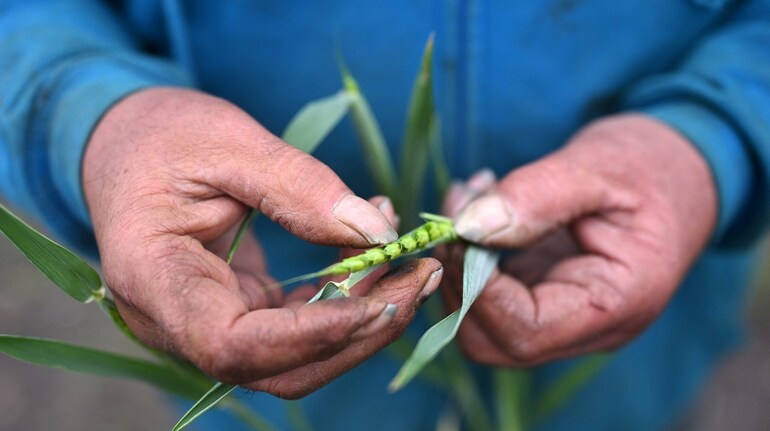
The United States has charged two Chinese nationals with smuggling a dangerous “agricultural pathogen” into the country: Fusarium graminearum, a toxic fungus known to devastate vital cereal crops.
The fungus causes Fusarium head blight (FHB), also known as scab, in wheat, barley, oats, and other grains. Beyond posing a serious threat to crop yields, it also produces harmful mycotoxins that can contaminate food supplies.
FBI Director Kash Patel described it as an “agro-terrorism agent” responsible for billions in economic losses worldwide every year.
What is Fusarium Graminearum?
Fusarium graminearum is a soil-borne fungal pathogen that infects cereal crops during flowering, typically through airborne spores. It thrives in warm, wet environments and is particularly prevalent in regions where moisture coincides with crop flowering. Once it infects the spikelets (the grain-bearing parts of the plant), the fungus colonizes the developing kernels, leading to discoloration, shrivelling, and contamination.
The result is Fusarium head blight (FHB), a plant disease that can reduce crop yields by 10–70%, depending on the severity of infection and weather conditions.
What’s the row about?
Two Chinese researchers — Jian Yunqing (33) and Liu Zunyong (34) — have been charged with conspiracy, smuggling goods into the country, false statements and visa fraud. The girlfriend is believed to be a member of the Chinese Communist Party.
The Trump administration, describing the incident as a "grave national security concern," accused Chinese researcher Zunyong Liu of attempting to smuggle the fungus into the U.S. to conduct research at a University of Michigan lab where his girlfriend, Yunqing Jian, was employed.
According to a BBC report, US officials alleged that Jian’s research on the pathogen was funded by the Chinese government.
Why it’s so dangerous?
FHB outbreaks can wipe out large portions of cereal crops. During severe outbreaks in the US in the 1990s and early 2000s, wheat and barley producers lost over $3 billion. In China, Canada, and parts of Europe, the disease continues to cause significant recurring losses, threatening the livelihoods of millions of farmers.
According to the FBI and USDA, Fusarium graminearum isn't just a plant pathogen—it’s a strategic bio-threat. In this case, it was allegedly smuggled with malicious intent, raising alarms about agro-terrorism.
The economic implications are compounded by health concerns. DON-contaminated grains are considered unsafe and unfit for consumption by both humans and animals. The presence of DON levels above permissible limits leads to crop rejection and trade disruptions.
Scientific studies have identified Fusarium graminearum, also known as Gibberella zeae, as one of the five most destructive fungal pathogens affecting cereal crops like wheat, barley, oats, and corn. It causes Fusarium head blight (FHB), or “scab,” which reduces crop yields and damages grain quality.
The fungus alters the amino acid composition of wheat, leading to shriveled, contaminated kernels. Infected wheat shows brown to dark purple-black lesions on spikelets, while in rice, it causes red seeds, brown discoloration, and white husk spots that turn yellow. The resulting grains are typically light, brittle, and shrunken.
Discover the latest Business News, Sensex, and Nifty updates. Obtain Personal Finance insights, tax queries, and expert opinions on Moneycontrol or download the Moneycontrol App to stay updated!
Find the best of Al News in one place, specially curated for you every weekend.
Stay on top of the latest tech trends and biggest startup news.