




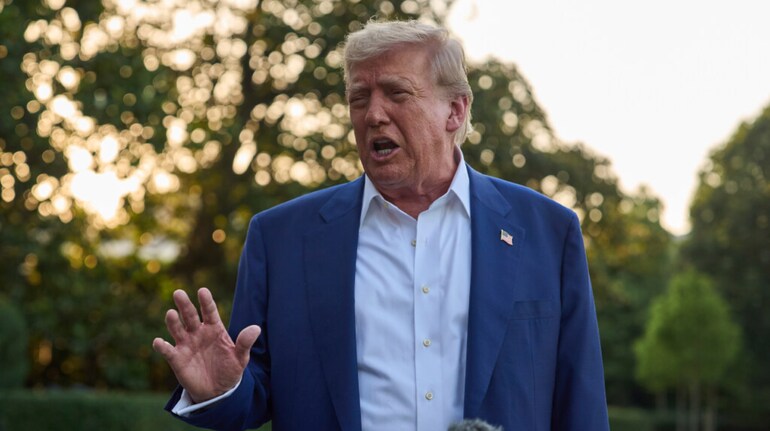
U.S. President Donald Trump, late Sunday evening, claimed that Iran’s nuclear program was “obliterated like nobody’s ever seen before”, asserting that the Islamic Republic is no longer in a position to pursue nuclear weapons, at least for now.
Speaking in an interview with Fox News, Trump said the June 22 strikes, part of Operation Midnight Hammer, destroyed three key Iranian nuclear sites, Fordow, Natanz, and Isfahan. He singled out the strike on Fordow, Iran’s most fortified underground facility, saying the bunker-buster bomb used “went through it like butter,” leaving “just thousands of tons of rock” in its wake.
“That meant the end to their nuclear ambitions, at least for a period of time,” Trump declared during the interview, warning Tehran that any renewed attempt to develop nuclear weapons would be met with further attacks.
The Fordow facility, located deep within the mountains, was considered largely impervious to conventional weapons. According to Trump, the US deployed at least seven B-2 stealth bombers equipped with GBU-57A Massive Ordnance Penetrators (MOPs) in the assault.
Trump’s sweeping assertions, however, appear at odds with early assessments from the Pentagon and the International Atomic Energy Agency (IAEA).
IAEA Director-General Rafael Grossi, in an interview with CBS News, confirmed that the targeted facilities had been “destroyed to a significant degree” but said Iran retained some capacity for uranium conversion and enrichment. He also revealed that the agency had been unable to account for 400 kilograms (nearly 900 pounds) of highly enriched uranium believed to be stored at the sites before the strikes.
In addition, last week, a preliminary intelligence report from the Pentagon echoed similar concerns, suggesting that much of Iran’s enriched uranium stockpile had likely been moved before the attack and that key underground components may remain intact.
Trump has been quick to reject those claims outright, insisting Iran did not have the time or ability to relocate enriched uranium ahead of the bombings.
“It’s very heavy, very hard to move, and they didn’t know we were coming,” he said, adding that any official who leaked contrary information to the press “should be prosecuted.”
The June strikes came amid a broader military confrontation between Israel and Iran that began on June 13.
After Israeli airstrikes targeted Iranian military leaders, nuclear personnel, and missile infrastructure, Tehran retaliated with a massive barrage of over 500 ballistic missiles and 1,000 drones, killing at least 28 people and wounding thousands in Israel.
Iran also responded to the U.S.-led strikes by targeting the Al Udeid Air Base in Qatar, a key American military installation in the region.
Despite the escalation, Trump has been stressing that Iran was now far from resuming its nuclear ambitions. “The last thing they want to do right now is think about nuclear,” he said during the interview. “They have to put themselves back into condition and shape.”
In the same interview, Trump also said more Arab nations would soon join the Abraham Accords, normalising ties with Israel. He framed the recent events as a turning point in the region’s balance of power.
Discover the latest Business News, Sensex, and Nifty updates. Obtain Personal Finance insights, tax queries, and expert opinions on Moneycontrol or download the Moneycontrol App to stay updated!
Find the best of Al News in one place, specially curated for you every weekend.
Stay on top of the latest tech trends and biggest startup news.