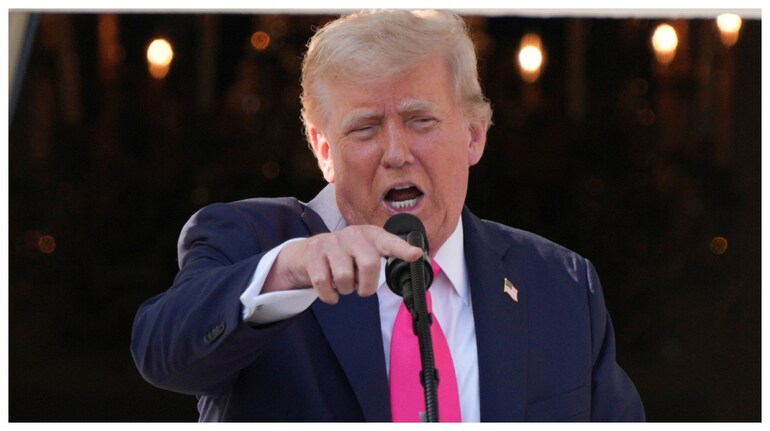
As US President Donald Trump prepares to impose sweeping new tariffs from August 1 on imports ranging from children’s toys to soybeans, America’s largest trading partners are signalling they are no longer willing to play by Washington’s rules. Instead, they are turning to one another, the New York Times reported.
At a two-day summit in Rio de Janeiro, leaders of the BRICS group — which includes Brazil, Russia, India, China, and South Africa, along with newly inducted members such as Egypt, Iran, and the United Arab Emirates — issued a joint declaration condemning unilateral trade measures and vowed to streamline trade within the bloc. Though the statement avoided naming the United States or Trump directly, the message was clear.
“We voice serious concerns about the rise of unilateral tariff and non-tariff measures, which distort trade,” the group said. It called for “fair,” “inclusive,” and rules-based trading systems aligned with the World Trade Organization.
The statement came just days before a 90-day pause on Trump’s earlier tariffs is set to expire. With few new deals finalized — apart from agreements with Britain and Vietnam — the administration has signalled more trade announcements are imminent, including fresh tariffs targeting countries that align with what the president now labels “anti-American” BRICS policies.
A veiled rebuke turns public
While the BRICS nations avoided directly confronting Trump at the summit, his latest remarks on Truth Social Sunday escalated tensions. The president threatened a 10 percent tariff on all imports from BRICS-aligned countries, warning “there will be no exceptions.”
Brazilian President Luiz Inácio Lula da Silva, who hosted the summit, swiftly responded. “We don’t want an emperor,” he said. “We are sovereign countries. If he thinks he can tax, countries have the right to tax, too.”
Despite Trump’s threats looming over the summit, Lula insisted BRICS leaders paid them little attention. “Nobody touched on the issue,” he said. “We didn’t give any importance to it.”
Still, analysts noted that concerns about antagonizing Washington lingered in the background, especially for countries with deep economic ties to the United States, such as India and South Africa.
China and Russia take a cautious line
China and Russia, the two most prominent powers within BRICS, issued restrained responses. China’s foreign ministry emphasized that BRICS is “not a bloc for confrontation,” while Kremlin officials said the group’s activities were “not directed against third countries.”
Yet, behind the diplomatic language lies a growing effort to reshape global trade architecture. Russia, which has faced heavy Western sanctions since its invasion of Ukraine, proposed a grains-trading platform that would bypass Western commodities markets. The exchange could later expand to other agricultural goods and operate outside the U.S. dollar system.
Another initiative under discussion is a BRICS-led payment system that would allow member countries to conduct trade in local currencies. The goal is to reduce dependence on the dollar, while giving sanctioned members like Russia and Iran an avenue to circumvent Western financial restrictions.
A bloc once symbolic grows more assertive
Founded in 2009, BRICS has long functioned as a symbol of the emerging world’s desire to challenge Western dominance. But the recent addition of members like Iran, Indonesia, and Ethiopia, and more ambitious economic proposals, point to a shift toward action.
The group now accounts for more than 40 percent of global GDP, and officials say there is growing momentum to transform BRICS from a talking shop into a trade and investment alternative to Western-led institutions.
President Lula echoed this sentiment. “It is a group of countries wanting to create another way of organizing the world,” he said. “Because of this, the BRICS is creating discomfort.”
For Trump, who has touted his “America First” trade agenda as a way to rebalance global commerce, the BRICS challenge underscores a mounting risk: that aggressive tariff policies may be accelerating the very decoupling of US allies and markets that he once warned against.
Discover the latest Business News, Sensex, and Nifty updates. Obtain Personal Finance insights, tax queries, and expert opinions on Moneycontrol or download the Moneycontrol App to stay updated!
Find the best of Al News in one place, specially curated for you every weekend.
Stay on top of the latest tech trends and biggest startup news.