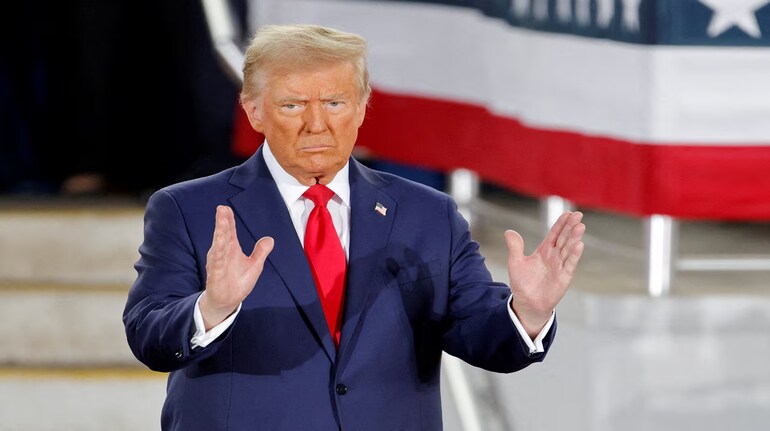
While China is racing forward with low-cost, high-tech electric vehicles (EVs), the United States is in danger of falling perilously behind, with President Trump rolling back important EV policies and cutting funding for clean energy research. Already reeling from infrastructure deficits and glacial EV rollouts, American automakers now have a tough fight ahead as subsidies evaporate and Chinese manufacturers bring increasing competition, the Washington Post reported
Frustrated drivers encounter EV roadblocks
Most American drivers, hungry for cleaner options, are frustrated by the US's dysfunctional charging infrastructure and policy changes. Michael Bickford, a Maine retiree, gave up on the idea of a fully electric vehicle after witnessing firsthand the shortcomings of the existing charging system. "I had decided to go all-electric, but I gave up," Bickford said, citing how China's stronger EV options show America's increasing lag.
Trump rips down EV support infrastructure
Since taking office, Trump has put billions of dollars slated for constructing EV infrastructure on hold, dismantled public charging stations, and taken steps to eliminate critical subsidies like the $7,500 credit for EV purchasers. All are components of a larger backsliding aimed at dismantling what Trump refers to as a "Marxist hoax" surrounding EVs. Federal investment holds have already caused cancellation of large battery factory projects in Georgia and Arizona, threatening thousands of jobs.
Automakers spooked by policy change
American automakers, previously cautious about draconian EV mandates, are now growing anxious over the withdrawal. The Alliance for Automotive Innovation cautioned Trump in a November letter that without continued support, American automakers risk losing the global EV dominance race forever. Chinese automakers, including BYD, now dominate 17 of the world's 20 best-selling EV models, with cars featuring fast-charging technology and prices significantly lower than American vehicles.
Charging deserts and dwindling choices
While China has nearly 20 times as many public EV charging stations as the United States, American infrastructure is miserably lacking. Drivers such as Ellen Hughes-Cromwick, a former economist at Ford, share terrifying stories of malfunctioning chargers and vacant lots where stations were to be found. "It was unbelievable how bad it was," she said following a drive from Michigan to New Jersey in her Ford Mach-E.
Industry placed in a delicate situation
With Tesla bleeding market share and legacy carmakers such as Ford and GM grasping at ways to shift, the US auto market is under increasingly powerful pressure. Ford CEO Jim Farley has cautioned that American companies are falling behind Chinese EV manufacturers, and without assistance from government, American plants could sit idle. Strategic Vision president
Alexander Edwards warned that Chinese EVs in the sub-$30,000 range and with full charges in minutes would destroy the US market if permitted entry.
A future at risk
Experts contend Trump's policy switch will delight elements of his base but risk forever locking US reliance on old-fashioned gasoline-powered cars while global consumers take a decisive march toward EVs. "We are on an island, weak and no longer playing offense," auto industry expert Michael Dunne said. With innovation overseas intensifying, America has a dire decision: play catch-up — or let China own the transport future.
Discover the latest Business News, Sensex, and Nifty updates. Obtain Personal Finance insights, tax queries, and expert opinions on Moneycontrol or download the Moneycontrol App to stay updated!
Find the best of Al News in one place, specially curated for you every weekend.
Stay on top of the latest tech trends and biggest startup news.