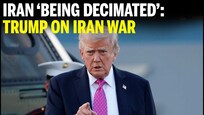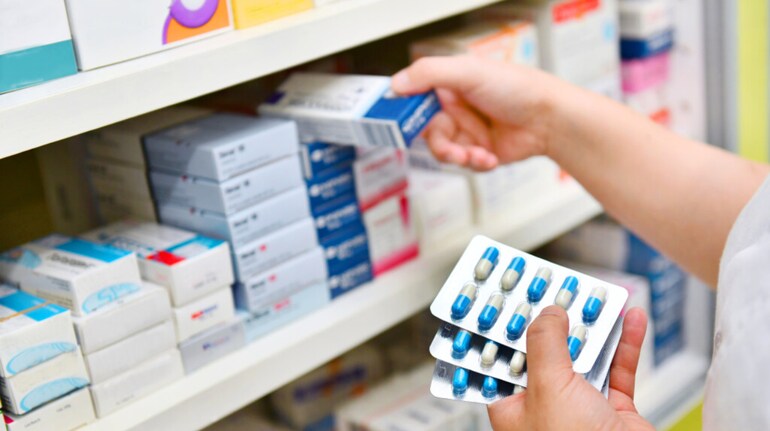
US President Donald Trump has signalled that tariffs on pharmaceutical imports could eventually climb as high as 250 per cent, marking the steepest potential rate he has proposed so far.
In an interview to CNBC, Trump said he would begin with a “small tariff” but plans to raise it gradually -- first to 150 per cent, and eventually to 250 per cent -- within a year to 18 months. He previously floated a 200 per cent tariff in early July but appears to have upped the ante.
In April, the Trump administration launched a Section 232 investigation into pharmaceutical imports. This law allows the US to examine whether certain imports pose a threat to national security.
Trump wants to use this as a way to push drug companies to manufacture more medicines in the US, as domestic production has declined sharply over the years. Major firms like Eli Lilly and Johnson & Johnson have already announced new investments in US facilities to stay in Trump’s good books.
“We want pharmaceuticals made in our country,” Trump told CNBC.
But the proposed tariffs could hurt the pharmaceutical industry. Drugmakers warn the move would raise costs, discourage investments in the US, disrupt supply chains and put patient access at risk.
Companies are already under pressure from Trump’s aggressive drug pricing policies, which they say are harming their profits and limiting their ability to fund new research.
In May, Trump signed an executive order reviving the controversial “most favoured nation” policy, which aims to cut drug prices by linking US prices to the much lower prices in other countries.
Speaking to CNBC on Tuesday, Trump said he had “invoked” the policy and claimed it would drastically lower medicine costs — though no official changes have taken effect yet.
Last week, Trump also sent letters to 17 major drugmakers, urging them to act by September 29. He asked them to offer their full range of medicines to Medicaid patients at the same low prices they charge in other developed countries, among other cost-cutting steps.
How it could hit India hard
Apart from making clear his intention to impose up to 250 per cent tariffs on pharmaceutical imports, Trump again threatened to “very significantly” raise tariffs on Indian imports over New Delhi buying Russian oil.
Last week, he announced a steep 25 per cent tariff on India and said he would soon impose a penalty on New Delhi for its purchases of Russian military equipment and energy.
India, often dubbed the “pharmacy of the world,” counts the United States as its biggest market for pharmaceutical exports. The country’s pharmaceutical market for FY 2023-24 is valued at USD 50 billion with domestic consumption valued at USD 23.5 billion and export valued at USD 26.5 billion
In FY 2023-24 alone, India shipped over $8 billion worth of pharma products to the US. In FY25, US again emerged as India’s largest pharmaceutical export destination, accounting for $9.8 billion in exports. However, this vital trade link is now at serious risk. If Trump moves ahead with his plan to impose 250 per cent tariffs on imported drugs, India’s generics industry could suffer a major blow.
These tariffs would drastically undermine the price advantage Indian drug makers currently enjoy in the US, especially in cost-sensitive markets like federal health schemes and among low-income patients. As a result, Indian firms may lose key contracts and tenders, while American pharma companies gain market share shielded by protectionist walls.
Several major Indian companies, which depend heavily on the US market, are particularly exposed. While many have set up or plan to expand manufacturing in the US, Trump’s proposed relocation window of “a year, maybe a year and a half” may not be long enough to adjust.
Indian drugmakers worried about Trump’s tariffs have been weighing portfolio rejig, and manufacturing realignment to survive US tariffs, as they typically operate on thin EBITDA margins of 5-15 percent on average for their base business. Even a 10 percent reciprocal tariff would have made them unviable if they fail to pass on the increased import duty to the consumers in the US.
Discover the latest Business News, Sensex, and Nifty updates. Obtain Personal Finance insights, tax queries, and expert opinions on Moneycontrol or download the Moneycontrol App to stay updated!
Find the best of Al News in one place, specially curated for you every weekend.
Stay on top of the latest tech trends and biggest startup news.