






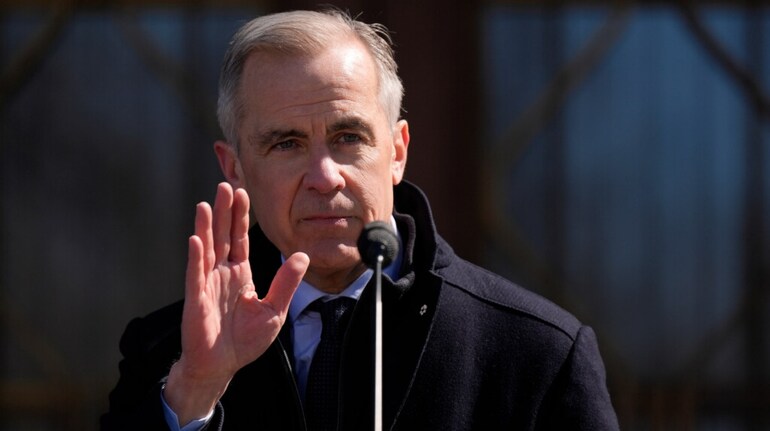
Newly sworn-in Canadian Prime Minister Mark Carney has called for a snap federal election on April 28, saying he needed a strong mandate to deal with the threat posed by US President Donald Trump, who “wants to break us so America can own us”.
This election arises amid escalating trade tensions with the United States and aims to establish a fresh mandate for leadership during these challenging times.
Although the next election was not due until October 20, Carney is hoping to capitalize on a remarkable recovery by his Liberal Party in the polls since January, when Trump began threatening Canada and former Prime Minister Justin Trudeau announced his resignation.
I have just asked the Governor General to dissolve Parliament and call a federal election on April 28.We need to build the strongest economy in the G7. We need to deal with President Trumps tariffs. Canadians deserve a choice about who should lead that effort for our country.Mark Carney (@MarkJCarney) March 23, 2025
Main contenders
As Canada is gearing up to see its third PM this year, let us take a look at the top contenders for the April 28 snap polls:
1. Mark Carney (Liberal Party): Former Governor of the Bank of Canada and the Bank of England, Carney succeeded Justin Trudeau as Prime Minister just two weeks ago. While Carney could have waited till October, the deadline for the next polls, calling for a snap poll makes evident his bet on seeking a mandate as Donald Trump’s tariffs start to bite. Carney's party emphasizes economic resilience, diversification of trade relationships beyond the US, and national unity in the face of external pressures.
2. Pierre Poilievre (Conservative Party): As the Conservative leader, Poilievre has officially launched his campaign, focusing on tax cuts, affordable housing, and revitalizing Canada's economy. However, his campaign faces challenges due to perceived similarities to U.S. President Donald Trump, especially as Trump has imposed tariffs and made provocative statements about Canada. Poilievre is working to reposition his message to align with the current surge in Canadian patriotic sentiment.
3. Jagmeet Singh (New Democratic Party - NDP): The NDP is haemorrhaging support to the Liberals. One hypothesis is that many of its previous supporters prefer the NDP, but now see that preference as outweighed by the threat from Trump.
How will the next PM be elected?
1. In countries with a parliamentary system, like Canada, "snap elections" refer to elections that are called earlier than the scheduled fixed election date. In Canada, the parliamentary system allows the PM to request the Governor-General to dissolve Parliament and call an election.
2. Following dissolution, writs of election are issued for each of the 343 electoral districts, instructing them to hold elections to select Members of Parliament (MPs).
3. Nomination of Candidates: Political parties nominate candidates to run in each electoral district. Individuals may also run as independents.
4. Campaigning: The official campaign period lasts a minimum of 37 days.
5. Voting: Eligible Canadian citizens aged 18 and over cast their votes on election day or through advance voting options.
6. Counting and Results: Votes are counted in each district. The candidate with the most votes in a district wins a seat in the House of Commons.
7. Formation of Government: The political party that wins the majority of seats in the House of Commons is invited by the Governor General to form the government. The leader of this party becomes the Prime Minister. If no party achieves a majority, the party with the most seats may attempt to form a minority government or seek coalition agreements.
Discover the latest Business News, Sensex, and Nifty updates. Obtain Personal Finance insights, tax queries, and expert opinions on Moneycontrol or download the Moneycontrol App to stay updated!
Find the best of Al News in one place, specially curated for you every weekend.
Stay on top of the latest tech trends and biggest startup news.









