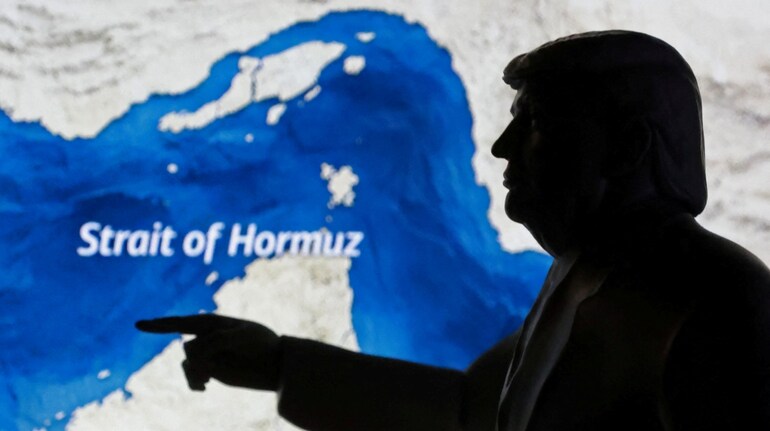

Even as US President Donald Trump signals a willingness to negotiate, Iran remains deeply sceptical of the latest peace overtures. The distrust is not new. It is rooted in recent history, conflicting signals, and ongoing military escalation, all of which have made Tehran wary of what it sees as a possible diplomatic trap.
1. The core issue: Talks amid bombings
At the heart of Iran’s hesitation lies a fundamental contradiction. Iranian officials believe that Washington is attempting diplomacy while simultaneously escalating military pressure.
A key concern stems from past experience. Iranian officials recall that previous rounds of talks were overtaken by military action, particularly US-Israeli strikes that came just as negotiations were expected to progress.
One report notes that Tehran fears being “played a third time” after earlier instances where diplomatic engagement coincided with attacks.
This dual-track approach has reinforced a perception in Iran that negotiations may not be genuine, but rather a strategic cover for military objectives.
2. “Negotiating with itself”: Iran questions US intent
Iranian scepticism goes beyond timing. It also extends to how the negotiations are being framed.
A senior Iranian military spokesperson dismissed Washington’s outreach, saying the US was effectively “negotiating with itself”, signalling Tehran’s refusal to engage under current conditions.
This reflects a broader belief within Iran’s leadership that:
Tehran has therefore avoided confirming any direct talks, even as backchannel diplomacy continues through mediators.
The 15-point plan: Peace proposal or pressure document?
The US proposal, reportedly a 15-point framework, is central to the current diplomatic push.
As outlined in the reports:
In return, the US has indicated sanctions relief and economic incentives.
However, from Iran’s perspective, these demands are too sweeping and resemble capitulation rather than compromise.
Tehran’s counter-expectations reportedly include:
The wide gap between the two sides has further fuelled distrust.
4. The shadow of military buildup
Even as diplomatic signals emerge, military preparations have not slowed.
Reports highlight that the US continues to:
This contradiction is captured starkly in a statement by a senior US official: “We negotiate with bombs.”
For Iran, such messaging reinforces the belief that talks are being conducted under coercion, not goodwill.
5. Mediation without direct talks
Another unusual feature of the current situation is the absence of direct US-Iran engagement. Instead, countries like Pakistan, Turkey and Egypt have been acting as intermediaries.
While this keeps communication channels open, it also adds layers of ambiguity. Iran has maintained publicly that no direct negotiations are underway, even as messages are exchanged indirectly.
This indirect format contributes to mistrust, as messages can be interpreted differently, commitments lack immediacy, and accountability becomes diffuse.
6. Iran’s bottom line: Ceasefire first, then talks
A critical divergence lies in sequencing.
Tehran’s priority, according to the reports, is a ceasefire, after which broader discussions can take place.
Without this, Iranian officials fear that entering negotiations would only weaken their position while military pressure continues.
7. A trust deficit years in the making
Ultimately, the current deadlock is not just about one proposal. It reflects a deep and accumulated trust deficit.
Key reasons include:
This has led Iran to approach the latest peace push with extreme caution, viewing it less as an opportunity and more as a potential strategic manoeuvre.
Conclusion: Diplomacy on fragile ground
The US push for talks and Iran’s resistance highlight a paradox.
There is clear interest in avoiding prolonged conflict, but no shared trust to enable genuine negotiations.
As things stand:
Until that gap is bridged, the prospect of a breakthrough remains uncertain. The risk is that diplomacy continues to exist alongside escalation, rather than replacing it.
Discover the latest Business News, Sensex, and Nifty updates. Obtain Personal Finance insights, tax queries, and expert opinions on Moneycontrol or download the Moneycontrol App to stay updated!
Find the best of Al News in one place, specially curated for you every weekend.
Stay on top of the latest tech trends and biggest startup news.