






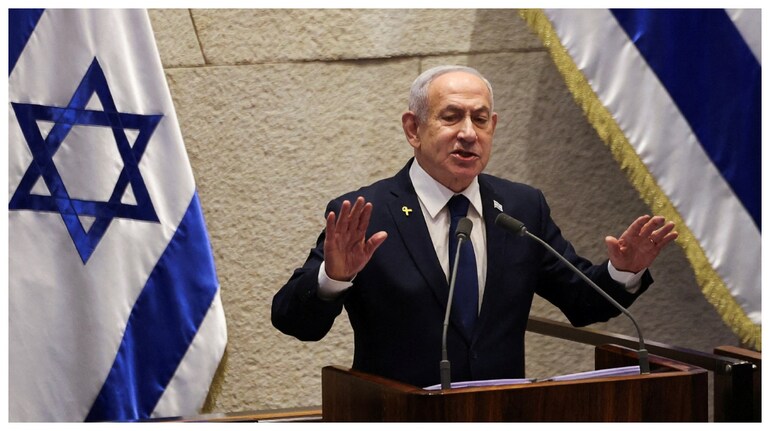
Israel Prime Minister Benjamin Netanyahu’s request for a pardon that would halt his long-running corruption trial was written in the formal language of a legal petition, not the punchy style of a social media post. But in ambition and tone, it closely tracks a playbook perfected by another leader who has treated criminal charges as a political backdrop rather than an endpoint: Donald Trump, the New York Times reported.
Netanyahu’s one-page letter to President Isaac Herzog did not use the word “pardon” and offered no admission of guilt or expression of regret. Instead, he asked for an “end of the trial,” while his lawyers submitted a 111-page brief attacking the investigations, the timing of the indictment and the charges themselves, insisting he would ultimately be acquitted.
The move came just over two weeks after Trump himself sent Herzog a letter urging him to “fully pardon” Netanyahu and denouncing the case as a “political, unjustified prosecution.” The pairing underlined how Netanyahu is now leaning openly on Trump’s backing as he fights both in court and in politics.
Shifting the political conversation
At home, the pardon bid immediately hijacked the national agenda. Until then, Netanyahu’s government had been on the defensive over two deeply unpopular issues: a bill to exempt many ultra-Orthodox Israelis from military service, and efforts to sidestep a national commission of inquiry into the failures surrounding the October 7, 2023 Hamas-led attack.
Opposition leaders who had been hammering him on those fronts suddenly had to pivot. Naftali Bennett, the former prime minister now eyeing a comeback, said he could back a pardon only if Netanyahu agreed to a “respectful retirement from political life.” Yair Lapid, the opposition leader, argued that Herzog could not legally approve any clemency without an admission of guilt, clear remorse and an immediate exit from politics.
Analysts saw a familiar tactical pattern. By introducing a dramatic new controversy, Netanyahu managed to pull attention away from unflattering debates about his policy choices and war leadership. For critics, that is classic Netanyahu: changing the conversation when it suits him better.
Framing a personal escape as a national duty
In a video released alongside the written request, Netanyahu cast the move as an act of self-denial in the national interest. His “personal” preference, he said, was to continue the trial to “full acquittal on all charges.” But, he argued, Israel’s “security and political reality” required that he be freed from the distraction of defending himself in court.
For years, Netanyahu has said that wartime responsibilities, especially in Gaza, leave him no time to focus on his legal defence. His lawyers now add that Israel faces “golden opportunities” in the region, hinting at prospects like expanding normalisation with Saudi Arabia — opportunities they say require the prime minister’s undivided attention.
The trial, which began in 2020 on graft and breach-of-trust charges, has moved slowly, with frequent delays and a defence plan that could call up to 100 witnesses. Some estimates suggest it might not end before 2028. Netanyahu testified again this week, even as he successfully requested postponement of at least one scheduled appearance.
Playing the victim, promising unity and hinting at leverage
In the video, Netanyahu warned that pressing ahead with the case “tears us apart from within” and deepens social rifts — and that ending it could “lower the flames” and support a broader reconciliation that Israel “urgently needs.” Critics heard something different: a leader who has long benefited from polarisation now presenting himself as the man to heal divisions, on his own terms.
The written brief goes further, echoing Trump-style themes. It portrays Netanyahu as the target of an overreaching law-enforcement system, recounts in detail his decades of military and political service, and invokes legal provisions that favour clemency for those who have made exceptional contributions to Israel’s security and resilience. The message is clear: his record against Iran, Hezbollah and Hamas should weigh heavily in his favour.
At the same time, the filing and public comments leave room for future political use. If Herzog denies the request and the trial continues, Netanyahu can campaign on what he will call a “witch hunt” against him — much as Trump has done in the United States.
What a pardon could mean for Israel’s institutions
Netanyahu’s critics see another risk beyond the immediate question of guilt or innocence. Because he was indicted on charges involving alleged favours to media owners, he has been required to recuse himself from decisions directly affecting the justice system and the press.
If a pardon lifted that restriction, he could again shape legislation and policy on courts, prosecutors and media regulation. Opponents fear that this might open the door to attempts to punish figures he blames for his prosecution or to push through deeper judicial changes that were already highly contentious before the war.
Netanyahu’s team has leaned heavily on Trump’s personal intervention, repeatedly citing the US president’s letter to Herzog as validation of their demands. For some Israeli commentators, that underlines a final contrast. Trump has made attacks on judges and prosecutors central to his own brand. Netanyahu, they argue, is now borrowing those tactics — but doing so from a more defensive crouch, relying on outside backing to justify his bid to end the trial on his own terms.
Discover the latest Business News, Sensex, and Nifty updates. Obtain Personal Finance insights, tax queries, and expert opinions on Moneycontrol or download the Moneycontrol App to stay updated!
Find the best of Al News in one place, specially curated for you every weekend.
Stay on top of the latest tech trends and biggest startup news.









