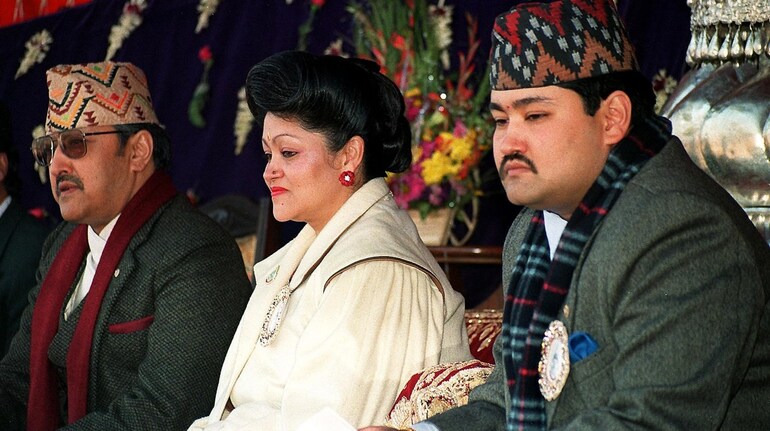
As Nepal experiences fresh political unrest led by Gen-Z protesters, one of the darkest chapters in the country’s modern history has returned to public debate. The 2001 Nepal royal massacre, in which Crown Prince Dipendra killed almost his entire family, including his parents King Birendra and Queen Aishwarya, is once again under the spotlight.
The protests, which culminated in the resignation of Prime Minister KP Sharma Oli, have reignited questions about the monarchy that was formally abolished in 2008.
The night of June 1, 2001
On the night of 1 June 2001, the royal family assembled for their customary weekly dinner at Narayanhiti Palace in Kathmandu. King Birendra, Queen Aishwarya, their children Dipendra, Princess Shruti and Prince Nirajan, and several other relatives were present.
According to eyewitnesses and a government commission report, Dipendra, 29 at the time, appeared heavily intoxicated, reportedly drinking Famous Grouse whisky and smoking cigarettes laced with hashish. His brother and a bodyguard eventually escorted him to his room.
From there, Dipendra is believed to have called his girlfriend Devyani Rana several times. Concerned by his slurred speech, Devyani asked a bodyguard to check on him. Moments later, Dipendra reappeared in full army combat uniform, wearing black boots and leather gloves, and carrying an M16 assault rifle, a submachine gun and a Glock pistol. Entering the room without speaking, he opened fire. His first victim was King Birendra, who reportedly looked at his son and asked, “Kay gardeko?" — “What have you done?"
Dipendra then shot his mother Queen Aishwarya, his brother Nirajan, sister Shruti and other royal relatives, including his uncle Prince Dhirendra. Nine people were killed in total. The official report described a horrific scene inside the palace with blood, broken glass, brain tissue and bullet casings scattered across the floor.
After the bloodshed
Dipendra was later found in the palace garden near a pond with a self-inflicted gunshot wound to the head. He was still alive, reportedly “lying on his back and gurgling," and was rushed to hospital. While in a coma, he was declared King of Nepal under constitutional rules of succession. He died on 4 June 2001, three days after the massacre.
His uncle Gyanendra, who had not been present at the dinner, was next in line and became king. He ruled until 2008 when public pressure and political changes ended Nepal’s 239-year-old monarchy.
A love denied?
The official investigation did not establish a clear motive, but one widely discussed theory links the killings to Dipendra’s relationship with Devyani Rana. Devyani, the daughter of Nepalese politician Pashupati Shamsher Jang Bahadur Rana and Usha Raje Scindia of the Gwalior royal family in India, was reportedly in a serious relationship with him.
Queen Aishwarya and other members of the royal family opposed the match, and there were reports of hesitation on Devyani’s side as well. Her family, considered wealthier and more influential than the Nepalese royals, allegedly warned her that marrying Dipendra would downgrade her lifestyle. Rejected and frustrated, Dipendra may have spiralled further. However, no conclusive evidence has ever explained his exact state of mind or what triggered the massacre.
A nation at a crossroads again
24 years later, Nepal once more finds itself in political turmoil. The Gen-Z-led protests have ousted the Oli government over accusations of corruption and repression. Some pro-monarchy voices are now resurfacing, presenting tradition as a source of stability.
Earlier this year, Oli accused former King Gyanendra of inciting violence at a pro-monarchy rally. Gyanendra responded by calling for peace and defending democratic values.
Discover the latest Business News, Sensex, and Nifty updates. Obtain Personal Finance insights, tax queries, and expert opinions on Moneycontrol or download the Moneycontrol App to stay updated!
Find the best of Al News in one place, specially curated for you every weekend.
Stay on top of the latest tech trends and biggest startup news.