




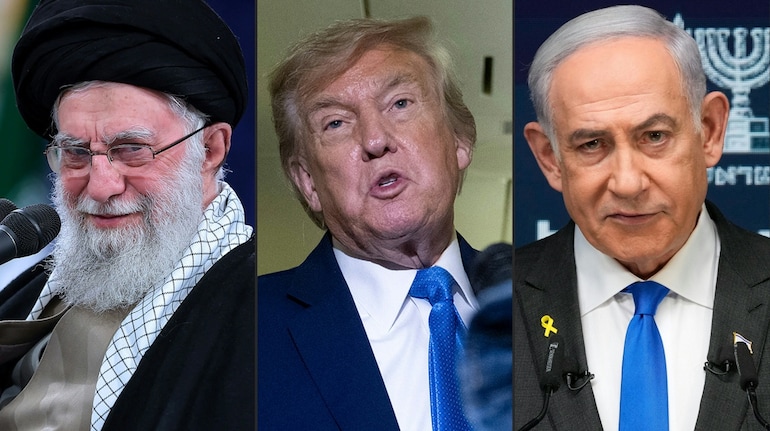
Amid escalating tensions in the Middle East, Iran’s Supreme Leader Ayatollah Ali Khamenei on Wednesday publicly ruled out any negotiations with Washington and warned the United States against launching a military strike. “If they attack, they will without doubt face irreparable harm,” Khamenei said in a televised address from a bunker, as reported by Iranian state media.
However, in a significant contrast to the Supreme Leader’s hardline stance, a senior Iranian Foreign Ministry official told The New York Times that Iran would be willing to accept U.S. President Donald Trump’s offer to engage in talks, potentially as early as this week.
According to The New York Times, Iran’s Foreign Minister Abbas Araghchi is open to meeting with either Trump’s special envoy Steve Witkoff or U.S. Vice President JD Vance. The Iranian official said the proposed dialogue would focus on a possible cease-fire with Israel and negotiations over Tehran’s nuclear program.
Araghchi has indicated that diplomacy could resume if Israel halts its airstrikes. He reportedly believes President Trump could end the conflict with a single phone call to Israeli Prime Minister Benjamin Netanyahu.
Despite Khamenei’s firm rejection of U.S. overtures, stating that “they cannot impose either war or peace on the Islamic Republic of Iran,” the Foreign Ministry’s position suggests internal divisions in Tehran on how to handle the deepening crisis.
The possibility of U.S.-Iran diplomacy comes at a precarious moment. Since the Islamic Revolution in 1979, there has been virtually no direct engagement between American presidents or vice presidents and Iranian officials. High-level cabinet-level talks have also been exceedingly rare.
Prior to the outbreak of hostilities with Israel, Washington and Tehran had been engaged in quiet backchannel negotiations mediated by Oman. The two sides had reportedly exchanged written proposals outlining potential frameworks for a nuclear deal, although major disagreements remained.
That diplomatic track was abruptly derailed on Friday, when Israel launched a series of airstrikes targeting Iranian nuclear infrastructure, a move it said was necessary to stop Iran from acquiring a nuclear weapon. The planned meeting between Araghchi and Trump’s envoy Witkoff was subsequently cancelled.
Meanwhile, Prime Minister Netanyahu has reportedly urged President Trump to support Israel’s offensive and to deploy powerful weapons to eliminate Iran’s underground nuclear sites, capabilities that Israel lacks. Trump, for his part, has publicly contemplated taking military action against Iran, including the possible assassination of Khamenei. “I haven’t made up my mind,” Trump said on Wednesday, while adding that diplomacy was still an option.
Khamenei, in his speech, sought to project calm, claiming “ordinary life” continued in Iran. But reports from within the country suggest a different reality: tens of thousands have fled Tehran, and many are grappling with shortages of food, clean water, and shelter.
As the conflict threatens to spill over across the region, a new international diplomatic push is underway. European, Arab, and Turkish leaders have intensified their engagement with both Tehran and Washington in hopes of brokering a cease-fire before the crisis deepens further.
In a parallel move, Iran’s mission to the United Nations has formally requested an emergency meeting of the UN Security Council. The meeting is scheduled for Friday morning.
Discover the latest Business News, Sensex, and Nifty updates. Obtain Personal Finance insights, tax queries, and expert opinions on Moneycontrol or download the Moneycontrol App to stay updated!
Find the best of Al News in one place, specially curated for you every weekend.
Stay on top of the latest tech trends and biggest startup news.