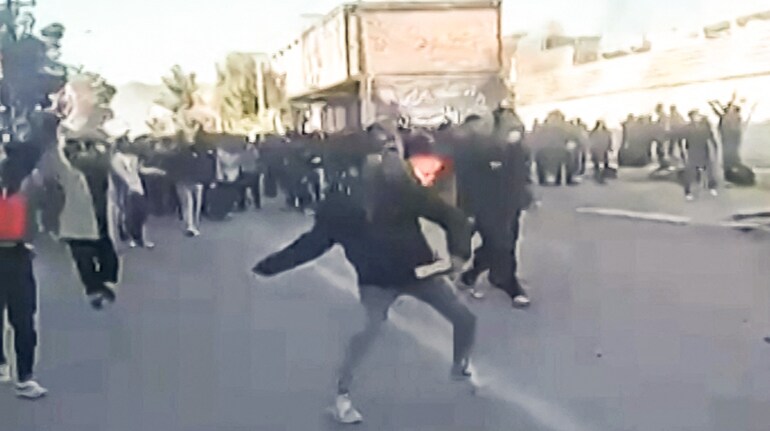
Iran’s leadership insists it is exercising restraint while confronting unrest. Human rights groups, eyewitnesses and foreign governments tell a far darker story, one in which children are being killed, minors detained, and security forces accused of indiscriminate violence as the state openly rejects pressure from the United States.
At the heart of the current protests lies a stark contradiction: Iranian authorities say they are listening to legitimate grievances, even as evidence mounts of a sweeping crackdown that has engulfed young people and drawn international alarm.
‘No leniency’ vs reality on the streets
Iran’s judiciary has taken a hard public line. Judiciary chief Gholamhossein Mohseni Ejei ordered prosecutors to act “with resolve” against what he called “rioters” and to show “no leniency or indulgence”, while insisting the state distinguishes between protesters and those causing unrest.
Yet human rights organisations say that distinction has collapsed on the ground.
According to the US-based Human Rights Activists in Iran (HRAI), at least three children have been killed and more than 40 minors arrested during just over a week of nationwide protests. Overall, the group says nearly 1,000 people have been detained and at least 20 killed as demonstrations spread to at least 78 cities and 222 locations.
The unrest was initially triggered by the collapse of Iran’s currency and soaring living costs but quickly morphed into political protests calling for the end of the regime. Supreme Leader Ali Khamenei has dismissed demonstrators as “rioters”, signalling a low tolerance for dissent.
Children at the centre of the unrest
What has set this wave of protests apart is the prominent role — and toll — on minors.
The Guardian reported that 15-year-old Mostafa Falahi was killed in central Iran after security forces opened fire on protesters. Another teenager, 17-year-old Rasul Kadivarian, was killed alongside his brother in Kermanshah when forces allegedly fired directly into crowds. The identity of a third deceased minor has yet to be confirmed.
HRAI deputy director Skylar Thompson said the documented killings and arrests show that young people are “present throughout the ongoing protests”, describing the targeting of civilians — particularly children — as a violation of international law.
Witnesses describe scenes resembling armed conflict rather than crowd control. One protester told The Guardian that security forces fired as if confronting “enemies or armed groups”, with wounded demonstrators arrested or blocked from receiving hospital care.
Rights group Hengaw has accused state forces of using tear gas and military-grade weapons, and of beating detainees before transferring them to undisclosed locations — allegations Tehran denies.
Defying Washington as pressure mounts
The crackdown has unfolded despite direct warnings from US President Donald Trump, who said Iran would “get hit very hard” if authorities killed more demonstrators. Tehran has publicly brushed aside the threat.
Iranian officials argue that foreign actors — including the United States and Israel — are fuelling unrest. Prosecutors have warned of “externally designed scenarios”, while conservative media have accused Washington and Tel Aviv of backing rioters.
This defiance reflects a broader standoff. Iran’s economy remains under severe strain from international sanctions, with inflation in double digits and the rial losing more than a third of its value in a year. The government has announced modest cash allowances, but protests continue.
While state media claim demonstrations are waning, riot police remain deployed across cities, universities have shifted online, and protests have spread to the Iranian diaspora abroad.
Why this moment matters
Iran has weathered waves of unrest before, most notably after the death of Mahsa Amini in custody in 2022. For now, officials say the current protests have not reached that scale.
But the killing of children, the arrest of minors and Tehran’s open dismissal of US warnings have sharpened scrutiny. The key question is no longer just how Iran responds to dissent — but how long it can maintain the gap between its claims of restraint and the evidence emerging from its streets.
Discover the latest Business News, Sensex, and Nifty updates. Obtain Personal Finance insights, tax queries, and expert opinions on Moneycontrol or download the Moneycontrol App to stay updated!
Find the best of Al News in one place, specially curated for you every weekend.
Stay on top of the latest tech trends and biggest startup news.