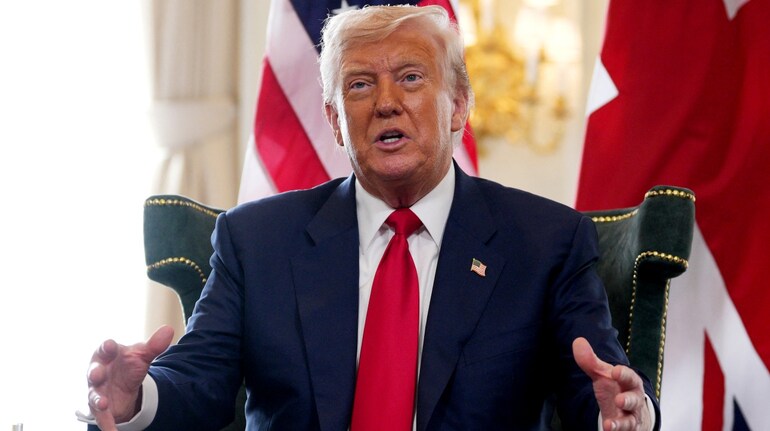
At a donor dinner earlier this month, US President Donald Trump privately acknowledged that the coronavirus vaccine programme Operation Warp Speed was among the greatest achievements of his first term. But he also lamented that he couldn’t take public credit for it. The politics of vaccines, once a point of pride for Trump, have now become a source of tension within his administration as Health Secretary Robert F. Kennedy Jr. pursues an agenda rooted in scepticism about vaccines, the Wall Street Journal reported.
Kennedy’s influence over vaccine policy
Kennedy, who leads the Department of Health and Human Services, has embraced his “Make America Healthy Again” movement and its antivaccine supporters, many of whom were critical to Trump’s 2024 re-election. He has been given wide latitude to reshape vaccine policy. This month, he told Trump during a cabinet meeting that autism rates were rising because of “interventions” he linked to vaccines, a claim rejected by mainstream science. Trump expressed excitement at Kennedy’s forthcoming report, even though decades of studies show no connection between vaccines and autism.
Crisis at the CDC
Tensions came to a head this week when Susan Monarez, newly appointed director of the Centers for Disease Control and Prevention, was fired after refusing to dismiss senior leaders and approve vaccine guidance that emphasized risks over benefits. Within hours, three senior officials—Debra Houry, Demetre Daskalakis, and Daniel Jernigan—resigned in protest, saying the agency’s integrity had been compromised by ideology. Their departures stripped the CDC of decades of experience at a moment when updated Covid and flu shots are scheduled for release this fall.
A broader purge of expertise
Kennedy has removed all members of the CDC’s vaccine advisory committee and replaced them with figures who include vaccine opponents. Budget cuts and layoffs across HHS have deepened fears inside the agency. Some CDC officials described learning about new vaccine policies not through internal briefings but through social media posts or opinion articles written by Kennedy. The changes have left staff demoralized, and some say the agency is being hollowed out in ways that could leave the country unprepared for future outbreaks.
Public health consequences
The turmoil comes at a sensitive time. The Food and Drug Administration has already tightened rules for approving booster shots, authorizing new Covid vaccines this week for a narrower group of people. Doctors are warning patients that access to vaccines could be limited and insurers may decline coverage for those outside federal recommendations. If supply shortages coincide with a severe winter outbreak, the White House could face political fallout.
Trump’s political balancing act
Trump’s alliance with Kennedy reflects a delicate calculation. On one hand, he privately views the vaccine rollout as a historic success. On the other, his embrace of vaccine-sceptical voters and Kennedy’s agenda has made it politically impossible to publicly champion Operation Warp Speed. Instead, he has allowed Kennedy to drive vaccine policy in a direction that scientists say undermines public health while reinforcing distrust in federal institutions.
What lies ahead
The resignations at the CDC highlight the deep rift between scientific consensus and the administration’s political priorities. Public health officials fear that the erosion of the CDC’s credibility could discourage vaccination at a time when updated shots are needed to blunt seasonal illness. For Trump, the paradox remains unresolved: his greatest achievement is also the one his administration can least afford to celebrate.
Discover the latest Business News, Sensex, and Nifty updates. Obtain Personal Finance insights, tax queries, and expert opinions on Moneycontrol or download the Moneycontrol App to stay updated!
Find the best of Al News in one place, specially curated for you every weekend.
Stay on top of the latest tech trends and biggest startup news.