
US President Donald Trump has announced a two-week ceasefire with Iran, pausing military action just hours before a looming deadline for escalation.
The truce, brokered through diplomatic efforts led by Pakistan, is conditional and aimed at creating space for a broader, long-term agreement between the two sides.
Key condition: Strait of Hormuz must reopen
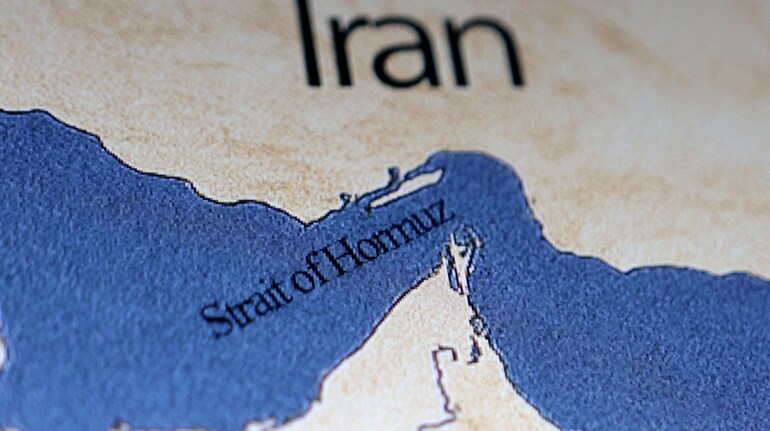
The central requirement of the ceasefire is Iran’s agreement to ensure the “complete, immediate, and safe opening” of the Strait of Hormuz. The strategic waterway carries a significant share of global oil supplies, making its reopening critical to global markets.
What the US is pausing
As part of the deal, the United States will suspend planned strikes on Iranian infrastructure, including bridges, power plants and other key installations that had been under threat in recent days.
Trump said the US has already “met and exceeded all Military objectives,” framing the pause as a strategic decision rather than a concession.
Iran signals conditional acceptance
Iran’s Foreign Minister Abbas Araghchi has responded to the announcement, signalling conditional acceptance of the ceasefire framework.
“If attacks against Iran are halted, our Powerful Armed Forces will cease their defensive operations,” Araghchi said, making clear that Tehran’s compliance depends on a halt in US strikes.
He also confirmed that safe passage through the Strait of Hormuz would be allowed during the two-week window, though under strict coordination. “Safe passage through the Strait of Hormuz will be possible via coordination with Iran’s Armed Forces,” he said, noting that this would be subject to “technical limitations.”
Araghchi also acknowledged Pakistan’s mediation efforts, thanking Prime Minister Shehbaz Sharif and Army Chief Field Marshal Asim Munir for helping de-escalate tensions.
What Iran is bringing to the table
Iran has reportedly put forward a 10-point proposal, which the US has described as a “workable basis” for negotiations.
The Iranian statement also referenced a broader framework of talks, including a US-proposed 15-point plan, indicating both sides are working toward convergence.
The breakthrough comes after Pakistan’s leadership pushed for a pause in hostilities, with Sharif urging a two-week window to “allow diplomacy to run its course.” Their intervention is seen as key to bringing both sides to the table.
What happens now?
The ceasefire is designed as a negotiation window, giving diplomats time to work toward a more permanent agreement. Discussions around potential in-person talks have also surfaced, though nothing has been confirmed yet.
Iranian officials have indicated cautious optimism. Tehran’s envoy to Pakistan described the development as “a step forward” from a “critical, sensitive stage,” signalling that talks may be gaining traction.
Discover the latest Business News, Sensex, and Nifty updates. Obtain Personal Finance insights, tax queries, and expert opinions on Moneycontrol or download the Moneycontrol App to stay updated!
Find the best of Al News in one place, specially curated for you every weekend.
Stay on top of the latest tech trends and biggest startup news.