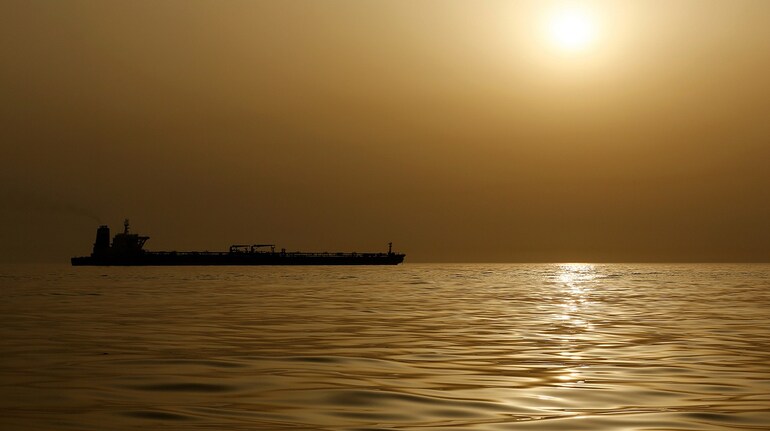
As tensions rise between Israel and Iran, the world’s oil markets are watching closely—but one country stands to lose more than most: China. While Israel has so far refrained from targeting Iran’s energy export hubs, any shift in that strategy could choke off Tehran’s crude exports and send economic ripples through China’s private refining sector, which has become deeply dependent on discounted Iranian oil, the Wall Street Journal reported.
China is now Iran’s last major buyer
Since the US reimposed sanctions on Iran’s oil exports in 2018, most of the world has stayed away from Tehran’s crude. But not China. More than 90% of Iran’s oil exports now go to China, according to data from commodities intelligence firm Kpler. Much of that oil is purchased by small, independent refineries known as “teapots” located in Shandong province. These refineries began switching en masse to illicit Iranian crude in 2022, lured by steep discounts that help preserve their razor-thin margins.
Because Iran’s oil is sanctioned, it is sold covertly via a “dark fleet” of tankers that disable their transponders to avoid detection. The cargoes are often paid for in renminbi rather than U.S. dollars, forcing Iran to use its earnings mainly on Chinese goods. One Iranian official described the resulting trade relationship as “a colonial trap.”
Discounts are narrowing amid fears of supply disruption
The price gap between Iranian Light crude and similar, non-sanctioned grades like Oman Export Blend has narrowed sharply in recent months. From an average discount of $11 a barrel in 2023, Iranian oil now trades just $2 cheaper. Analysts say this reflects growing concerns that conflict with Israel—or tougher U.S. enforcement—could curb Iranian supply and make the black-market barrels even riskier to access.
If Israel were to strike Kharg Island, the Persian Gulf terminal where most of Iran’s crude is loaded onto tankers, it could cut off Tehran’s main oil artery. Such an action would not only deal a financial blow to Iran, but also instantly cut off China’s supply of discounted crude.
China’s teapot refineries would be forced to pay market price
Losing access to Iranian oil would leave China’s private refiners scrambling. Without discounted barrels, they would need to turn to the open market and compete for full-priced crude, reducing their cost advantage and squeezing margins. While the global oil market might be able to rebalance over time, China’s refineries would feel the pressure immediately.
Markets could absorb the shock—but not without pain
A disruption of Iran’s 1.7 million barrels per day—less than 2% of global demand—would be significant, but not unmanageable. Saudi Arabia and the UAE together hold over four million barrels per day of spare capacity, and historical patterns suggest they could replace around 80% of lost Iranian supply within six months, according to Goldman Sachs.
However, any disruption would likely cause a temporary price spike at the pump, something President Trump is keen to avoid during an election cycle. That political calculus may temper the White House’s response to any Israeli escalation targeting Iran’s oil infrastructure.
Still, for China, the risk is direct and immediate. If Iranian oil stops flowing, it would be the first time in years that its private refiners would have to pay full price for every barrel—an unwelcome shock in a sector built on buying cheap.
Discover the latest Business News, Sensex, and Nifty updates. Obtain Personal Finance insights, tax queries, and expert opinions on Moneycontrol or download the Moneycontrol App to stay updated!
Find the best of Al News in one place, specially curated for you every weekend.
Stay on top of the latest tech trends and biggest startup news.