
Just a couple of years ago, Saudi Arabia was trying to cool things down with Iran. Now, it finds itself pulled into a conflict it had actively tried to stay out of.
What has changed is not Saudi intent, but the regional environment around it.
From confrontation to cautious engagement
For years, Saudi Arabia saw Iran as its main regional rival. Crown Prince Mohammed bin Salman had once taken a very hard line, warning against engaging with Tehran.
But that approach shifted. In 2023, Saudi Arabia restored diplomatic ties with Iran in a China-brokered deal after years of tension. The idea was simple: reduce conflict, stabilise the region, and create the kind of environment needed for economic growth.
This mattered because Saudi Arabia’s larger plan, including its Vision 2030 projects, depends heavily on stability. Investors, tourism and large infrastructure bets don’t sit well with regional instability, the Financial Times reported.
The war has disrupted that balance
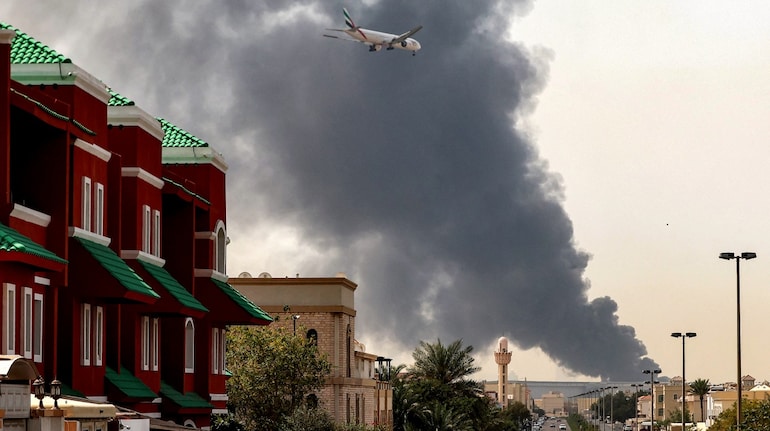
The US and Israel’s strikes on Iran have upended that strategy. Since the conflict began, Iran has responded by targeting not just US assets but also Gulf states, including Saudi Arabia. Attacks have hit American bases in the kingdom, as well as critical infrastructure like oil facilities.
This is exactly the kind of spillover Saudi Arabia had hoped to avoid. The country had tried to keep itself at arm’s length, even signalling to Iran that it would not allow its territory or airspace to be used for military action.
But once the conflict escalated, that distance became harder to maintain.
Economic ambitions now face new risks
The longer the war continues, the more it threatens Saudi Arabia’s economic plans. The kingdom has been trying to position itself as a global hub for business, tourism and investment. But ongoing conflict changes how investors see risk. Even symbolic disruptions
are starting to show. High-profile events like Formula 1 races in the region have already been cancelled.
There is also a broader concern around energy markets. Saudi Aramco’s leadership has warned that a prolonged conflict could have serious consequences for the global economy, especially given how central the region is to oil and gas supply.
At the same time, the pressure is starting to show in how the government might have to spend its money. If the situation drags on, more funds will likely go towards defence and security, which means some of the big, long-term economic projects could slow down.
Caught between two difficult outcomes
Saudi Arabia is in a bit of a bind right now. It wants the conflict to end, and quickly. But it’s also uneasy about what that ending might look like. If things stop too abruptly, there’s a risk of ending up with an Iran that is weakened but still hostile, or even more hardline than
before.
There’s also a quieter calculation at play. While Gulf countries are wary of chaos, they also wouldn’t mind seeing Iran’s ability to threaten them reduced. That makes the situation complicated, they want de-escalation, but not necessarily a simple reset to how things were
earlier.
The risk of wider escalation
There’s always the concern that this could spill over further. Groups aligned with Iran, like the Houthis in Yemen, could step up their involvement. Saudi Arabia has spent years trying to manage that front, and any renewed escalation would undo a lot of that effort.
Then there’s the risk to critical infrastructure, especially oil facilities. The region has seen how disruptive those attacks can be, not just locally, but for global markets as well.
A reality check for Saudi foreign policy
If anything, this situation has been a reminder of how quickly things can change in the region.
Saudi Arabia had been trying to move towards a more stable relationship with Iran, keeping tensions in check and communication lines open. But the current conflict shows how fragile that approach can be when larger powers get involved.
There’s also some frustration in Riyadh. Gulf countries had warned about the risks of a conflict like this, but are now dealing with the fallout anyway.
Stability remains the core objective
Despite everything, Saudi Arabia’s goal hasn’t really changed. It still wants stability more than anything else.
The problem is that stability now feels harder to achieve. The risks are more immediate, more unpredictable, and often outside its control.
For Mohammed bin Salman, the challenge has shifted. It’s no longer just about managing ties with Iran, it’s about navigating a region where events can move faster than any long-term strategy.
Discover the latest Business News, Sensex, and Nifty updates. Obtain Personal Finance insights, tax queries, and expert opinions on Moneycontrol or download the Moneycontrol App to stay updated!
Find the best of Al News in one place, specially curated for you every weekend.
Stay on top of the latest tech trends and biggest startup news.