For decades, the United States was seen as the most welcoming place in the world for international students. Degrees from American universities opened doors, and a system of flexible visas let students focus on their studies and careers without worrying about immigration paperwork. That reputation is now under strain.
Under the Trump administration, Washington has moved to tighten the rules on student visas and increase costs for foreign visitors. Proposals to end the long-standing “duration of status” system and to impose new fees have unsettled families across the world, especially in India which sends the largest number of students to the US. Critics warn that these steps risk undermining America’s higher-education leadership.
What has changed in the US student visa system
The Department of Homeland Security (DHS) has proposed ending the “duration of status” or D/S system. For nearly 50 years, this allowed F-1 academic students and J-1 exchange visitors to stay in the United States for as long as they were enrolled full-time and complied with visa rules. No expiry date was printed on their I-94 records. Compliance was mainly overseen by universities through designated school officials and reported to the DHS student tracking database.
The Trump administration says this flexible system is being abused. It points to a small but significant number of students who stay on for many years by moving from one course to another or enrolling in language schools after earning advanced degrees. The DHS argues that assigning fixed end dates will let the government reassess compliance more regularly and reduce misuse.
Under the proposed change, students would be admitted for up to four years or until the end date of their programme, whichever is sooner. To stay longer, for example to complete a PhD or to use Optional Practical Training (OPT), they would have to apply to US Citizenship and Immigration Services (USCIS) for an extension of stay. This means filing Form I-539, paying fees, providing financial evidence, submitting biometrics and possibly attending an interview.
The grace period after completing studies would be cut from 60 days to 30 days. Transfers between schools would be restricted: undergraduates would have to complete an academic year before moving, and graduates would not be allowed to change programmes mid-course. Students would also be barred from starting a new degree at the same or lower level while staying in F-1 status, effectively ending the practice of doing a “second Master’s”. Language study would be capped at 24 months.
These are only draft rules at present. The DHS has said there will be transition provisions if and when the regulation is finalised. Current students will be given fixed end dates based on their existing documents plus a one-time grace period. Comments on the proposal are open until late September and October, after which the department must review submissions before issuing a final rule. If the process goes ahead, the changes could take effect in early or mid-2026.
New costs for students
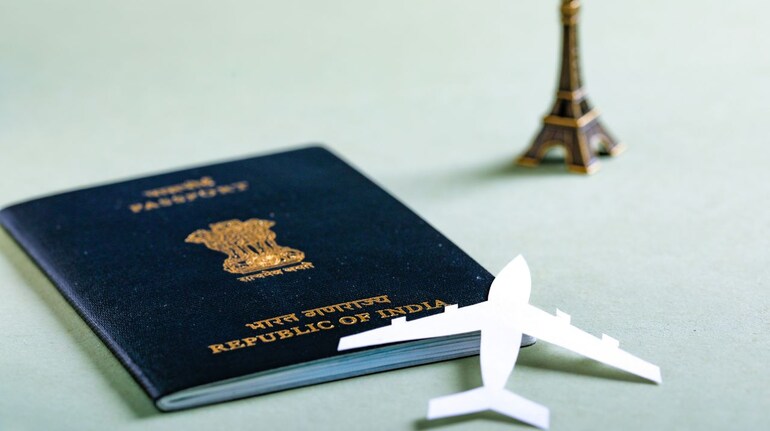
In addition to the tighter rules, the US has introduced a new $250 “visa integrity fee” for travellers from countries outside the visa waiver programme, effective October 1. This will raise the total cost of a US visa to $442, one of the highest visa fees in the world. Countries likely to be most affected include India, China, Brazil, Mexico and Argentina, which send large numbers of students and professionals to the US.
Industry groups say the timing is worrying because international arrivals have already been falling. Government data show a 3.1 per cent drop in July, marking the fifth straight month of decline. Travel experts warn that adding friction to the process will further reduce volumes and make planning harder for families and universities.
Stricter social media screening
For international students heading to the US, keeping their social media profiles public throughout their stay has been mandatory. According to the US Embassy in New Delhi, all student and exchange visitor visa applicants in the F, M and J categories are required to adjust their privacy settings to public to enable security vetting from application through the validity of the visa. The Embassy said this measure is to ensure applicants remain eligible to travel and safeguard US national security.
The F-1 visa covers academic studies, the M-1 visa is for vocational or non-academic courses and the J-1 visa allows teaching, research and training. In 2023-24, Indian students made up the largest international cohort in the US with 3.31 lakh enrolments. The rule applies worldwide and builds on a 2019 requirement for applicants to share social media identifiers. The State Department resumed student visa interviews in June after a temporary pause.
Impact on Indian students
There are more than a million international students in the United States, about 330,000 of them from India. Many Indians are in STEM fields and rely on long academic programmes and post-study work options. Under the proposed four-year limit a two-year Master’s followed by three years of STEM OPT would already exceed the cap, forcing students to apply for an extension. PhD programmes, which often take five to six years, would almost certainly require multiple extensions.
Immigration lawyers point out that until now the university handled compliance and USCIS was not involved unless there was a problem. Under the new system USCIS could approve or deny an extension in the middle of a student’s course. For families spending large sums on tuition this introduces uncertainty and anxiety.
The elimination of the second Master’s route also removes a popular fallback option for Indians who miss out on the H-1B visa lottery. In the past many would enrol in another Master’s programme to maintain status while trying again for the work visa. With that door closing some may look at PhDs or other countries instead.
Indian counsellors already report confusion. When news of the draft regulation broke, many students thought the rules were final and sent urgent messages to lawyers. Advisers had to reassure them that nothing changes immediately. Even so, the constant churn of immigration policy is eroding confidence.
Impact on US universities and research
Universities and education groups in the United States have condemned the proposed rules. The Presidents’ Alliance on Higher Education and Immigration, which represents 580 college and university leaders, has called the changes “unnecessary and counterproductive” and warned that they will worsen USCIS backlogs and deter students at a time when enrolments are still recovering from the pandemic.
NAFSA, the leading association of international educators, says the rule would shift academic decisions from campuses to immigration officials, burying students and staff in red tape without improving oversight. Immigration law firms caution that mandatory mid-programme extensions could create status and work-authorisation uncertainty if filings are late or denied, even if some protections exist while applications are pending.
The economic stakes are high. International students contribute tens of billions of dollars to the US economy each year and play a critical role in research and teaching. They fill graduate assistantships, staff laboratories and diversify classrooms. A decline in student inflows could slow innovation, reduce revenue for universities and weaken America’s global competitiveness.
The new $250 visa fee is also seen as damaging. Critics argue that labelling it a “visa integrity fee” implies mistrust of applicants. Countries like Canada, Australia and Germany are moving in the opposite direction by streamlining their systems to attract global talent. Analysts warn that the US risks sending a message of “transactional education” where students feel like paying customers rather than valued contributors.
Discover the latest Business News, Sensex, and Nifty updates. Obtain Personal Finance insights, tax queries, and expert opinions on Moneycontrol or download the Moneycontrol App to stay updated!
Find the best of Al News in one place, specially curated for you every weekend.
Stay on top of the latest tech trends and biggest startup news.