US President Donald Trump’s aggressive tariff policies have often been portrayed as a vital move to breathe new life into American manufacturing, a sector he believes is essential for the nation’s economic strength and security. But here’s the thing: this goal isn’t just an American phenomenon. The drive to bolster and grow domestic manufacturing through government action is making a comeback, reminiscent of the 1970s.
Trump’s commitment to reviving the manufacturing sector is clear, especially since the tariffs apply only to goods and not services, leaving trade in services between the US and its partners untouched. The Trump administration claims that these tariffs will encourage companies to produce more at home, rebuild supply chains, and regain America’s manufacturing advantage. Yet, the reality of bringing manufacturing jobs back is much more complicated than simply slapping on tariffs.
Public Sentiment vs Personal Reality
While there’s a strong public desire for a revival of American manufacturing—evident from the 2024 Cato Institute Trade and Globalization National Survey, which shows that 80% of Americans think the country would benefit from more manufacturing jobs—only 25% believe they would personally be better off working in a factory, and just 2% actually do.
This glaring gap between what people want and what they’re willing to do underscores the challenges of revitalizing American manufacturing. While there’s a clear desire for a robust manufacturing sector, many Americans are hesitant to take on those jobs themselves.
The survey data falls in line with manufacturing job data. As of may 2024, there were over 600,000 open positions in manufacturing, and this number hasn’t dipped below 300,000 in roughly a decade.
According to a Financial Times column, manufacturing wages have been steadily decreasing, falling behind the private-sector average in 2018. Moreover, the column underscores the often-difficult working conditions in factories—"noisy, repetitive, and isolating"—which may contribute to the below-average job satisfaction reported by manufacturing employees in a 2024 Gallup poll.
Also, according to US Bureau of Labor Statistics figures, if the whole US trade deficit were rebalanced through expanding domestic industries, this would increase the share of manufacturing employment within the US by about one percentage point, from about 8 per cent today to 9 per cent.
Trade and Tactical Rerouting
Trump's tariffs are aimed at decoupling from China and restoring American industrial strength. Yet rather than bringing jobs back to US soil, many companies are simply rerouting their supply chains through third countries. India, Vietnam, and Mexico are increasingly serving as transit hubs or alternative production centres.
Indian ports and firms, for instance, have seen a rise in transshipment activity, with Chinese-origin goods being rerouted through Indian channels to avoid tariff penalties. While this highlights India’s growing role in the global trade network, it also undercuts the idea that tariffs will automatically lead to domestic job creation in the US.
Limits for Reshoring Narrative
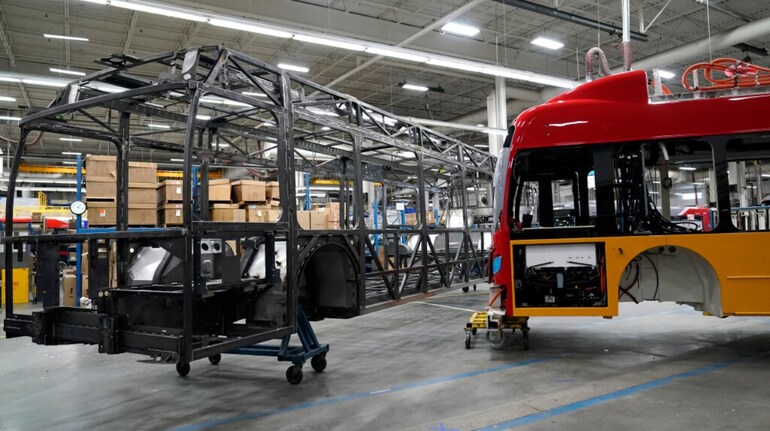
Should American companies repatriate manufacturing, the resulting jobs would differ significantly from historical models. Factories today are designed for efficiency, relying heavily on machines and minimal human intervention. This means fewer opportunities for large-scale employment.
This disconnect is clearly visible in the Cato survey data. Americans may romanticize factory work, but the reality – physically demanding tasks, rigid shifts, and comparatively lower wages - makes it an unattractive option for many. With only 2% currently employed in manufacturing and just 25% open to factory jobs, the labor pool for any “reshoring” effort is shallow at best.
Capital Investment
Rebuilding the manufacturing sector requires massive capital investment in new factories, equipment, and infrastructure. Finding the necessary investment is a significant challenge, particularly given the long-term nature of manufacturing investments.
The failure to effectively reshore manufacturing jobs could have significant economic and political implications. If Trump's tariff policies fail to deliver on their promise of creating manufacturing jobs, it could lead to economic disappointment and voter backlash.
Discover the latest Business News, Sensex, and Nifty updates. Obtain Personal Finance insights, tax queries, and expert opinions on Moneycontrol or download the Moneycontrol App to stay updated!
Find the best of Al News in one place, specially curated for you every weekend.
Stay on top of the latest tech trends and biggest startup news.