




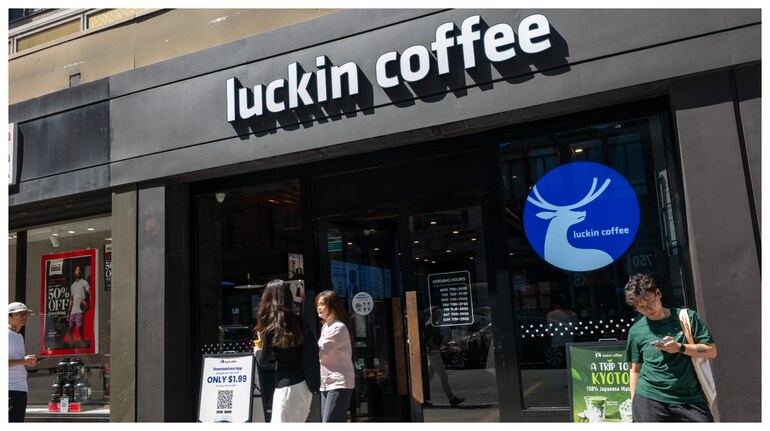
Even as US-China relations remain tense, the American food scene is being transformed by a fast-rising group of Chinese restaurant and beverage chains. Their timing is not accidental. China’s consumer economy, once buoyed by rapid growth, is now slowing under the weight of a real-estate crisis and weaker household spending. Domestic food brands face brutal competition, with price wars so severe that many chains operate on razor-thin margins. For companies backed into a corner, the United States — with its size, stability and appetite for novelty — represents both escape and opportunity, the New York Times reported.
Tea giants like Heytea, Chagee and Naisnow, offering drinks topped with cheese foam or fresh fruit, have carved out space in New York, Los Angeles and beyond. Coffee powerhouse Luckin, which outnumbers Starbucks in China, has opened several Manhattan stores. Wallace, a fried-chicken chain with more than 20,000 outlets in China, has landed in California. And Haidilao, the hot-pot phenomenon famous for its noodle dances and hyper-attentive service, is doubling down after an uneven first attempt at the American market.
Why chains are looking west
For investors like Bob Qing, who tracks China’s food sector, the logic is simple: the country has far too many restaurants competing for too few customers. China now has triple the number of food-and-beverage outlets per capita compared with the United States, and roughly half of all new restaurants fail within their first year. Expanding abroad — especially into a market as large as America — is one of the few ways to outrun the squeeze.
The US, meanwhile, offers something China no longer does: pricing power. Naisnow’s leadership admits margins in New York already look better than what the brand earns at home, where tea chains undercut one another to stay alive. Heytea, now with about 4,000 stores, stopped accepting new domestic franchise applications this year and accelerated its US footprint instead.
Winning over American customers
Success, however, is not guaranteed. Haidilao struggled early because it transplanted its Chinese service culture without adjusting for American expectations. Staff performed their signature noodle-making dances and offered manicures to diners waiting for a table, but many US patrons interpreted the attentiveness as intrusive rather than welcoming. The chain has since recalibrated: clearer English-language guidance at the table, expanded beef selections, and slight tweaks to spice levels.
Other brands have learned to adapt more quickly. Wallace simplified its sprawling China menu to focus on fried-chicken sandwiches and adjusted recipes for local tastes — removing lettuce, adding pickles and increasing salt. Its pitch is straightforward: offer generous portions at prices well below major American chains. At its California location, three full-size sandwiches cost $10, a value play in a market where a single Chick-fil-A sandwich is nearly $6.
Chagee, meanwhile, intentionally softens its Chinese branding. Its logo echoes Asian opera imagery but is abstract enough to feel global, and the company markets itself as “ABC” — American-born Chinese — to ease its entry. It has already lined up more stores across multiple states.
A cultural and geopolitical balancing act
Despite geopolitical tensions, Chinese brands have not been met with significant resistance. Many US consumers are drawn to novelty and global flavours, and Asian American communities offer natural early adopters. Wallace’s customer base, once overwhelmingly Asian, now spans a broader demographic. The US Embassy in Beijing has even encouraged exchanges with Chinese restaurant operators, seeing food as one of the few areas where cross-border engagement still feels unthreatening.
Back in China, these overseas moves are celebrated as markers of national pride — proof that homegrown brands can compete with global heavyweights just as American giants like Starbucks and Burger King recalibrate or retreat from the Chinese market.
What this moment signals
The arrival of these chains is not simply a culinary trend. It reflects deep shifts in both economies: China’s pivot away from reckless growth, and America’s openness to global dining influences even amid political strain. Whether these brands become lasting fixtures or passing fascinations will depend on how well they navigate US tastes while preserving the innovation that made them stand out at home. For now, the lines outside Heytea in Times Square and Naisnow in Flushing suggest that the experiment has only begun.
Discover the latest Business News, Sensex, and Nifty updates. Obtain Personal Finance insights, tax queries, and expert opinions on Moneycontrol or download the Moneycontrol App to stay updated!
Find the best of Al News in one place, specially curated for you every weekend.
Stay on top of the latest tech trends and biggest startup news.