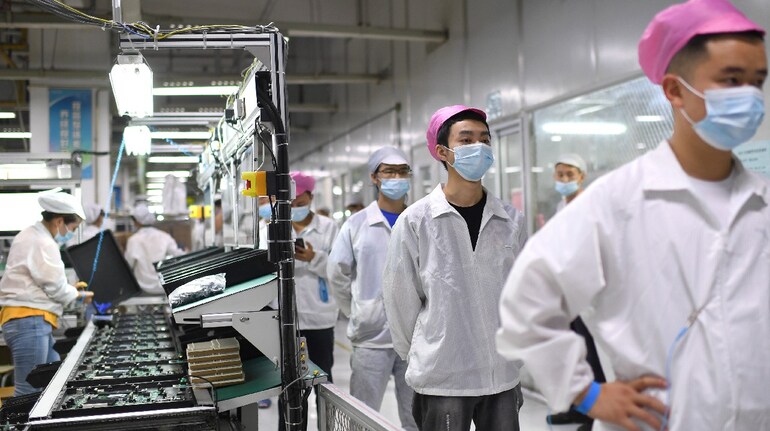
Faced with rising tariffs and deepening hostility from Washington, Chinese manufacturers are turning to Mexico as a backdoor into the US market. At industrial parks like Hofusan, Chinese investment is booming—creating jobs for Mexicans, tension in trade talks, and a new battleground in Trump’s trade war, the Wall Street Journal reported.
Chinese manufacturers reroute through Mexico to avoid US tariffs
After President Trump’s first wave of tariffs in 2018, Chinese companies began quietly relocating production to Mexico to maintain access to US consumers under the US-Mexico-Canada Agreement (USMCA). That trend has intensified: billions of dollars have poured into Mexico, with more than 135,000 jobs created and over 400 Chinese-owned factories established.
The strategy has fuelled a surge in US imports from Mexico and a swelling trade deficit—up to $172 billion last year from $78 billion in 2018—frustrating the Trump administration, which now views the workaround as a major loophole in the trade deal it negotiated.
Hofusan: the epicenter of Chinese industry in Mexico
Hofusan Industrial Park, located about 125 miles south of the Texas border, exemplifies the new trade dynamic. Built by a joint venture between China’s Holley Group and Mexico’s Santos family, the park has attracted over 20 Chinese firms with another 20 on the way. A once-rural cattle ranch now boasts $1.5 billion in Chinese investment, with plans for housing, shops, and even entertainment to serve the influx of foreign workers.
“We’re playing by the rules,” said Cesar Santos, Hofusan’s chairman. “Many of our clients are confident they’ll weather any new tariffs, since their products have no easy substitutes.”
Trump’s crackdown looms
Trump has already imposed 25% tariffs on foreign steel, aluminium, and soon cars, and is now weighing new country-specific or sweeping global tariffs—including on imports from Mexico. His administration accuses Chinese firms of exploiting USMCA by setting up in Mexico solely to avoid tariffs meant to protect US industry.
Automotive supply chains are especially at risk. US automakers source over 40% of their parts from Mexico, many from Chinese-owned facilities. Analysts at JPMorgan estimate the new tariffs could add $3,125 to the cost of each vehicle. Auto executives warn of job losses, price hikes, and wiped-out margins.
Chinese firms anchor themselves deeper in Mexico
Despite Trump’s threats, Chinese companies already in Mexico are doubling down. Flooring maker Elegant Home-Tech and car parts supplier Ningbo Xusheng have expanded operations after being hit by earlier tariffs. Bethel Automotive, which supplies GM and Ford, opened a plant that now employs over 500 people and is building a second one.
“We came because our US clients asked us to,” said Tao Zhang of Zhongke Construction Mexico, which helps Chinese manufacturers set up operations.
The Tesla-fuelled EV boom in northern Mexico also draws Chinese suppliers, even as Tesla has paused its local factory plans. New facilities and contracts are already in motion—like Xusheng’s $262 million order from a major US automaker.
Economic impact in Mexico: jobs and growth
Chinese investment is transforming towns like Salinas Victoria, where Hofusan is based. Unemployment is nearly nonexistent, and tax revenues have doubled. Mayor Raúl Cantú is investing in public services and building a baseball stadium to support the growing population.
“The jobs are real, and the rules are being followed,” said Emmanuel Loo, economic minister of Nuevo Leon state. “We welcome investment from anywhere, as long as it complies with USMCA.”
Still, Mexico is under pressure. The Trump administration has urged Mexico to clamp down on Chinese expansion, even floating tariff alignment with the US as a negotiating chip. Mexico recently blocked EV giant BYD from opening a plant, wary of angering Trump.
A difficult balancing act for Mexico
Mexico is walking a tightrope: honouring trade ties with China while safeguarding its critical relationship with the US. President Claudia Sheinbaum has signalled loyalty to US trade priorities, even as Chinese firms remain crucial to Mexico’s export boom.
“We prioritize trade with the countries with which we have agreements,” she said, noting that more Chinese investment still flows to the US and Canada than to Mexico.
The long game: tariffs or no, China stays
Even amid rising tariffs, most Chinese manufacturers aren’t leaving. “Margins are thinner at home. They have nowhere else to go,” said Huo Pugang, a longtime Chinese manager in Guadalajara. “They’ll accept lower profits if it means staying in the market.”
With housing complexes, restaurants, and infrastructure rising alongside the factories, Chinese industry in Mexico is becoming entrenched.
“All of this will be filled with factories next year,” Santos said, gesturing toward new cleared land. “It’s already sold out.”
As Trump cracks down on Chinese trade and revisits NAFTA’s successor, Chinese firms are already rooted in Mexico. For now, they’re helping Mexico become America’s top trading partner—leaving Washington to grapple with a reshaped global supply chain that tariffs alone may not fix.
Discover the latest Business News, Sensex, and Nifty updates. Obtain Personal Finance insights, tax queries, and expert opinions on Moneycontrol or download the Moneycontrol App to stay updated!
Find the best of Al News in one place, specially curated for you every weekend.
Stay on top of the latest tech trends and biggest startup news.