China has strongly opposed the Dalai Lama’s claim that his successor would be born outside of China, stating that he must “abide by the laws and regulations of the state” regarding the matter.
Beijing maintains that it holds the authority to choose the Dalai Lama’s successor, while the Tibetan spiritual leader has asserted that any successor appointed by China would not be recognised.
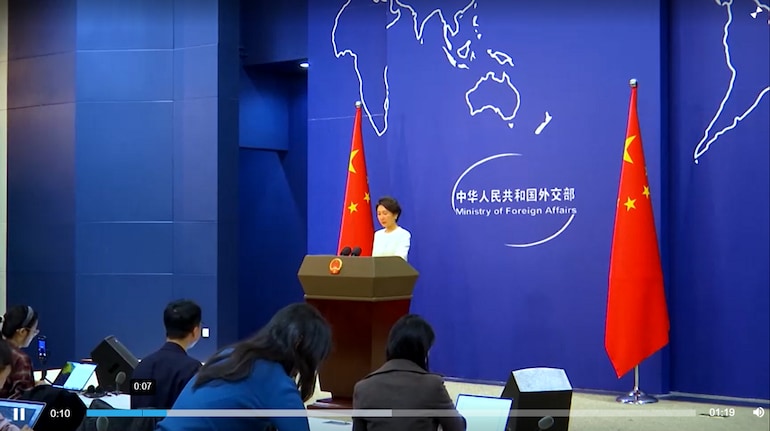
During a regular press briefing on Tuesday, Chinese foreign ministry spokesperson Mao Ning referred to the Dalai Lama as a “political exile who is engaged in anti-China separatist activities under the cloak of religion.”
She said, "The 14th Dalai Lama is a political exile who engages in anti-China separatist activities under the cloak of religion and has no right to represent the Tibetan people at all."
"The Chinese government promulgated regulations on religious affairs and measures for the management of the reincarnation of living Buddhas of Tibetan Buddhism. Respecting and protecting the inheritance of Tibetan Buddhism, including the inheritance of the Dalai Lama, should abide by the laws and regulations of the state, follow religious rituals and historical conventions, and follow the method of domestic searching and lot-drawing from the golden urn," Ning added.
The comments follow the Dalai Lama’s statement in a newly released book, intensifying a long-standing dispute with Beijing over the control of Tibet.
Tenzin Gyatso, the 14th Dalai Lama, fled to India in 1959 at the age of 23, along with thousands of Tibetans, following a failed uprising against Mao Zedong’s Communist rule.
Discover the latest Business News, Sensex, and Nifty updates. Obtain Personal Finance insights, tax queries, and expert opinions on Moneycontrol or download the Moneycontrol App to stay updated!
Find the best of Al News in one place, specially curated for you every weekend.
Stay on top of the latest tech trends and biggest startup news.