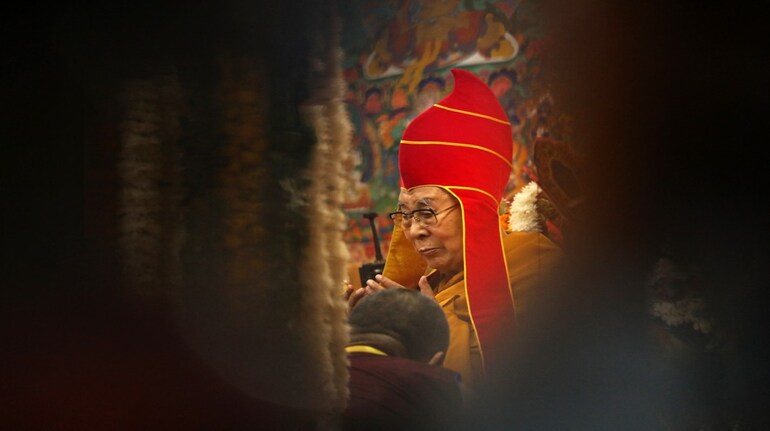
China has officially protested against Prime Minister Narendra Modi’s birthday wishes to the 14th Dalai Lama, calling the move a violation of India’s past commitments on Tibet-related (Xizang) issues. The protest also extends to the attendance of senior Indian officials at the Tibetan spiritual leader’s 90th birthday celebrations held in Dharamshala on Sunday.
The Chinese Foreign Ministry, in a sharp response on Monday, said India must stop "meddling" in its internal affairs and fully acknowledge the “anti-China separatist nature” of the Dalai Lama.
Beijing warns India to tread cautiously on Tibet
“India should fully appreciate the great sensitivity of Xizang-related issues and recognise the anti-separatist nature of the 14th Dalai Lama,” said Chinese Foreign Ministry spokesperson Mao Ning at a press briefing in Beijing.
She alleged that the Dalai Lama was a “political exile” engaged in separatist activities under the guise of religion. Mao reiterated that China has lodged a formal protest with India over the recent developments.
Modi’s Message and Indian ministers’ presence upset Beijing
On Sunday, PM Modi posted on X: “Warm birthday wishes to the Dalai Lama. He is an enduring symbol of love, compassion, patience and moral discipline. His message has inspired respect and admiration across all faiths. We pray for his continued good health and long life.”
His message was echoed by a visible presence of Indian leadership at the birthday celebration, including Union Ministers Kiren Rijiju and Rajiv Ranjan Singh, Arunachal Pradesh Chief Minister Pema Khandu, and Sikkim Minister Sonam Lama.
Their attendance added symbolic weight to India’s support for the Tibetan leader, which China sees as a challenge to its authority over Tibet (Xizang).
Rijiju’s remark on Dalai Lama’s reincarnation also draws fire
Just days before the celebration, China had also reacted strongly to a statement by Minority Affairs Minister Kiren Rijiju, who said the decision on the reincarnation of the Dalai Lama must be left to the Tibetan Buddhist institution and the Dalai Lama himself.
Reacting to this, Mao said: “India should act cautiously on Tibet-related issues to avoid affecting the improvement of bilateral relations.”
China has maintained that any reincarnation process must follow its laws, historical conventions, and approval from the central government in Beijing, a view India has increasingly appeared unwilling to endorse.
Dalai Lama reasserts spiritual independence on reincarnation
In a speech last week, the 14th Dalai Lama made it clear that the Gaden Phodrang Trust, and not China, will decide on his future reincarnation.
“The institution of the Dalai Lama will continue, and only the Gaden Phodrang Trust will have the authority to recognise it,” he said.
This statement directly challenges Beijing’s claim to oversee and approve the reincarnation process, which it insists must involve a lottery from a golden urn, a tradition introduced by the Qing dynasty, and legal oversight by Chinese authorities.
Discover the latest Business News, Sensex, and Nifty updates. Obtain Personal Finance insights, tax queries, and expert opinions on Moneycontrol or download the Moneycontrol App to stay updated!
Find the best of Al News in one place, specially curated for you every weekend.
Stay on top of the latest tech trends and biggest startup news.