






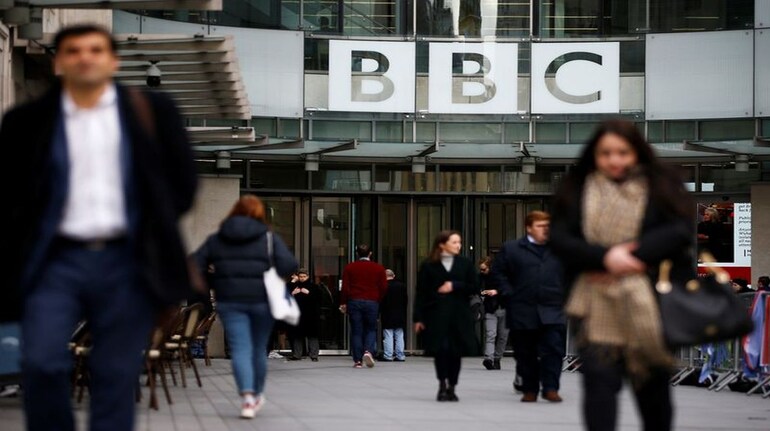
The BBC is battling its biggest crisis in decades after its two most senior leaders resigned over accusations of bias that have prompted U.S. President Donald Trump to threaten legal action for "no less" than $1 billion unless he gets compensation.
On Monday (November 10) the BBC apologized for a Panorama documentary which spliced together two parts of a Trump speech on January 6, 2021, the day his supporters stormed the Capitol, creating the impression he had called for violence.
Below are details on how the crisis came about, how the BBC is funded and governed, and how a new director general will be selected.
AN INTERNAL MEMO SEIZED ON BY CRITICS
The scandal was sparked by the leaking of an internal memo from a former standards adviser that listed what he said were failings in the BBC's coverage of Trump, the Israel-Hamas war, and transgender rights.
The memo by Michael Prescott, a former Sunday Times political editor, set out what he said was a series of editorial failings that showed systemic left-wing bias at the BBC.
Prescott was an external adviser to the BBC's Editorial Guidelines and Standards Committee that oversees coverage, compliance and complaints.
His memo to the BBC board was leaked to the right-wing Daily Telegraph, and seized on by critics and rivals who object to the BBC's perceived liberal stance and public funding.
The BBC took a week to respond, creating an impression of paralysis in the face of a barrage of criticism.
Its media correspondent, Katie Razzall, and one of its top political presenters, Nick Robinson, said there had been a clash between news managers and the board: the former wanted to apologize over the Trump edit while the latter argued that a broader problem with institutionalized bias needed tackling.
Robinson pointed the finger at board member Robbie Gibb, a spokesman for Theresa May when she was Conservative prime minister. Robinson said Gibb had argued the BBC had systemic failings. Gibb did not respond to a request for comment.
Jon Sopel, formerly the BBC's North America editor, said on his podcast on Monday that Gibb had pursued complaints of a left-wing bias in the BBC's output, but never a right-wing bias, as alleged by some on the left over its coverage of Israel.
The BBC press office declined to comment.
WHAT HAS THE BBC SAID?
BBC Chair Samir Shah said it was "fanciful" to suggest a hostile board had engineered the resignations of Director General Tim Davie and the head of news, Deborah Turness.
In a letter to lawmakers on Monday, he also said the BBC had not buried examples of failings. It had published corrections, changed guidance and leadership and carried out formal disciplinary measures when problems were found, he said.
He said Prescott's memo had only given a partial description of issues, but he added that he had instigated a review of the standards board, well before he received Prescott's memo.
GOVERNMENT TO REVIEW HOW TO FUND BBC
The BBC is funded by a license fee paid by all television-watching households in Britain. In 2024/25, it brought in 3.8 billion pounds ($5.1 billion), while commercial income took total revenue to 5.9 billion pounds.
The BBC's funding is detailed in its latest 10-year royal charter that is due to expire in 2027. The government will set out options for different funding models by the end of this year, as it becomes harder to defend the license when many viewers are turning to Netflix and other streaming platforms.
The number of people paying the license fee has been steadily dropping - it was 23.8 million by the end of its last financial year, down from 25.3 million two years ago.
PUBLIC SUPPORT FOR PUBLIC BROADCASTER
The BBC, which is a client of Reuters, is both the most trusted and most-used news provider in Britain, surveys show.
Its news reaches 67% of all adults across TV, radio and online, media regulator Ofcom said in July, although its reach has fallen by 11 percentage points since 2019.
A snap YouGov survey on Monday showed half of those queried believed the BBC was politically biased, although they split along party lines. Some 31% said it was generally biased in favor of left-wing views, while 19% said it favored the right.
WHO SELECTS THE NEW BOSS, AND WHO IS IN THE RUNNING
The 14-strong board will select a new director general.
Five of the non-execs are chosen by the government, including the chair.
Contenders to replace Davie include Charlotte Moore, a former BBC Chief Content Officer. She is CEO of Left Bank Pictures and has a senior role at Sony Pictures Television.
Jay Hunt, a former controller of BBC One and executive at Channel 4 and Channel 5, has also been suggested. She is currently creative director, Europe, Worldwide Video at Apple.
Other names in the frame include Alex Mahon, a former head of Channel 4 who is running an events business, and ITV CEO Carolyn McCall. Jane Turton, the head of All3Media, is also seen as a possible candidate.
ABC ‘RAPE’ COMMENTS LAWSUIT
ABC News settled a defamation suit brought by Trump , agreeing to donate $15 million to his presidential library and issue a statement saying it regretted comments about Trump made by anchor George Stephanopolous.
Trump alleged in the lawsuit filed in March in federal court in Florida that Stephanopolous defamed him by saying he had been found liable for “rape.”
Stephanoplous was referring to a civil case brought against Trump by writer E. Jean Carroll, who accused Trump of sexually assaulting her in a New York department store in the 1990s. A jury found Trump liable for defamation and sexual abuse but not rape, which is a separate offense under New York state law.
Trump has denied assaulting Carroll. He is appealing the judgment, as well as a jury verdict finding him liable for defaming Carroll in a separate case she filed over the same alleged incident.
U.S. District Judge Cecilia Altonaga in Miami had denied ABC’s initial motion to dismiss the case, though that did not necessarily mean Trump would have won.
An ABC News spokesperson said in a statement that the network was pleased that the parties had reached an agreement to dismiss the lawsuit.
CBS ‘60 MINUTES’ HARRIS INTERVIEW LAWSUIT
Trump filed a $10 billion lawsuit against CBS in October, alleging the network deceptively edited an interview with then-presidential candidate Harris to “tip the scales in favor of the Democratic Party” in the election.
CBS aired two versions of the Harris interview in which she appears to give different answers to the same question about the Israel-Hamas war, according to the lawsuit filed in federal court in Texas.
Trump alleged CBS’s editing of the interview violated the Texas Deceptive Trade Practices-Consumer Protection Act, which makes it illegal to use false, misleading or deceptive acts in commerce.
Trump's lawyers have not yet responded.
SIMON & SCHUSTER RECORDING COPYRIGHTLAWSUIT
Trump sued Simon & Schuster in federal court in Florida in January 2023, accusing the book publisher and author Bob Woodward of violating copyright laws through “systematic usurpation, manipulation, and exploitation” of audio recordings of Trump that the veteran journalist gathered during interviews.
Discover the latest Business News, Sensex, and Nifty updates. Obtain Personal Finance insights, tax queries, and expert opinions on Moneycontrol or download the Moneycontrol App to stay updated!
Find the best of Al News in one place, specially curated for you every weekend.
Stay on top of the latest tech trends and biggest startup news.




