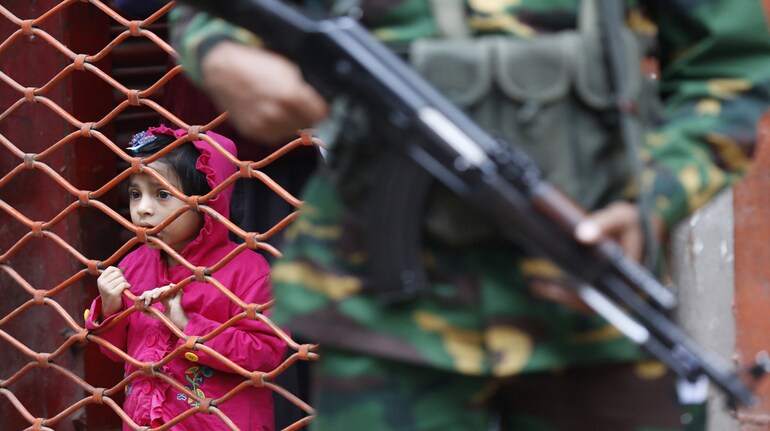
Over half of Bangladesh’s polling centres have been designated as “risk-prone” ahead of the general elections, with officials stating that 90 per cent will be monitored by CCTV and many policemen in Dhaka will wear body cameras.
Election Commissioner Abul Fazal Mohammad Sanaullah told reporters late Tuesday, “Security deployment is being made based on local sensitivity assessments,” explaining that the Election Commission’s safety measures are guided by risk evaluation.
EC officials added that this election will see the largest-ever deployment of law enforcement personnel, alongside the most extensive use of technology in the nation’s electoral history.
Sanaullah emphasised that the poll body expects law enforcement agencies to maintain a peaceful environment for voters both during and after polling.
He said the EC was largely satisfied with the current law-and-order situation and “compared to any time in the past, we are in a better position now”.
His comments came hours after the police Inspector General Baharul Alam said they found 24,000 out of nearly 43,000 polling centres across the country were “high” or “moderate” risk-prone election stations.
Police said they provided a list of risk-prone polling centres to the EC, which showed that out of 2,131 polling centres in Dhaka, 1,614 were risk-prone. However, the army, in a media briefing earlier, said they have identified two centres in Dhaka city to be "risky".
Officials said policemen would use body-worn cameras for the first time at these specific locations.
EC data showed that first-time voters made up some 3.58 per cent of the total 1,27,700,597 voters.
The polls are being held simultaneously along with a referendum on a complex 84-point reform package. The contest is mainly between the Bangladesh Nationalist Party (BNP) and its once ally, Jamaat-e-Islami.
Chief adviser Muhammad Yunus’ interim government last year disbanded deposed prime minister Sheikh Hasina’s Awami League and barred it from contesting the polls.
A series of pre-poll surveys conducted in the past two months by consulting firms, research organisations and think tanks suggest that the BNP was the frontrunner and that its new chairman, Tarique Rahman, is in pole position to be the next prime minister.
Hasina’s Awami League government was ousted in a student-led violent street protest, dubbed the July Uprising, on August 5, 2024.
(With PTI inputs)
Discover the latest Business News, Sensex, and Nifty updates. Obtain Personal Finance insights, tax queries, and expert opinions on Moneycontrol or download the Moneycontrol App to stay updated!
Find the best of Al News in one place, specially curated for you every weekend.
Stay on top of the latest tech trends and biggest startup news.