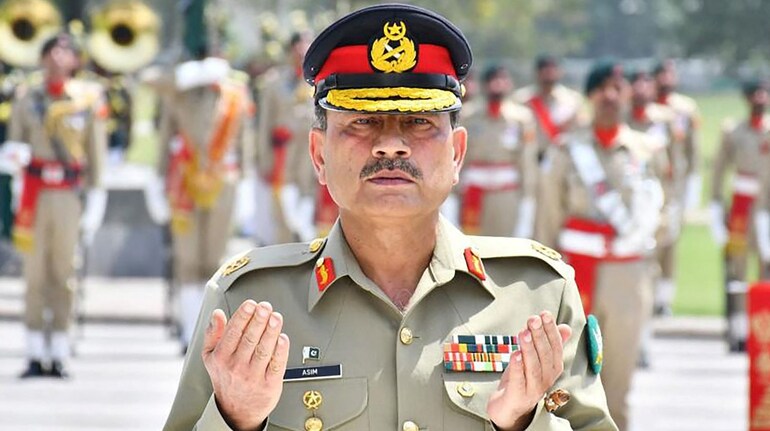
Over the past few weeks, there has been a flurry of high-level visits by Pakistani officials to the United States. From Field Marshal Asim Munir’s lunch with Donald Trump at the White House to Finance Minister Muhammad Aurangzeb’s ongoing efforts to secure trade concessions, Pakistan appears to be deepening its outreach to Washington.
On the surface, these meetings seem routine. But with Trump’s self-congratulatory claims of brokering peace between India and Pakistan, and whispers of Kashmir re-entering the diplomatic chatter, India must keep its guard up.
Meanwhile, a Pakistani delegation is set to visit the US for bilateral talks. Confirmed by State Department spokesperson Tammy Bruce, the meeting is part of what appears to be a wide effort by Islamabad to re-anchor itself in Washington’s good books – economically, diplomatically and militarily. While Bruce did not elaborate on the agenda of the bilateral talks, her remarks hinted at a strategic thaw in relations.
The upcoming talks follow a rare and symbolic move as Trump hosted Munir for a one-on-one lunch at the White House. This was no routine courtesy call; rather it was a calculated signal from both sides, especially in the context of Pakistan’s military dominating its foreign policy apparatus.
Trump’s mediation boasts
During the same briefing, Trump once again revived his past claims of mediating the ceasefire between India and Pakistan, following the Pahalgam terror attack. Trump has repeatedly asserted that a "long night" of talks in Washington led to the two nuclear powers agreeing to a full ceasefire. He even suggested the US had dangled trade incentives to bring both sides to the table.
India, however, has categorically denied this. The ceasefire agreement was achieved through direct talks between the Directors General of Military Operations (DGMOs), with no third-party involvement. Prime Minister Narendra Modi reportedly made this clear to Trump during a phone call on the sidelines of the G7 Summit in Canada, stating unequivocally that mediation was “never on the table.”
New Delhi’s stance remains firm: Kashmir is a bilateral issue, and there is no room for outside intervention.
Trade and Dollars: What Pakistan really wants
Pakistan’s increasing warmth towards the US also has a clear economic dimension. Finance Minister Muhammad Aurangzeb has been in talks with American counterparts to negotiate Washington’s demands under a proposed trade framework. Pakistan is desperate for US investment, market access, and even a potential long-term deal that might appease investors wary of its flailing economy and debt crises.
The military-led civilian government in Islamabad believes Washington can be swayed by economic overtures and defence alignment, but that often comes with the price of towing the American line in strategic matters. This could include playing up its “peace posture” with India to win favour, or even quietly re-floating the Kashmir issue, especially if encouraged by populists like Trump.
India’s strategic concerns
Pakistan’s recent diplomatic offensive may seem like harmless posturing, but history suggests otherwise. Whenever Pakistan draws closer to the US, especially under military-led initiatives, it often attempts to internationalise Kashmir, directly or via proxies.
What makes this different is the Trump factor. His unpredictable approach to foreign policy, combined with Pakistan’s eagerness to milk old narratives for relevance, makes for a combustible mix.
India must ensure that it counters any attempt to distort facts on Kashmir or push the idea of third-party mediation back into diplomatic discourse.
Trump's lunch meeting with Munir prompted a private diplomatic protest from India in a warning to Washington about risks to their bilateral ties while New Delhi is recalibrating relations with China as a hedge, Reuters reported, quoting officials and analysts.
The current problems are different, said Michael Kugelman, a Washington-based senior fellow at the Asia Pacific Foundation think tank.
"The frequency and intensity with which the US is engaging with Pakistan, and seemingly not taking Indian concerns into account, especially after India's recent conflict with Pakistan, has contributed to a bit of a bilateral malaise."
"The concern this time around is that one of the triggers for broader tensions, that being Trump's unpredictability, is extending into the trade realm with his approach to tariffs," he said.
Discover the latest Business News, Sensex, and Nifty updates. Obtain Personal Finance insights, tax queries, and expert opinions on Moneycontrol or download the Moneycontrol App to stay updated!
Find the best of Al News in one place, specially curated for you every weekend.
Stay on top of the latest tech trends and biggest startup news.