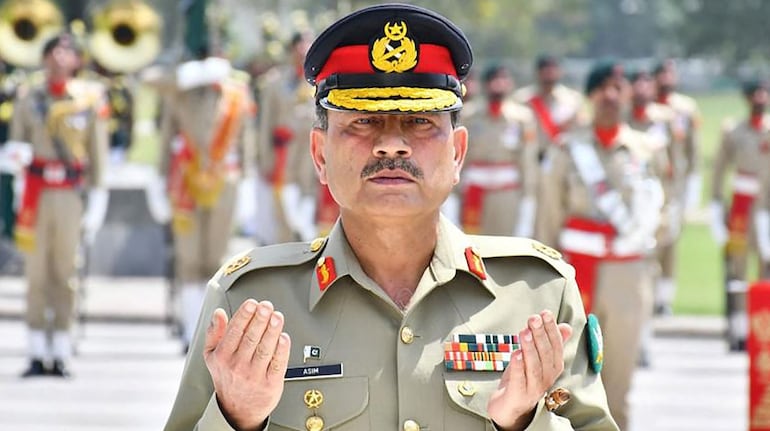
Pakistan has handed unprecedented power to Army Chief Field Marshal Asim Munir, appointing him as the country’s first Chief of Defence Forces (CDF), a move that places both military and defence authority under one individual for the next five years. The Shehbaz Sharif government cleared the decision after weeks of political bargaining and backroom negotiations, raising concerns over an extraordinary concentration of military influence in a country already dominated by the army.
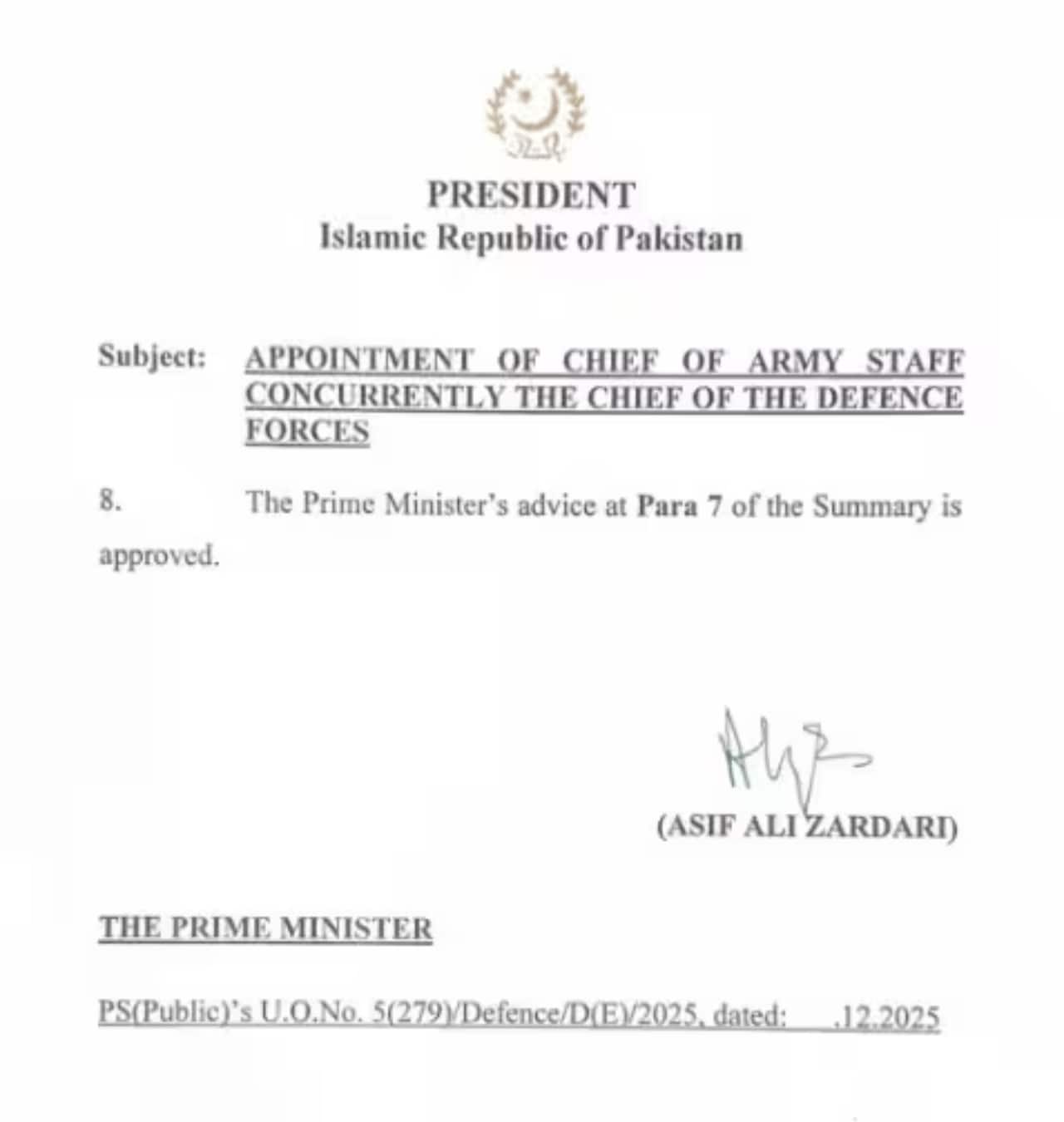
A notification issued by President Asif Ali Zardari confirmed that Munir will retain his current office as Chief of Army Staff while simultaneously heading the newly created CDF post. The statement from the President’s Office read, “President Asif Ali Zardari has approved the summary submitted by the Prime Minister for the appointment of Field Marshal Syed Asim Munir NI(M), HJ, Chief of Army Staff, concurrently as Chief of Defence Forces for a period of five years.”
A deal carved out through political bargaining
According to Pakistani government sources, as quoted by CNN-News18, the appointment was pushed through only after intense negotiations involving former Prime Minister Nawaz Sharif and PML-N chief organiser Maryam Nawaz. The delay in processing Munir’s new position was widely reported as a tug-of-war between the Sharif family and the top general.
According to sources quoted by CNN-News18, the Sharifs were seeking political assurances and a guarantee of military support in the future. One senior PML-N source told CNN-News18, “If Asim Munir wants a five-year tenure as both COAS and CDF, then he has to assure Nawaz Sharif’s premiership.” This makes the appointment look less like an institutional decision and more like a political transaction designed to protect both sides.
Sources further told CNN-News18 that the Sharifs demanded influence over upcoming postings in the military hierarchy. Those close to Maryam Nawaz said she and her father wanted officers “aligned with their political vision” to be placed in strategic positions. The motivation, sources said, was to secure long-term political stability for Nawaz Sharif’s potential return as Prime Minister.
A power grab wrapped in uniform
By taking charge of both roles, Munir becomes the most powerful military officer in Pakistan’s recent history, with broad influence over defence operations, appointments and institutional architecture. Critics say the move effectively centralises command under one man in a country where the military already interferes heavily in governance, elections and policy-making.
While the Sharif government has justified the decision as a structural reform, analysts see it as a political bargain that reinforces Pakistan’s military establishment instead of strengthening civilian authority. Rather than reduce the army’s control over politics, the creation of the CDF office appears to cement it.
Another extension in the air
The government also cleared a two-year extension for Air Chief Marshal Zaheer Ahmed Babar Sidhu, which will take effect after his current term ends in March 2026. This extension, read together with Munir’s expanded mandate, suggests a wider consolidation of military leadership rather than a fresh institutional reset.
As Pakistan hands unmatched power to one general and negotiates political futures through the military, the country moves further away from democratic accountability. With Munir now holding dual authority, Pakistan’s defence structure is not only reshaped but locked under a single uniform for the foreseeable future.
Discover the latest Business News, Sensex, and Nifty updates. Obtain Personal Finance insights, tax queries, and expert opinions on Moneycontrol or download the Moneycontrol App to stay updated!
Find the best of Al News in one place, specially curated for you every weekend.
Stay on top of the latest tech trends and biggest startup news.